

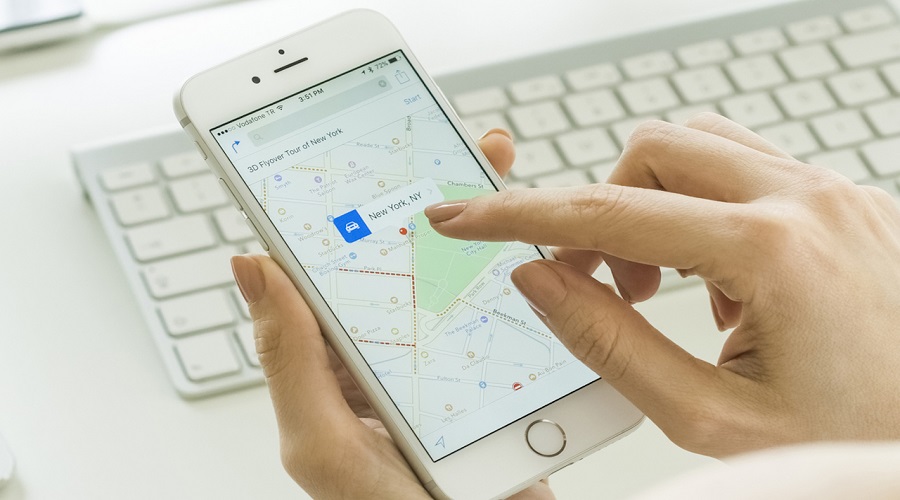
 Google Maps is an amazing tool for both the consumer and the business owner. It is also a great but underrated tool for digital marketing that most people have not explored, preferring other options like SEM (Search Engine Marketing) and SEO (Search Engine Optimization) for the ever-competitive SERP or Search Engine Results Page. However, every good business owner knows that SERP requires things like good organic content, relevance, enough time and of course enough money. The solution is to turn to less demanding search options like images, videos and Google Maps. It is one of the most underrated tools in the digital toolbox and one that can easily be used by brands to attract potential consumers.
In 2004, two Danish brothers, Lars and Jens Eilstrup Rasmussen, went to Google with an idea for a mapping application that would display static maps and allow searching, panning, and zooming in on them. Google saw the potential and bought their company, Where 2 Technologies. Google also bought Keyhole, a company that develops geospatial imaging software. Keyhole’s technology began to power Google Earth, and the same team of people went on to build Google Maps.
Google Maps launched on February 8, 2005, but it wasn't the first to hit the market. Yahoo had already launched a newer version of Yahoo Maps. MapQuest was on the market with maps that offered directions, but users still sought out physical maps to find landmarks and accurate directions.
Google , navigable map of the world, organizing the information into a simple, searchable format.
Google Maps was further enhanced with Street View. Street View was a collection of images of street views taken by a special camera mounted on a car. The idea began when Google's co-founders were driving around the Stanford campus in California.
Launched in 2007 with Apple's first iPhone, Google Maps was the world's first map app. Although Apple later released its own version of Maps, Google Maps has continued to get better and better, adding more information to its app. In 2013, it became the most popular smartphone app in the world, with more than 54% of global smartphone using it.
The app now uses AR and suggested locations. It offers numerous settings such as:
Multi-location route planning: Today, our road trips contain multiple stops, some of which are planned and some are not. Google Maps plans both planned and unplanned stops to provide a comfortable journey.
Use it even when offline: Google Maps lets you download the map, along with your planned stops. Better yet, it lets you share it with someone via message or email.
One-click Drag and Drop: change directions by simply Drag and Drop specific parts of your route.
One-click directions: Right-click anywhere on the map and a list will appear to help you find directions. You can also measure the distance of a route.
Alternative suggestions: the application allows you to combine the way you will travel, suggesting other means of transportation besides the car.
Plus, with Street View, you can travel back in time to see how neighborhoods have changed over time. You can even create your own Private Google Map or explore the Earth's oceans.
But what is it that makes Google Maps such an irresistible digital marketing tool?
First, you can use it to ensure that your business is a preferred stop in the consumer journey. Google now automatically pulls maps into the SERP (Search Engine Results Page) as a search option. As a brand or business, you can ensure that your API, websites, and social pages are integrated into all of your pages. With the rise of mobile, these location results become even more important.
Google Maps listings work similarly to how AdWords works. Listings are prioritized based on the user's location, with the closest and most prominent location for a given search result being ranked first. Other options are also provided, so that the user has at least 3 alternatives.
