

Microsoft revealed that the impact of Petya was significantly smaller compared to WannaCry, which managed to infect hundreds of thousands of computers around the world.
In an in-depth analysis of Petya, Microsoft says the attack originated in Ukraine. 70%+ of infected systems are located in that country.
Petya vs WannaCry
But most importantly, the Petya attack, which uses the same SMB vulnerability as WannaCry, could not compromise Windows 10 systems, according to Microsoft's telemetry data. The company's telemetry appears to reveal that most infections occurred on Windows 7 computers.
Even so, the scale of the attack was dramatically smaller this time as Microsoft reports that only 20,000 devices were infected.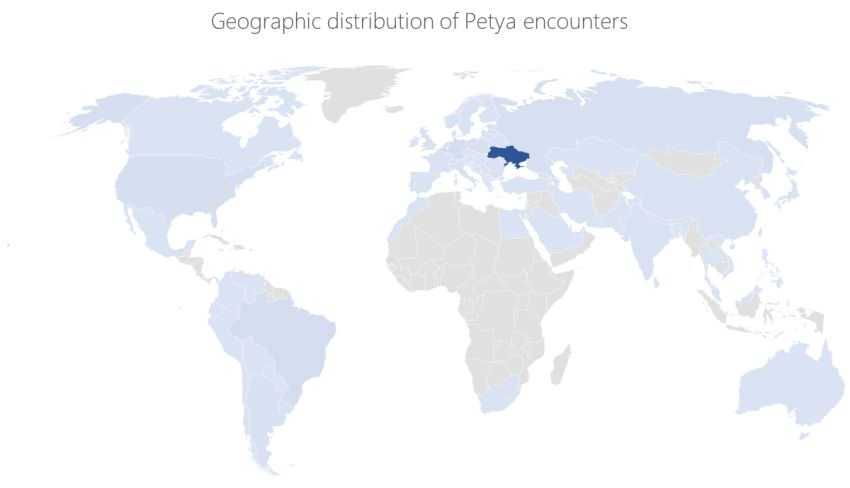
But compared to WannaCry, the Petya malware hit more high-profile victims, as the attack mainly targeted organizations and businesses in Ukraine but also in the rest of Europe. The infection reached as far as the United States, but isolated incidents were observed.
Microsoft also said that while Petya wasn't as successful as its predecessor, it shows a worrying trend: Each new ransomware that is developed gets better, and has new capabilities that can bypass advanced security technologies.
"The new variant of Petya ransomware we saw this week is significantly more sophisticated than the original. It improved its propagation mechanisms compared to WannaCrypt by using a second exploit and adding more propagation methods. These side capabilities make the ransomware a greater risk to networks containing an infected machine," Microsoft says.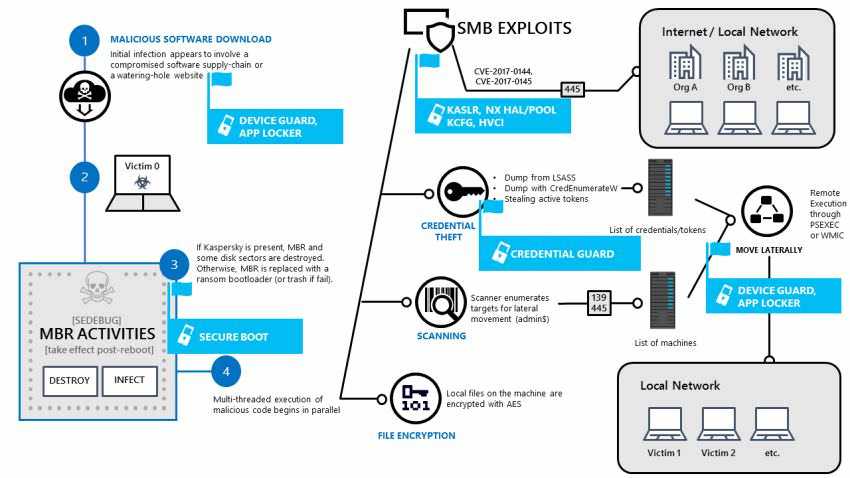
Of course, Microsoft, while advertising the security of Windows 10, did not forget to remind users that to protect themselves from Petya and other new forms of ransomware, they should upgrade to Windows 10 and update their systems with the latest patches.
