

American scientists developed a gadget that allows instant photography of the interior of the eye
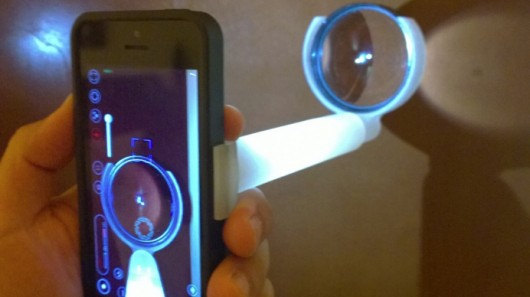
Researchers from Stanford University School of Medicine in California have developed an inexpensive gadget that allows a smartphone to take ultra-high-resolution photos of its owner's eye, which could then be evaluated by a specialist.
The scientists’ goal was to help individuals who need to undergo regular eye examinations, significantly reducing the cost of such visits, especially for those living in remote areas.
«Instagram» of the eye
The EyeGo, created by specialists, consists of an additional macro lens that attaches to the back of the device. With the help of LED, the patient can easily and quickly photograph the front and back part of the interior of his eye and then send the photographic file to his doctor for careful examination. In the process, the specialist can record it in the patient's electronic file, creating a modern database.
“Think of it as an Instagram for the eye,” explains Dr. Robert Chang, one of the inventors of EyeGo. The researchers believe their new eye gadget could make it easier for patients to access eye care services and improve doctors’ ability to advise their patients remotely.
The modern professional equipment for photographing the eye, according to scientists, costs thousands of euros and its use requires special training on the part of the operators.
"People living in remote areas do not have access to such equipment," experts say.
"Adapting a smartphone to photograph the eye may offer the opportunity for patients who cannot easily visit their ophthalmologist to share their condition with a specialist and then receive a diagnosis," says Dr. David Myung, lead author of the American study.
"This system could also have applications in the emergency department of a hospital, where patients are required to wait a long time until they are examined by a specialist. By simplifying the entire process, we aim to improve the quality of patient care," he adds.
Low cost through3D printing
The researchers created the prototype of the ophthalmic gadget by assembling parts that had previously been printed with a 3D printer, a fact that dramatically reduced its cost.
Clinical trials regarding the quality of the photographic captures have been scheduled to take place in the emergency department of Stanford University Hospital, while a second study that the scientists have launched will focus primarily on cases of patients suffering from diabetes.
The interesting findings were presented in the scientific publication "Journal of Mobile Technology in Medicine".
Source: tovima.gr
