

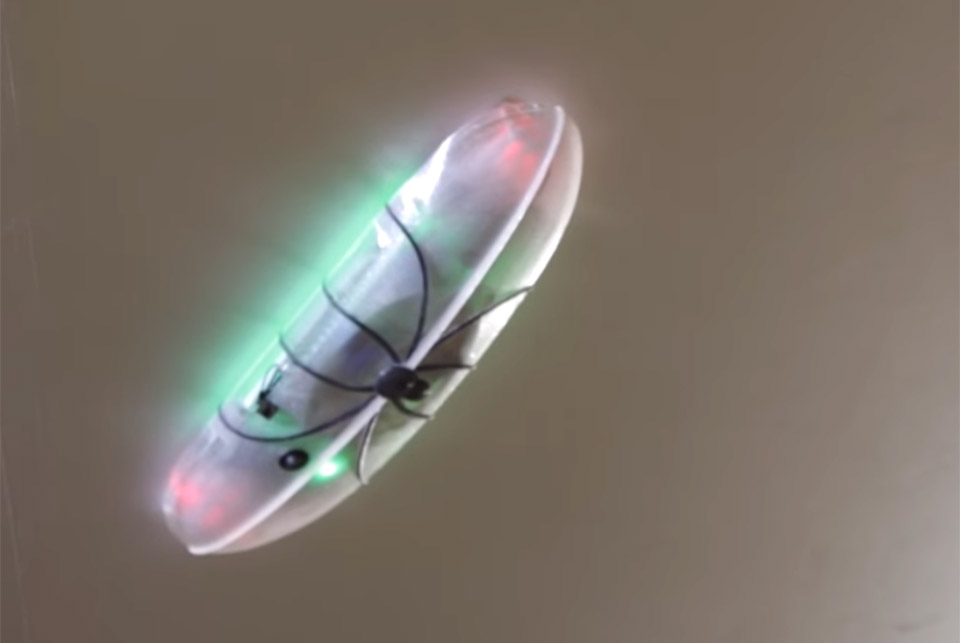
From Lockheed Martin's Skunk Works team – the same people who brought us the U-2 Dragon Lady and SR-71 Blackbird strategic reconnaissance aircraft, as well as the F-117 Nighthawk fighter – now comes the Spider, a device for repairing airships more efficiently than ever before.
As Skunk Works explains, the old methods of repairing airships are time-consuming. Someone has to deflate the small balloon (which can take hours) and walk around with a bright, portable light to look very carefully for tears and damage.
Instead, the Spider uses two magnetic parts, one to shine an LED light inside the airship and one that senses that light from the inside, exposing holes and problem areas. The mechanism moves over the hole in question, repairs it, and then takes before-and-after photos, allowing someone to inspect later.
The last time airships were in vogue was after World War I, but they may be making a big comeback. Manufacturers envision uses for them, including gathering surveillance information, moving consumer cargo, supporting wireless Internet connectivity, gathering weather data, and more. Even Goodyear recently released new versions of its flying vehicles.
The competition is also gearing up to make a bigger, better, more efficient airship. Both Lockheed and British-owned Hybrid Air Vehicles (HAV) are reportedly developing their own models, since the U.S. invaded Afghanistan, which led to cheaper oil prices. However, the companies are required to move their heavy equipment to remote areas in the desert. With the new aircraft expected to cost about $40 million each, the Spider could make these big markets less risky.
