

Google seems determined to fundamentally change the way users interact with productivity tools , investing heavily in artificial intelligence (AI) -powered voice interfaces . At the Google I/O 2026 developer conference , the company unveiled a new generation of features for Google Docs, Gmail , and Keep that allow users to create, organize, and manage content exclusively through voice commands.
Google's strategy is based on the belief that natural speech will be the next big thing in productivity, gradually replacing the traditional keyboard. With the support of Gemini AI, the company is attempting to turn Workspace apps into intelligent assistants that understand complex spoken instructions and perform multiple tasks simultaneously.
The goal is not simply to dictate text, but to create an experience where artificial intelligence understands context, recognizes intent, and organizes information in a way that resembles a human collaborator.
See also: Google's first AI smart glasses are coming this fall
Docs Live: Create documents with just your voice
The most important new feature announced by Google is Docs Live, a feature that allows users to create and edit documents by speaking naturally, without using a keyboard.
During the presentation, Google showed a user verbally asking the system to pull information from a resume in Google Drive, integrate data from email conversations, and add personal stories to a single document, all in real time.
The impressive feature is that the system can follow complex spoken instructions even when the user changes direction in mid-sentence. This means that the artificial intelligence no longer functions as a simple transcription tool, but as a natural language understanding system capable of handling complex context.
Google CEO Sundar Pichaisaid that voice document creation will soon become as natural as typing today, predicting a complete change in the way millions of users work.
Rambler shows Google's new direction
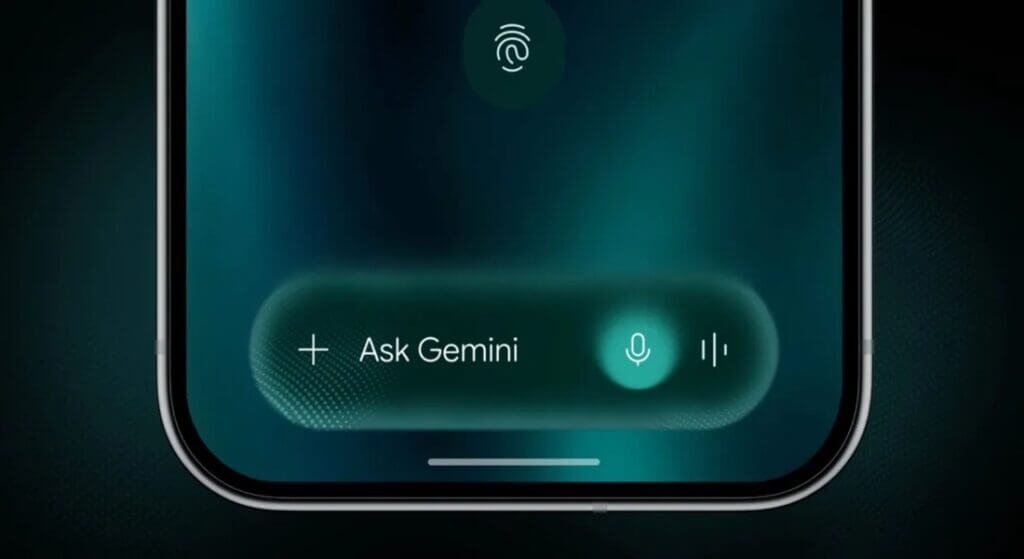
Google's move to voice-first experiences didn't start now. Earlier this month, the company released Rambler, a new AI dictation tool built into Gboard.
Rambler can automatically remove filler words, correct spoken language, and manage switching between different languages during speech. The feature is already available on Samsung Galaxy and Google Pixel and is considered the first step towards a fully voice-enabled work environment.
See also: More new Google Pixel 3D emoji leaked for Android 17
Analysts note that Google is leveraging the huge advantage it has in the Android ecosystem, as it has direct access to millions of mobile device users and can integrate AI functions at the operating system level.
Google Keep turns into a smart thought organizer
Significant changes are also coming to Google Keep, which gains voice note organization capabilities via Gemini AI.
Users will be able to speak freely, recording fragmentary thoughts, ideas, shopping lists or business notes, while artificial intelligence will automatically organize the content into separate categories.
Although apps like Voicenotes, AudioPen, and Wispr Flow already offer similar capabilities, Google is attempting to differentiate itself through full integration into the Workspace ecosystem.
This means that voice notes can be instantly converted into documents, spreadsheets or reminders without the user having to switch apps. This approach reinforces Google’s philosophy of a single AI productivity environment.
Gmail gets AI agent for inbox
At the same time, Google introduced Gmail Live, a new conversational AI experience for managing email via voice.
Users will be able to ask Gmail for specific information, such as flight details, Airbnb reservations, school schedules or professional data, receiving spoken answers based on the content of their emails.
See also: Google makes it easier to share files between Android and iPhone
In practice, Gmail becomes a personal AI agent that understands the content of mail and can handle complex, multi-step requests.
Google believes that voice is a more natural way to interact with AI tools, especially as users ask increasingly complex questions.

The battle for the future of productivity has begun
Google isn't the only company investing in voice AI experiences. OpenAI, Apple, and other tech giants are already developing AI systems with a focus on natural conversation.
However, Google has a critical advantage: it controls both the Android and Workspace ecosystems, allowing it to deeply integrate AI features into everyday apps used by billions of people.
The new voice AI features are expected to roll out this summer for Google AI Premium subscribers and corporate Workspace users.
Whether voice will eventually replace the keyboard remains an open question, but Google seems confident that the next era of productivity will not be based on clicks and keys, but on natural conversations with artificial intelligence.
