

Astronomers have discovered an unusual planetary system in which a "recalcitrant" rocky planet orbits much further away than where it would normally be expected to form.
See also: The "Great Comet of 2026" could be visible to the naked eye
Typically, rocky planets form close to a star, while gaseous planets form at greater distances — as is the case in our own solar system, where an extensive asteroid belt separates rocky Mars from gas giant Jupiter.
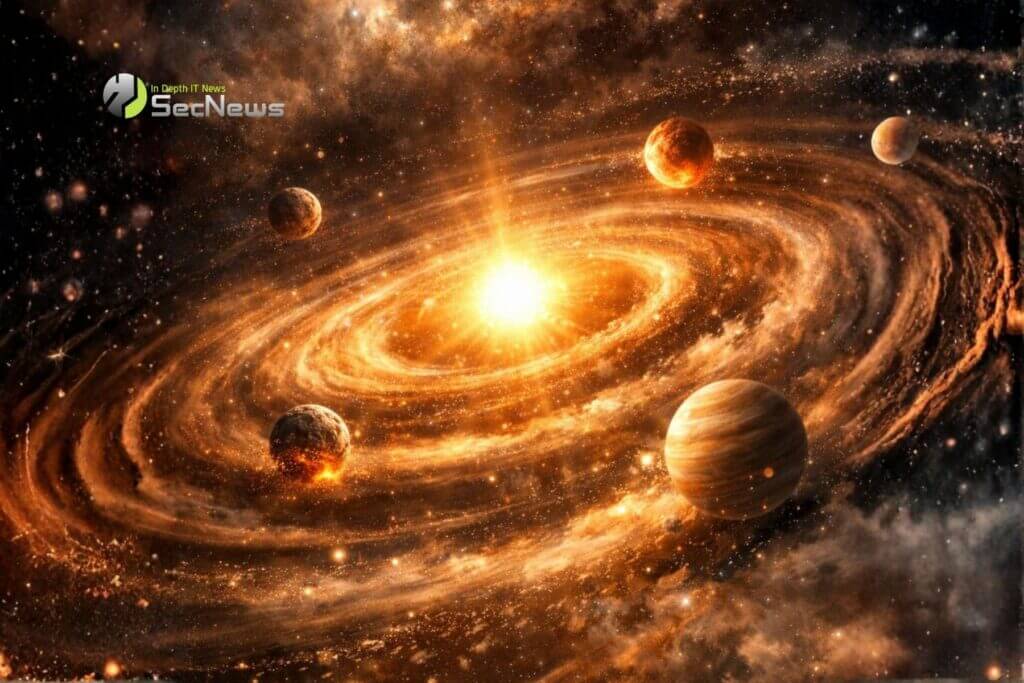
In the new system, which consists of four planets, the first three follow this pattern. However, there is also a rocky planet at the outer edge of the system, beyond the two gaseous planets. This suggests that it formed after the gas in the protoplanetary disk had already been depleted, the researchers reported February 12 in the journal Science.
See also: Huge black hole "wakes up" after 100 million years
As the planets in our solar system formed and grew, they accumulated dust, metals, and other solid materials. At greater distances from the Sun, substances such as water and methane remained in solid form due to the lower temperatures. As the outer planets grew in size, they attracted hydrogen and helium from their surroundings, eventually evolving into gas giants.
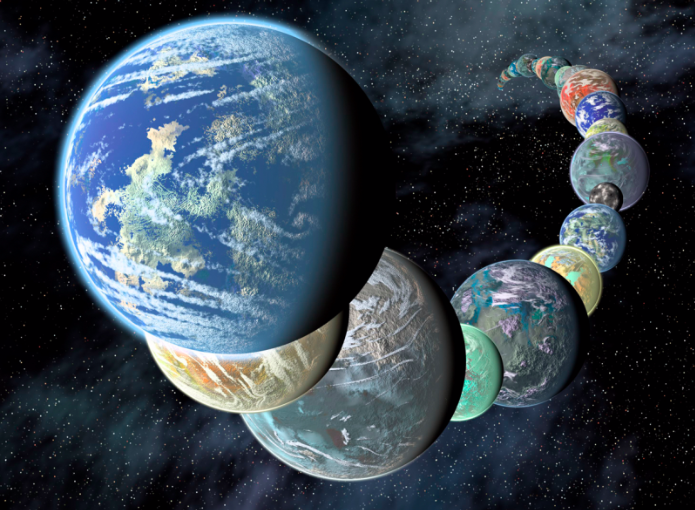
In the new study, Wilson and his colleagues searched for exoplanets around the red dwarf LHS 1903, which was observed by the Transiting Exoplanet Survey Satellite (TESS) from 2019 to 2023. When a planet passes between the star and the satellite, it causes a small decrease in its brightness. The researchers then analyzed the characteristics of these planets with the help of the Characterizing Exoplanets Satellite (CHEOPS).
Scientists have identified four exoplanets orbiting the star, including the distant rocky planet. The team concluded that the planets likely did not form simultaneously; instead, they were created sequentially, with each new planet growing in an environment that had already been influenced by the previous one.
See also: Stunning images of a galactic union from space telescopes

Furthermore, the researchers ruled out the possibility that the distant rocky planet lost its atmosphere after a collision or swapped places with a gaseous planet.
