

Recently, two NASA space telescopes, the James Webb Space Telescope and the Chandra X-Ray Observatory, captured images of a galactic merger as two galaxies begin to collide. NASA released a composite imagethat combines visible and X-ray data from the collision. The smaller galaxy, IC 2163, is in the upper left of the image, while NGC 2207 dominates the center and lower right. Their long, silvery-blue spiral structures are full of bright knots and spots — signs of intense and chaotic astrophysical activity.
The two galaxies passed very close to each other millions of years ago, their gravitational interaction bending and distorting their spiral structures. In billions of years, they are expected to merge into a single galaxy. The two telescopes that recorded this "galactic union" study the Universe at different wavelengths.
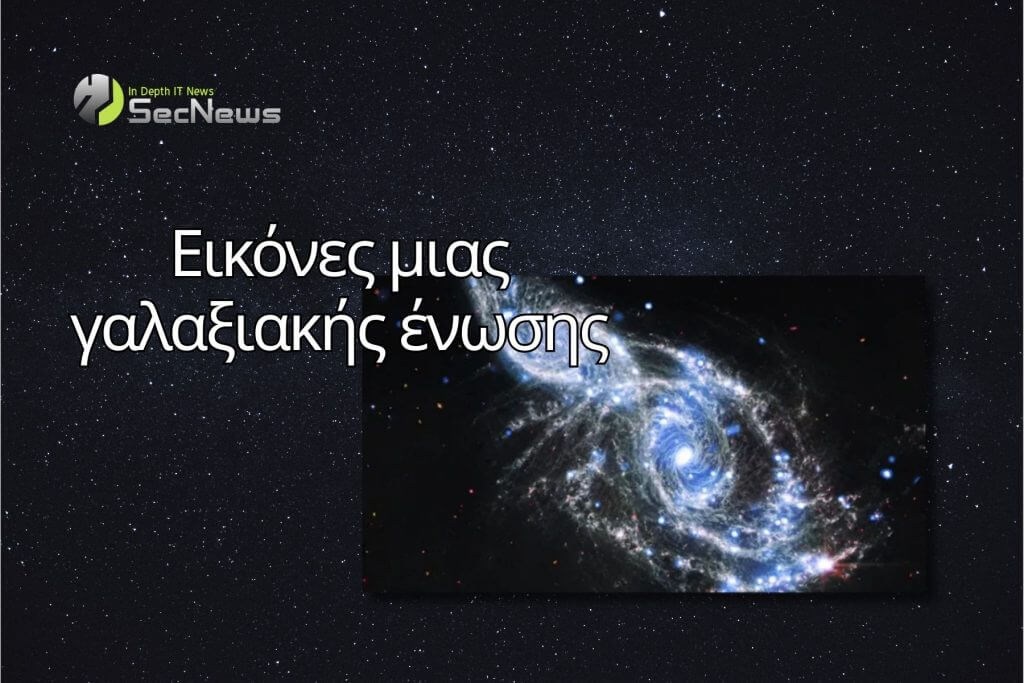
Webb observes primarily in the infrared spectrum, revealing dust, cool to hot gas, and star-forming regions that are often invisible in visible light. To do this, it orbits the Sun near the L2 Sun–Earth, about 1.5 million kilometers away, so that it remains stable and cool.
In contrast, Chandra is designed to study the X-ray Universe, observing phenomena where matter is heated to millions of degrees by extreme gravity, strong magnetic fields, and explosive events. Because Earth's atmosphere absorbs X-rays, Chandra moves in a highly elliptical orbit around Earth, allowing for prolonged and unobstructed observations.

Combining data from the two telescopes not only offers a more impressive picture, but also a more complete physical understanding of the processes taking place within and between galaxies.
The two galaxies are estimated to be about 120 million light-years apart , in the constellation Canis Major . Collisions and mergers are two of the most fundamental mechanisms by which galaxies evolve and change over cosmic time.

Observing a galactic merger "face-to-face" is particularly valuable, as it allows astronomers to monitor the deformation of spiral arms, the points where matter is compressed, and how the interaction redistributes gas and dust that can later lead to the formation of new stars.
