

Rocks and soil collected from the asteroid Bennu by NASA's OSIRIS-REx spacecraft appear to be rich in carbon and minerals that contain water , according to an analysis by scientists . The revelation sheds new light on the formation of our planet and raises theories about how water may have reached Earth in the distant past.
The metals found in the sample from Bennu “have water locked inside their crystal structure,” said Dante Lauretta, a planetary scientist at the University of Arizona and the principal investigator of the asteroid sample return mission.
“And I want to stop and think about what that means,” Lauretta said. “That’s how we think water got to Earth.”
“The reason Earth is a habitable world, (the reason) we have oceans and lakes and rivers and rain, is because these clay minerals, like the ones we see from Bennu, landed on Earth four and a half billion years ago, making our world habitable,” Lauretta said.
See also: 14,300-year-old trees reveal the largest solar storm of all time
“So we see how water was incorporated… eventually into the planets“.
The Bennu sample capsule returned to Earth aboard the OSIRIS-REx spacecraft on September 24. The spacecraft had arrived at the asteroid and begun the sample collection process nearly three years earlier.
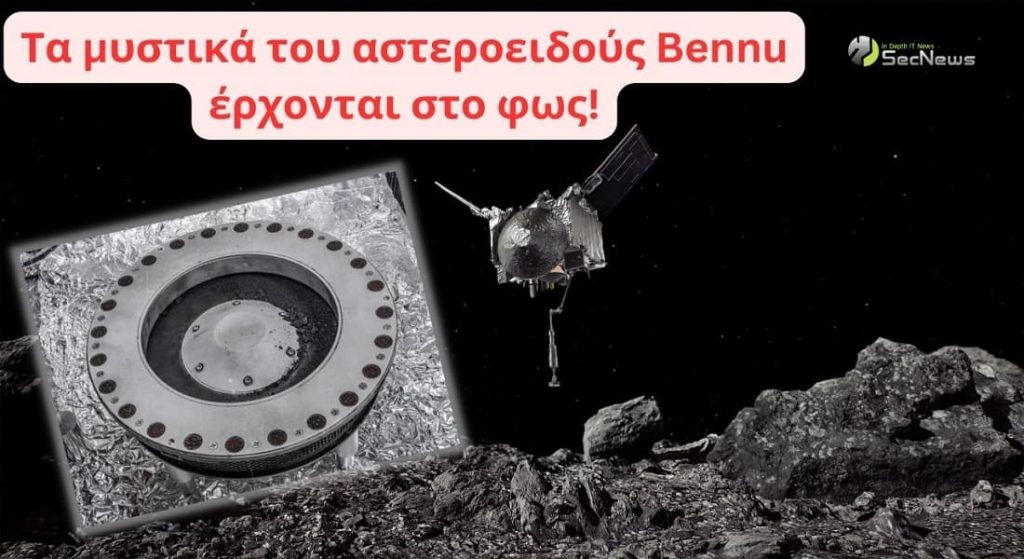
The samples are being studied in an isolated laboratory at the Texas space center. Initial examination of the asteroid dust was done with a powerful electron microscope that revealed clay minerals that carry water, sulfides and high concentrations of carbon.
Sulfides, along with other elements, are “a critical element for planetary evolution,” Lauretta said. “It determines how quickly things melt, and it’s also critical for biology. Many of the amino acids that give structure to proteins use sulfur to connect and provide these bridges.”
NASA Administrator Bill Nelsonsaid the sample from asteroid Bennu represents “the largest carbon-rich asteroid sample ever returned to Earth.”
"Carbon and water molecules are exactly the materials we wanted to find," he said. "They are critical elements for the formation of our own planet and will help us determine the origin of elements that could have led to life."
See also: Antarctica: Ozone hole is 2.5 times the size of Canada
Once the entire sample is opened, about 25% will be kept for study by the OSIRIS-REx team at Johnson Space Center. Another 4% will be given to the Canadian Space Agency, and about 0.5% will be given to the Japan Aerospace Exploration Agency.
A small portion of it will remain protected at a facility in White Sands, New Mexico, and the rest will be given for final analysis to scientists around the world.
The samples revealed Wednesday are “the material that came out of the collection capsule when we flipped it over,” Lauretta said. “Underneath that, there’s a whole treasure chest. And believe me, the sample science team is eager to get their hands on it.”

NASA: OSIRIS-REx Mission
Equipped with three cameras, two spectrometers and other important instruments, NASA's OSIRIS-REx spacecraft and sample return capsule were launched aboard a United Launch Alliance Atlas 5 rocket on September 8, 2016
The spacecraft arrived at Bennu in December 2018 and remained in orbit for months mapping and analyzing the area. Nearly two years later, on October 20, 2020, the spacecraft approached the asteroid and landed its sample collection tool on the surface.
See also: Could there be plants on alien planets?
After completing the collection, the spacecraft placed the sample in a special capsule and finally returned to Earth last month. The capsule landed in Utah and was transported to the Astromaterials Acquisition and Curation Officeat Johnson Space Center, where it will undergo detailed analysis for two years.
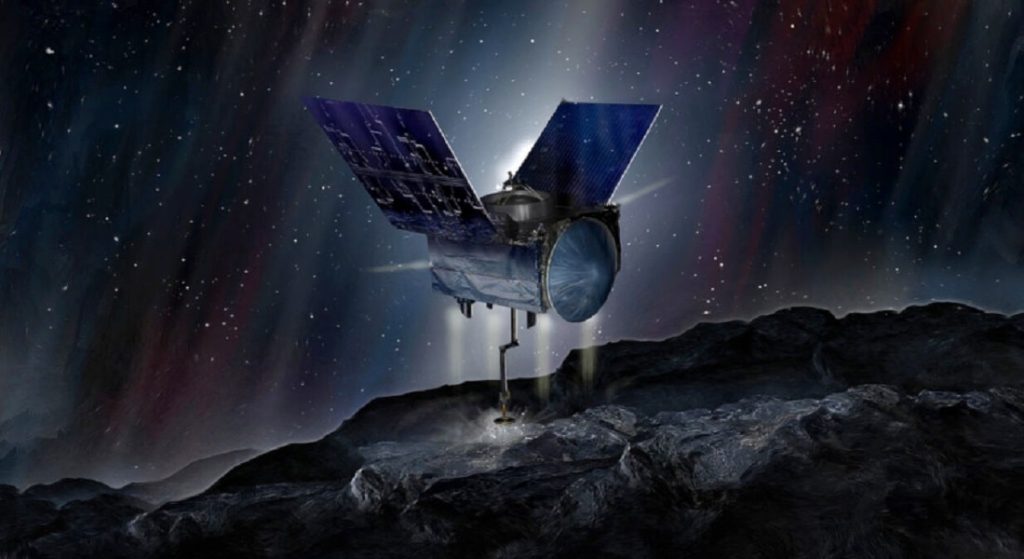
The OSIRIS-REx mission and the sample from Bennu allow us to learn more about the materials that existed at the birth of our solar system, 4.5 billion years ago, and see how they came together to form the sun and subsequently our planets.
The composition and evolution of asteroids and comets are central to understanding where the water in Earth's oceans came from and how life managed to arise from organic compounds and other chemicals transported to Earth.
The mission to Bennu is just the beginning. As science and technology advance, NASA continues to embark on missions that push the boundaries of human knowledge and understanding. The discovery of carbon and water on the asteroid Bennu is just one step toward answering some of humanity's big questions about the origin and evolution of life in the universe.
Source: www.cbsnews.com
