

After seven years and a journey of 6.21 billion kilometers, NASA's OSIRIS-REx spacecraft has returned to Earth, bringing a capsule full of precious dust from the asteroid Bennu.
See also: OSIRIS-REx aligns with Earth to send sample from asteroid Bennu
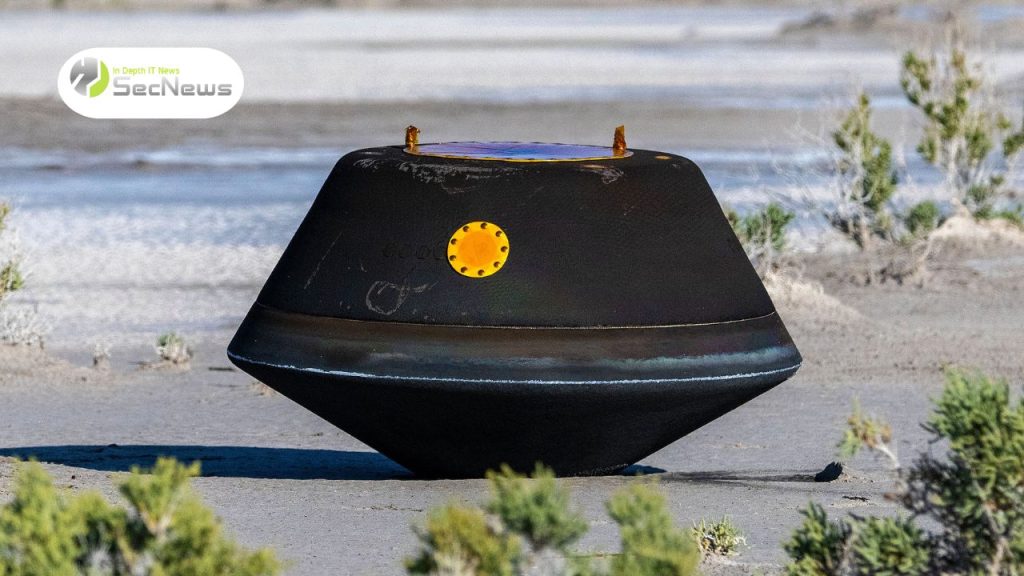
This is a significant and incredible achievement, a feat of space prowess, engineering, dedication and skill. Although the capsule has reached its destination, there is still much work to be done. Scientists hope that analyzing this cosmic debris will provide new insights into the birth of the Solar System and how the basic building blocks of life on Earth formed.
"Today marks an extraordinary milestone not only for the OSIRIS-REx team but for science as a whole," says OSIRIS-REx principal investigator Dante Lauretta of the University of Arizona.
After returning from the Utah desert, the capsule was transported to a portable and completely clean facility in order to minimize any contamination from Earth. This capsule contains about 250 grams of material, however we won't have exact knowledge for a few more days.
At the initial installation, only six people were allowed in, wearing special suits, nitrile gloves, shoe covers, hair covers, and beard covers. Their role was to remove the collection canister from the capsule, preparing it for flight to NASA's Johnson Space Flight Center.
There, researchers will carefully open the container and carefully remove samples, setting the stage for the scientific investigation that will follow. Portions will be distributed to scientists around the world for various analyses. On October 11, NASA will announce the results of its first analysis.
See also: Asteroid passed just 4,000 kilometers from Earth
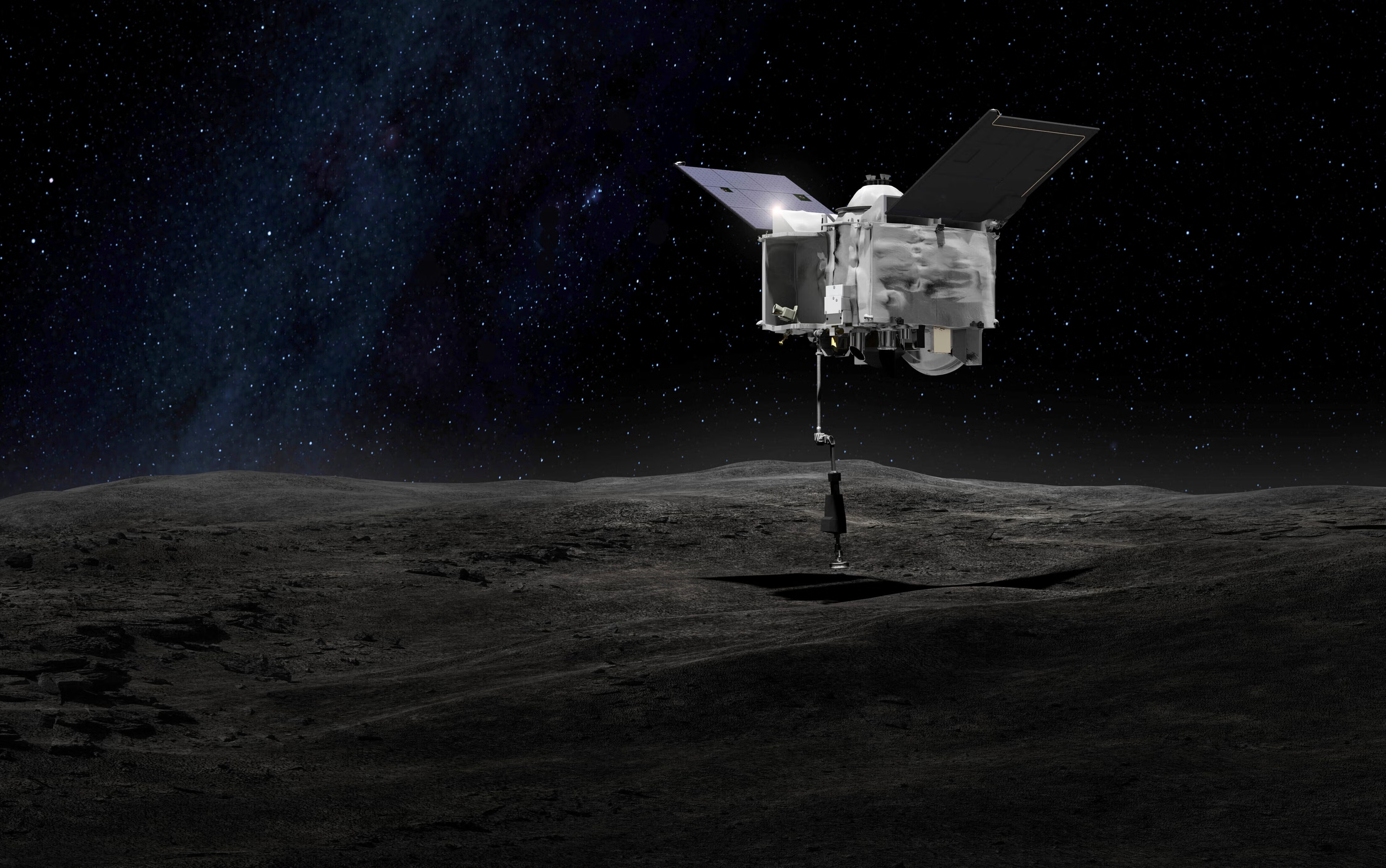
The asteroid is a valuable treasure trove, representing a largely unexplored record of the early Solar System. It is believed that space objects, such as asteroid Bennu, have remained unchanged since their formation, about 4.5 billion years ago.
We've already collected a fair number of space rock samples here on Earth, taken in the form of meteorites that managed to reach planet and land on its surface. However, examples like OSIRIS-REx's collection from Bennu are truly extraordinary.
A major model for how Earth acquired the ingredients for life is the asteroid shower that hit Earth early in the history of the Solar System. Studying pristine asteroid material can help scientists explore the possibility of this model, either in whole or in part, with greater precision and understanding.
We can also discover what minerals and molecules were present in the early Solar System. In the past, there have been two asteroid sampling missions that returned material to Earth. Both missions were carried out by the Japan Aerospace Exploration Agency.
In 2010, Hayabusa returned less than a milligram of material from the asteroid Itokawadue to a failure in its sampling mechanism. Hayabusa2, a remarkably successful mission, returned 5.4 grams of material from the asteroid RyuguFrom this small number of asteroids, scientists have managed to collect a lot.
Stardust grains older than those of the Solar System have been discovered, containing the building blocks of life, a component of RNA, organic molecules and the early history of Ryugu as a baby planet in the outer Solar System.
See also: Asteroid orbiting Earth may be part of the Moon
With 50 times the amount of material, scientists hope their studies of asteroid Bennu will help solve some of humanity's greatest mysteries.
