

The field of neuroprosthetics has come a long way in recent years, but until now the technology hasn't been easily accessible enough to make life easier for amputees. However, MIT could change that.
MIT in collaboration with Shanghai Jiao Tong University designed a prosthetic hand that costs about $500 (in terms of the components used to design it). The artificial hand is made of an elastomer called EcoFlex and looks a bit like Baymax from Big Hero 6.
See also: Surgeries will become safer with the help of AI
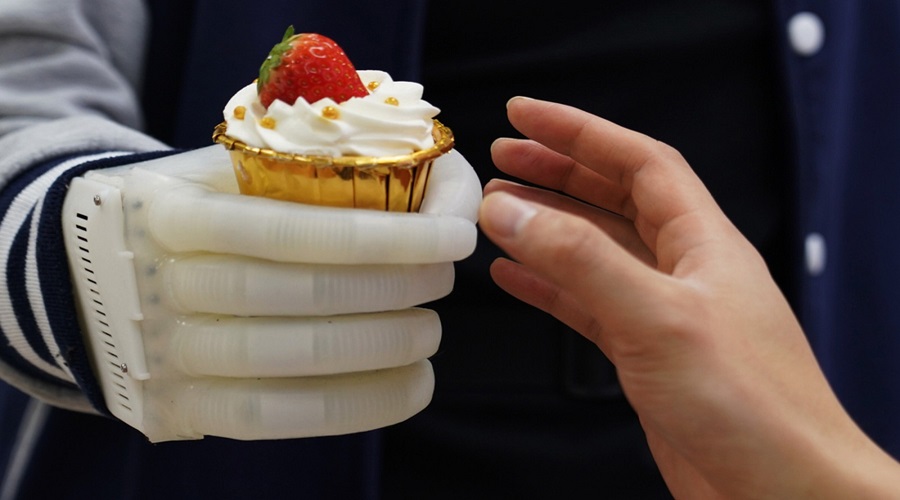
MIT's prosthetic hand can allow for a variety of movements, allowing an amputee to do things like pet a cat, pick up a carton of milk, unzip a zipper, or even pick up a cupcake. The device translates how the user wants to use it through a software program that "decodes" the EMG signals sent by the brain to an injured limb.
The prosthetic hand weighs less than half a kilo and can even restore the user's hand feeling. It does this with a series of pressure sensors. When the user touches or squeezes an object, an electrical signal is sent to a specific point on their amputated arm. Another advantage of the artificial hand is that the user can learn to use it very quickly. After about 15 minutes, two volunteers found that they could write with a pen.
See also: COVIDSafe: COVID-19 detection app continues to be used

“It’s not a commercial product yet, but the performance is already similar to or superior to existing neuroprosthetic systems, and we’re excited about it,” said Professor Xuanhe Zhao, one of the engineers who worked on the project. “There’s a huge potential for this soft prosthetic hand to come at a very low cost, for low-income families who have had an amputation.”
See also: Magnetic helmet shrinks deadly tumor in first test
This technology will take some time to reach the market for use by amputees, but the team behind the project is already working on improving the design. The researchers want to make it better at decoding electrical signals and more customizable by the time it's time for mass production.
Source: Engadget
