

Linux enthusiasts know that they can run Linux distributions on older Apple hardware , including the MacBook Air. The quality of Apple's hardware even motivated Linux creator Linus Torvalds to use the MacBook Air to run Linux in the past.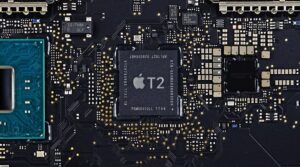
However, it seems that Apple's newer hardware is becoming increasingly hostile to Linux. With the latest T2 security chip, Apple's latest Mac Mini prevents Linux from booting, as Phoronix. So it's probably safe to assume that other newer Apple hardware will have the same effect.
As we already know, the T2 security chip verifies every step of the boot process using Apple-signed keys. In addition to UEFI Secure Boot validation, it is also used for other security-focused functions.
As Phoronix notes, the Boot Camp Assistant software, which is used to enable support for Windows, installs the Windows Production CA 2011 certificate. This certificate is used by other Microsoft partners, including Linux distributions.
However, according to T2 documentation, Microsoft Corporation's UEFI CA 2011 is currently not trusted and is the certification commonly used to verify the authenticity of boot programs for other operating systems, such as Linux variants.
One might think that disabling Secure Boot entirely would allow Linux to load, but that's not the case here. The T2 security chip still blocks operating systems other than macOS and Windows 10.
