

Cyber threats are evolving at an unprecedented rate, becoming more persistent, more automated, and more difficult to counter. Just as the fictional Skynet sent ever-more-advanced “Terminators” to complete its mission, modern cyberattacks are testing the limits of every organization’s security maturity. According to SecurityWeek, there are four main categories of cyber threats that are planning big things for the future — and every organization needs to be aware of them and prepare accordingly.
See also: Top 10 Cyber Threats in 2026 and how to protect yourself
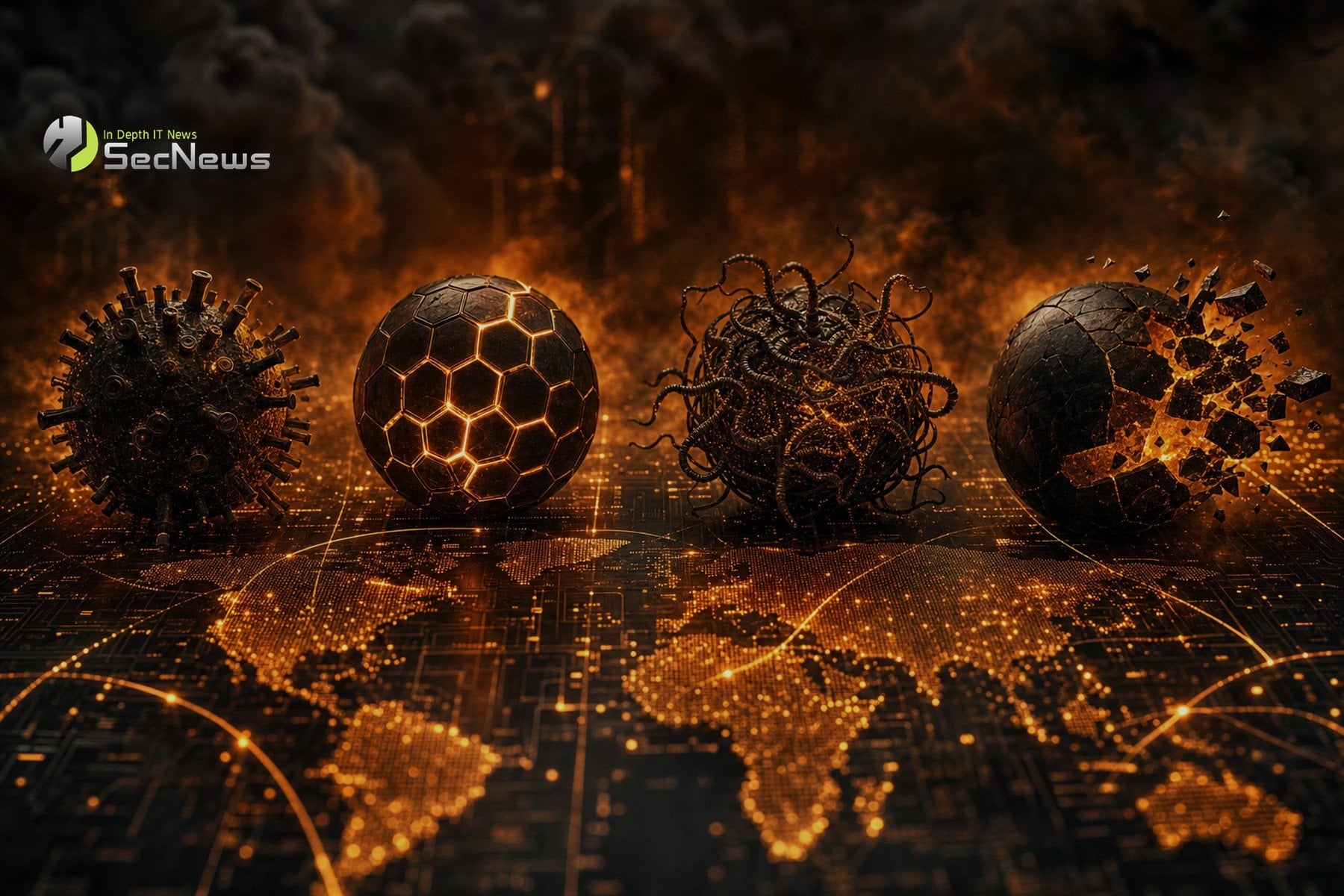
Resilience is no longer optional. It has become an evolving business imperative. Organizations that treat security as a static state — something that is “set” once and forgotten — are the ones that will find themselves most exposed to upcoming threats. Understanding the cyber threat landscape is the first step to developing an effective defense.
Cyber Threats from Artificial Intelligence: The Dual Role of AI
Artificial Intelligence (AI) plays both roles in the cybersecurity landscape — arming both attackers and defenders. On the attacker’s side, AI automates critical stages of the attack chain, such as reconnaissance and vulnerability scanning , compressing the time from discovery of a vulnerability to exploitation from days to mere hours .
Phishing emails are becoming more targeted and persuasive, as AI can analyze publicly available information about the target and create personalized messages that are almost impossible to distinguish from the real thing. Deepfakes of voice and video are reaching a level of realism that makes them extremely difficult to detect, while synthetic identities — fake profiles based on real and stolen information — are a new tool for deception.
This is not just a theoretical risk. In May 2026, fraudsters used AI-generated deepfakes to fake a Zoom, impersonating the Prime Minister of Singapore and defrauding a professional of S$4.9 million. Countering AI-driven attacks requires AI-based defenses: anomaly detection tools that spot the threat before it fully unfolds, as well as enhanced incident management for the attacks that inevitably slip past defense lines.
Cyber Threats from Third Parties and Supply Chains
A typical organization is supported by a network of vendors, cloud , and other close partners. A breach in any one of these can have a domino effect on business operations. Attackers hide behind backdoors in vendor software and exploit unmanaged applications and APIs. This software is already running within the organization’s systems, so the backdoor wears a “cloak of trust” rather than being treated as an external intrusion.
Unmanaged APIs exploit a similar opening: a vendor platform already has permission to access systems, so malicious activity through it is much harder to detect. The consequences of such an attack are not limited to the primary organization — they spread throughout the supply chain network. A typical example is the cyberattack on Australian manufacturer Mackay Sugar, which led to the closure of two factories and forced 1,300 farms to stop harvesting.
To address this category of cyberthreats, organizations must abandon the “set and forget” mentality in supplier relationships. Transparency and ongoing monitoring are essential. It is recommended to create a supplier evaluation scorecard based on the sensitivity of the data they manage, prioritize security resources for high-risk suppliers, and implement a principle of least privilege. Contracts should also include clear security clauses and measurable risk monitoring indicators.
See also: EU Cyber Resilience Act: New reporting obligations start September 11, 2026

Cyber Threats from Quantum Computers: Harvest Now, Decrypt Later
Quantum computers capable of breaking widely used public-key cryptography methods, such as RSA and ECC , are still a few years away. However, the risk of “Harvest Now, Decrypt Later” (HNDL) is already present and concerns long-lived data, such as medical records, financial information, and intellectual property. Malicious actors are already harvesting encrypted data today, with the goal of decrypting it when quantum technology matures.
The transition to post-quantum cryptography (PQC) is estimated to take 5 to 7 years for small businesses and 12 to 15+ years for large organizations. That’s because the process isn’t a simple software update installation — it requires identifying and replacing vulnerable cryptography in applications, infrastructure, hardware, and third-party dependencies. Organizations with long-lived sensitive data should start planning for the transition immediately, mapping where and how encryption is used across the enterprise.
Cyber Threats from Automated Attacks and Organizational Resilience
Beyond the three categories mentioned above, cyberthreats in general are moving towards greater automation and persistence. Botnets, ransomware-as-a-service models, and automated exploit kits allow even less skilled attackers to launch sophisticated attacks on a large scale. Automation means that the time between discovering a vulnerability and exploiting it is constantly decreasing, leaving organizations with less time to react.
Building resilience as a business goal means that organizations must invest in three areas: prevention (identifying and addressing vulnerabilities before they are exploited), detection (rapidly identifying attacks that bypass defenses), and recovery (minimizing the time and cost of recovery after an incident). No organization is completely secure, but those that invest in all three are much better prepared to face today’s cyberthreats.
See also: Insider Threats: How to protect yourself from insider threats
🔒 Protect your privacy with Proton VPN
Swiss VPN from the creators of Proton Mail — strict no-logs policy, strong encryption, and built-in NetShield that blocks ads, trackers, & malware.
- ✔ No-logs, based in Switzerland (except 14-Eyes)
- ✔ NetShield: blocks ads, trackers & malicious domains
- ✔ Covers all devices — free version available
The link is an affiliate link — SecNews may receive a commission at no additional cost to you. It does not affect the independence of our article writing.
In summary, the cyber threat landscape for the immediate and distant future is being shaped by four main factors: Artificial Intelligence , supply chain vulnerabilities, the quantum threat, and the increasing automation of attacks. The organizations that will survive and thrive in this environment are those that view security as a dynamic, ever-evolving process — not a static state that is achieved once and maintained automatically.
