

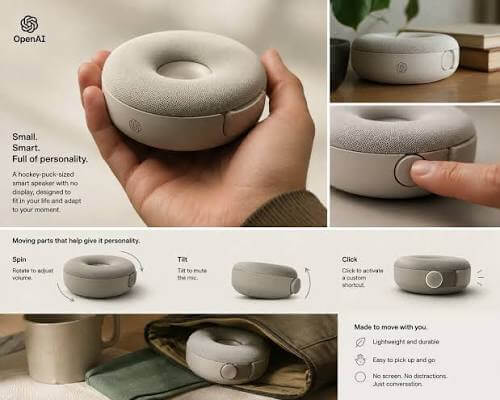
The OpenAI smart speaker , designed by OpenAI in collaboration with legendary designer Jony Ive, is starting to take shape, and the first details are impressive. According to Bloomberg reporter Mark Gurman , the device looks like a “smart speaker without a screen,” is shaped like a doughnut, is about the size of a hockey puck , and is expected to be released in 2027 with a price tag of more than $300 .
See also: Apple likely won't add Jony Ive to OpenAI trade secret theft lawsuit
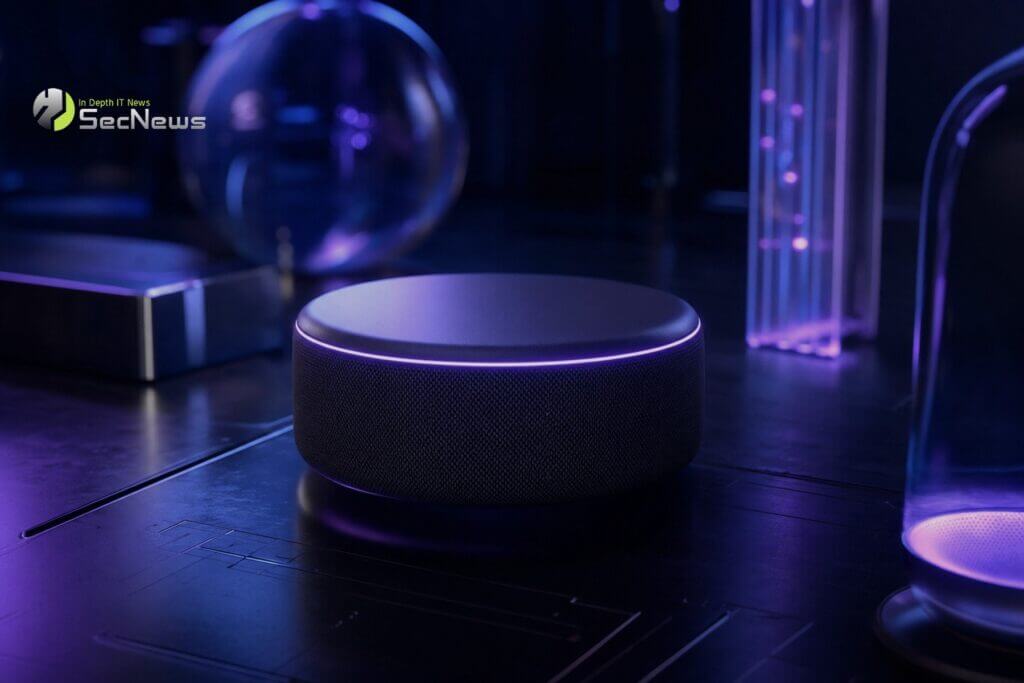
The news confirms that OpenAI is taking the big leap from software to hardware, attempting to transform ChatGPT from an app into a dedicated home device. The strategy reflects a broader trend in the AI industry: creating AI-native hardware, that is, devices where the innate AI is not just an add-on feature, but the core of the user experience. As for the OpenAI smart speaker,
The collaboration with Jony Ive, the man who designed the iPhone, iMac , and MacBook, gives the project a special weight. According to the sources, the device will not look like an Apple — despite the legal dispute between the two companies over alleged theft of metal processing techniques — but will feature premium materials and high-quality metal components. In relation to the OpenAI smart speaker,
OpenAI Smart Speaker: Technical specifications and design choices
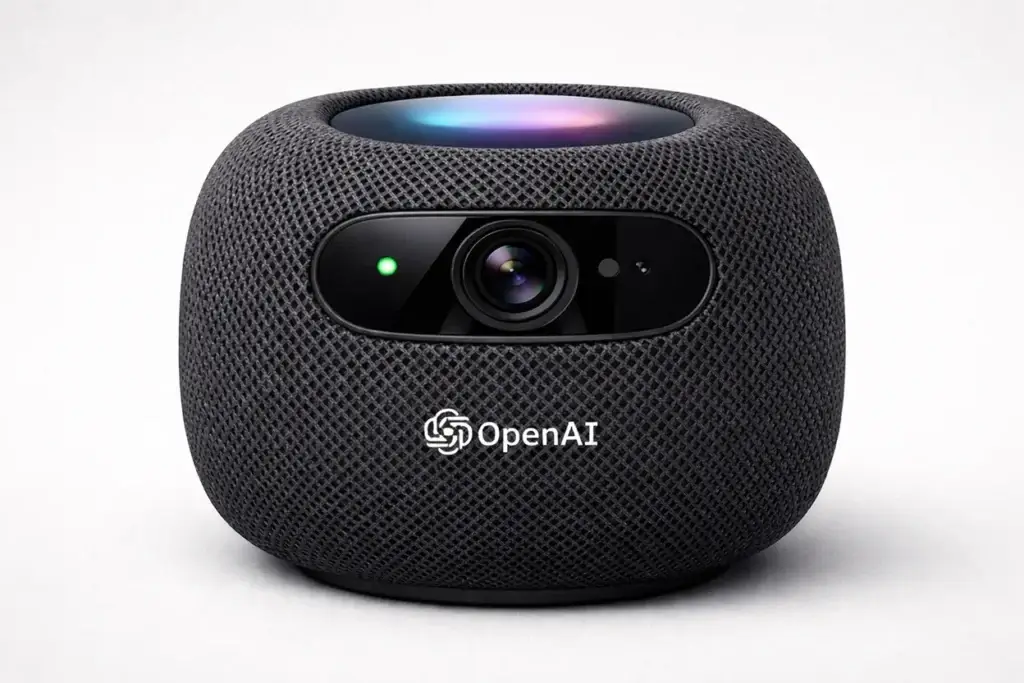
The OpenAI smart speaker stands out from existing smart speakers due to a number of innovative features. The device will feature a camera, microphones, speakers, lights , and — most impressively — moving mechanical parts that will move autonomously to indicate when the device is responding or interacting with the user. This design choice shows that OpenAI wants the device to feel “alive” and communicate nonverbally with the user.
Battery power is a conscious choice aimed at portability around the home. Gurman says the device is designed to be “easily carried around the house with one hand,” citing the now-discontinued Amazon Tap as a functional precedent. However, OpenAI ’s version aims to be much more capable, leveraging advanced AI models and sensors rather than basic voice assistants. The hockey puck -sized design — about 3 inches in diameter — ensures a small footprint. The case of the OpenAI smart speaker
In terms of functionality, the device will work “similar to the ChatGPT in smartphone apps, but with more advanced models for human interaction,” according to Gurman. This means the device won’t be limited to simple commands but will be able to conduct natural, flowing conversations, understand context, and respond in a way that feels more human than today’s assistants. Regarding the OpenAI smart speaker,
See also: OpenAI Smart Speaker: The first hardware without a screen
OpenAI Smart Speaker vs. Amazon Echo, Google Nest, and Apple HomePod
The OpenAI smart speaker enters a market already dominated by the Amazon Echo , Google Nest , and Apple HomePod . However, those products are based on older models of assistants, while OpenAI is aiming for an AI-native experience — more like a proactive conversational companion than a traditional speaker. The inclusion of a camera and environmental sensors suggests the device will be context-aware and respond with more “personality” than typical smart speakers.
Pricing at $300–400 places the device in a premium category, well above most mainstream smart speakers. This signals that OpenAI isn’t competing on low-cost hardware; instead, it’s looking to create a high-margin flagship device that justifies its price through advanced AI and exceptional design. If Jony Ive and his team produce something that stands out aesthetically, the device could sway the entire market toward more sculpted, premium AI hardware. In the context of the OpenAI smart speaker,
For competitors, OpenAI into hardware increases the pressure on Amazon, Google , and Apple to improve their own assistant experiences. A premium OpenAI could redefine expectations for what a smart speaker should do, especially if it offers better conversation quality than older assistants.
The strategic importance of this move for OpenAI is enormous. Moving from software to integrated hardware is more difficult, more expensive, and more risky. However, success would give OpenAI a direct consumer device channel and potentially stronger control over the user experience. Several reports suggest that this device could be the first of a larger “family of devices” OpenAIis building, marking the first move in a broader consumer product ecosystem strategy.
See also: OpenAI: Is it negotiating with Jony Ive for a Hardware Project?
The biggest questions that remain unanswered are whether consumers will pay $300+ for a screenless assistant, and whether the AI experience will be substantially better than what they already have on their phones or smart speakers. There’s also no confirmation yet on battery life, processor type, production volume, or subscription pricing that will be tied to the hardware. If OpenAI can make the device feel truly “alive” and context-sensitive, it could be an early example of the next phase of consumer AI hardware: devices designed less as tools you manipulate and more as systems you constantly talk to. The official launch is expected to bring many more revelations before its 2027 launch.
