

Denmark has accused Russia of major cyberattacks on the country over the past two years. According to the Defense Intelligence Agency , Russia has carried out attacks on critical infrastructure and public websites, with some incidents now being revealed for the first time.
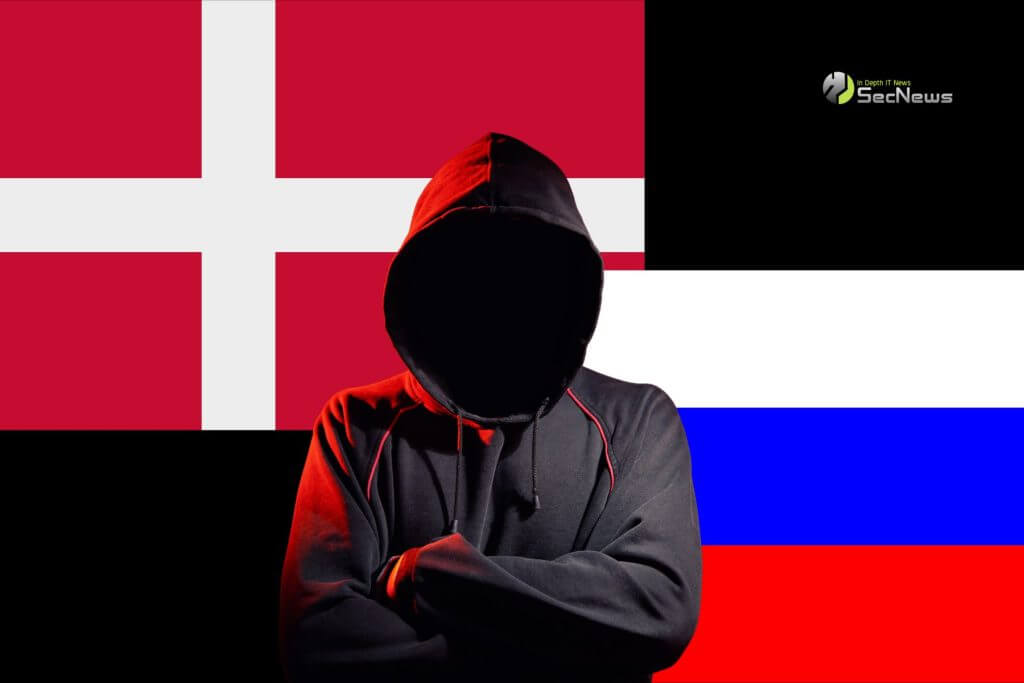
The report describes an escalating cyber threat that is not limited to espionage, but is clearly destructive and destabilizing in nature.
Attack on a water company and problems in everyday life
The report of a "catastrophic" cyberattack against a water company in 2024 . According to information released by public broadcaster DR, the attack resulted in pipes bursting, leading to a temporary interruption of water supply to homes.
See also: Hackers attacked the British government
Authorities attribute the attack to the pro-Russian group Z-Pentest, which allegedly interfered with water pressure control systems. The incident occurred near the city of Køge, about 35 kilometers south of Copenhagen, and highlighted in the most tangible way how a digital attack can have direct physical consequences.
Cyberattacks ahead of elections
Meanwhile, Danish authorities have recorded a series of denial-of-service (DDoS) attacks on government and public websites, shortly before regional and local elections last month. The attacks aimed to flood websites with traffic, making them temporarily inaccessible.
The NoName057(16), group which according to intelligence agencies also has ties to the Russian state , is considered responsible for these actions . The attacks, although they did not alter the election result, were clearly intended to disrupt the process and create doubts about the smooth conduct of the elections.
See also: LongNosedGoblin hackers use Windows Group Policy for attacks

Hybrid warfare and destabilization strategy
The Danish Defense Intelligence Agency has described the incidents as part of Russia's so-called " hybrid warfare " against the West. It says the cyberattacks are part of a broader campaign to undermine and punish countries that support Ukraine after its 2022 invasion.
The aim, according to the assessment, is not only to put pressure on governments, but also to create a sense of insecurity among citizens, as well as to test the strengths and weaknesses of European states.
"We are not adequately prepared," the government admits
Denmark's Minister for Resilience and Preparedness, Torsten Sack Pedersen, admitted that while material damage was limited, the impact of the attacks was severe. He told a press conference that the incidents show that there are forces capable of "closing down significant parts of society."
He added that these events reveal that Denmark is not yet sufficiently equipped to deal with such threats, opening the discussion on strengthening cyber defense and better coordination between state agencies.
See also: University of Sydney: Student and staff data breach

A pan-European pattern of attacks
The Danish incidents are part of a broader European pattern. According to an Associated Press database, there have been at least 147 incidents of sabotage and cyberattacks in European countries attributed to Russia. Many of these are not immediately made public, and it often takes months for a connection to Moscow to be proven.
🔒 Protect your privacy with Proton VPN
Swiss VPN from the creators of Proton Mail — strict no-logs policy, strong encryption, and built-in NetShield that blocks ads, trackers, & malware.
- ✔ No-logs, based in Switzerland (except 14-Eyes)
- ✔ NetShield: blocks ads, trackers & malicious domains
- ✔ Covers all devices — free version available
The link is an affiliate link — SecNews may receive a commission at no additional cost to you. It does not affect the independence of our article writing.
Similar concerns are being expressed in Germany, where authorities summoned the Russian ambassador to Berlin in December over allegations of cyberattacks, sabotage and election, including a 2024 attack on German air traffic control.
Cybersecurity as a national defense issue
These developments demonstrate that cyberspace has become a modern conflict zone, where the boundaries between war and peace are increasingly blurred. For European countries, protecting digital infrastructure is no longer just a matter of technology, but a critical issue of national security and social stability.
