

Chinese hackers are reportedly targeting critical infrastructure in Australia.
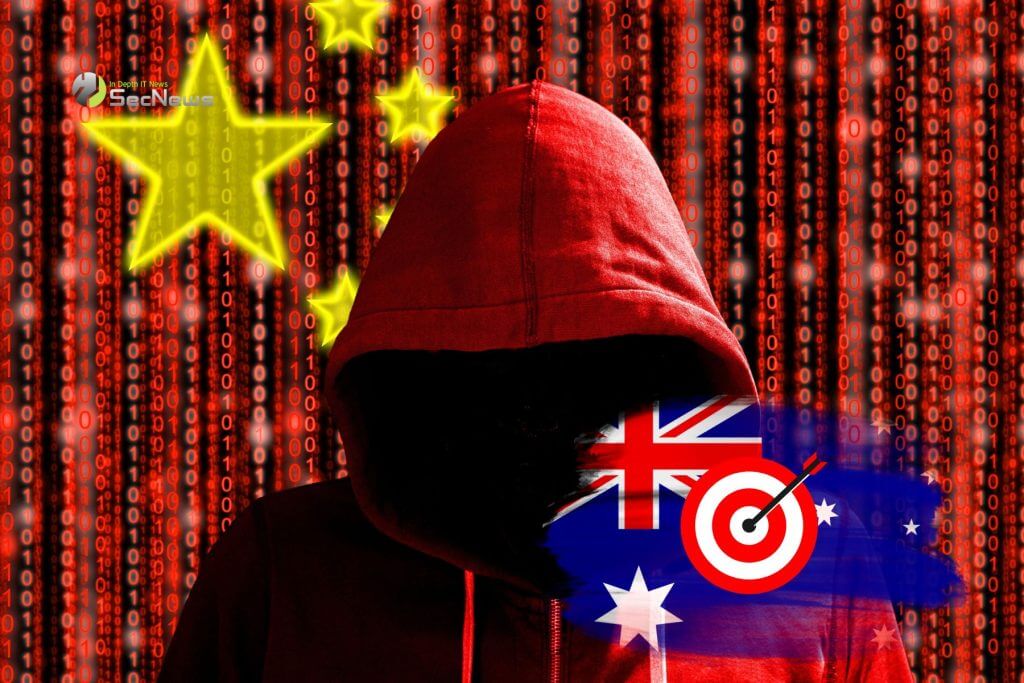
Australia is being targeted by organised hacking groups backed by China , aiming to infiltrate and control critical infrastructure such as energy, water and telecommunications, the country's intelligence chief Mike Burgess has revealed , raising concerns about the security of national systems.
"Shadows" in cyberspace: Chinese hackers have already gained access
Speaking at a cybersecurity conference in Melbourne, Burgess warned that at least two state-backed Chinese groups, known as Volt Typhoon and Salt Typhoon, have infiltrated networks of strategic importance and may have gained access to critical infrastructure.
The revelation came just weeks after similar statements from the United States, which accused Beijing of attempting to install malicious software on critical networks for years — software that can be activated whenever Chinese authorities deem it necessary, causing widespread disruptions and social unrest.
See also: Synnovis: Data breach following ransomware attack
"I don't think we've realized how devastating this could be," Burgess said. "Once hackers gain access, what happens next is a matter of intent, not capability."
Volt Typhoon: The digital threat to energy and transportation infrastructure
The Volt Typhoon group , according to information from Australian services, has focused on penetrating energy, water and transportation networks , trying to gain internal knowledge about the systems' operations.

According to the US NSA and FBI, these hackers have spent years planting malware inside critical infrastructure in Western countries, with the aim of disrupting the West's response in the event of a conflict in the Indo-Pacific region — especially in the event of a Chinese invasion of Taiwan.
Australia is a natural target for these operations, as it has strategic energy and telecommunications that support the American presence in the Pacific.
Salt Typhoon: The "invisible" enemy of telecommunications
The second group, known as Salt Typhoon, targets phone and internet companies. The FBI has linked the group to breaches at more than 200 companies around the world — including giants like AT&T, Verizon , and Lumen.
The attacks aim to steal call logs, subscriber data and information about online activity. With this data, hackers can map personal contact networks or even identify government, military and high-tech executives.
See also: Active Directory: Critical infrastructures need stronger security

Burgess warned that similar attempts have already been recorded in Australia, targeting the country's telecommunications infrastructure. Similar incidents have also been confirmed in Canada, reinforcing the assessment that this is a global cyber espionage campaign.
International alarm: Democracies unite their defenses
The warning from the head of Australia's intelligence agency comes at a time of heightened geopolitical tension. The US, Britain and Australia have already launched coordinated cyber defence actions, while strengthening their cooperation through the Five Eyes Alliance, the international intelligence-sharing coalition.
🔒 Protect your privacy with Proton VPN
Swiss VPN from the creators of Proton Mail — strict no-logs policy, strong encryption, and built-in NetShield that blocks ads, trackers, & malware.
- ✔ No-logs, based in Switzerland (except 14-Eyes)
- ✔ NetShield: blocks ads, trackers & malicious domains
- ✔ Covers all devices — free version available
The link is an affiliate link — SecNews may receive a commission at no additional cost to you. It does not affect the independence of our article writing.
China , for its part, categorically denies accusations of state support for hackers, calling them “Western propaganda.” However, incidents of cyberattacks with characteristics identical to the tactics of Chinese groups continue to increase.
The new era of cyberwarfare
Burgess's statements are not just a warning; they are a wake-up call for all countries that rely on networked infrastructure. Digital warfare is no longer limited to data theft or espionage — it is evolving into a tool of geopolitical pressure with the potential for real destruction.
If a state loses access to its energy or water grid, the consequences can be as severe as a physical attack. As Burgess famously put it, “intent is the only thing that separates surveillance from disaster.”
See also: CISO guide to supply chain attacks using AI

The next day for Australia
The Australian government plans to strengthen cybersecurity protocols, investing billions of dollars in detection, training and defense programs, while increasing cooperation with the United States to create a digital shield to protect critical infrastructure from state-sponsored threats.
The message is clear: the next war will not be fought on battlefields, but on the servers, cables, and networks that connect modern societies.
