

Academics from an Israeli university published new research today detailing a technique for converting a RAM card into a makeshift wireless transmitter and transmitting sensitive data through a device without any connection to a local or other network (air-gapped device) that does not have a Wi-Fi card.
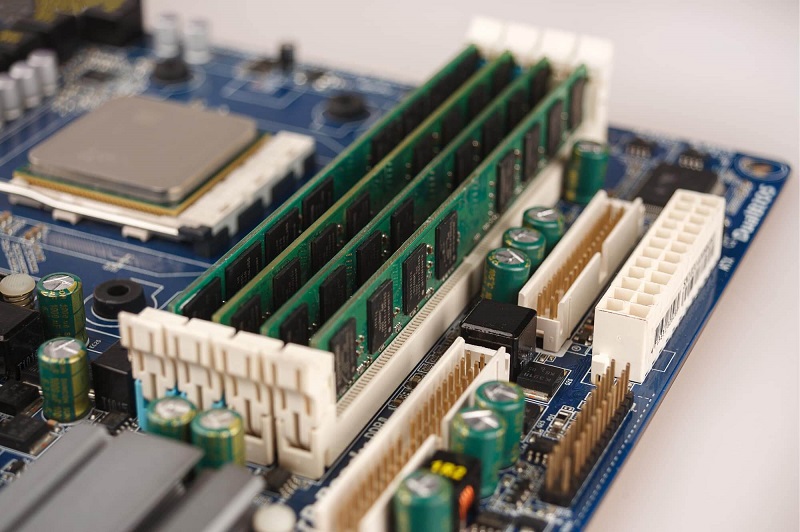
Called AIR-FI, this technique is the work of Mordechai Guri, head of the Ben-Gurion University of the Negev, in Israel.
Over the past half decade, Guri has led dozens of research projects that investigated data theft through unconventional methods from systems without any connection to a local or other network (air-gapped systems).
These types of techniques are what security researchers call “covert data exfiltration channels.” They are not techniques for breaking into computers, but techniques that can be used to steal data in ways that users don’t expect.
Such data exfiltration channels do not pose a risk to normal users, but they are a constant threat to administrators of air-gapped networks.
Air-gapped systems are computers isolated on local networks without external access to the internet. Air-gapped systems are often used in government, military, or corporate networks to store sensitive data.
At the core of the AIR-FI technique is the fact that every electronic component produces electromagnetic waves as electrical current passes through it.
Since Wi-Fi signals are radio waves and radio is electromagnetic waves, Guri argues that malicious code placed in an “air-gapped system” by attackers could manipulate the electrical current inside the RAM card to create electromagnetic waves at a frequency consistent with the normal Wi-Fi signal spectrum (2.400 GHz).
In his research paper, titled “AIR-FI: Generating Covert WiFi Signals from Air-Gapped Computers,” Guri shows that perfectly timed read-write operations on a computer’s RAM card can cause the card to emit electromagnetic waves that are consistent with a weak WiFi signal.
This signal can then be received by anything with a Wi-Fi antenna near an “air-gapped system,” such as smartphones, laptops, IoT devices, smartwatches, and more.
Guri says he tested the technique with different air-gapped computer platforms, where the Wi-Fi card was removed and was able to leak data at speeds of up to 100 b/s to devices several meters away.
Guri, who has investigated dozens of other hidden data exfiltration channels in the past, said the AIR-FI attack is one of the easiest, as the attacker does not need to gain root/admin privilegesbefore executing an exploit.
Information source: zdnet.com
