

Security researchers have shown how hacked/fake license plates could be used to confuse autonomous cars – causing them to crash or brake abruptly.
Autonomous driving systems have seen a rise in recent years, but not without mistakes, confusion, and accidents.
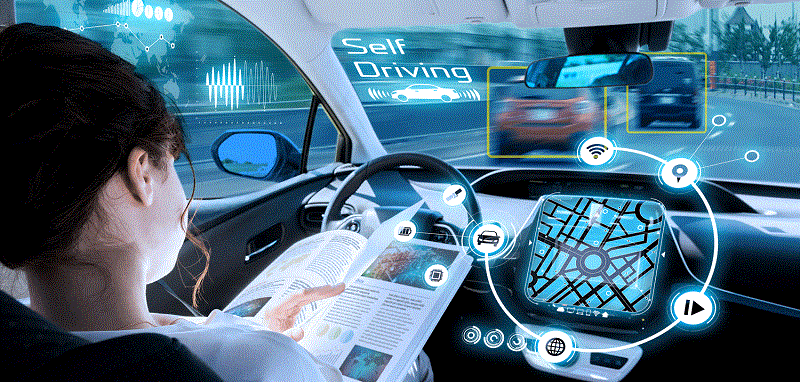
Vehicle intelligence has a long way to go before it is considered fully autonomous and safe to use without the supervision of a human driver, and as tech companies continue to improve their platforms , the focus tends to be on weather conditions, mapping, and how cars should respond to dangerous objects – such as people on the road or other cars.
However, as Wired reported, there may be other, invisible dangers that humans cannot detect with the naked eye.
New research conducted by academics from Ben Gurion University in Israel suggests that so-called "ghost" images - such as a stop sign that might appear on an electronic billboard - could confuse AI and trigger specific actions or movements.
This could not only cause traffic jams but also more serious road accidents, with hackers leaving little evidence of activities – and leaving drivers puzzled as to why their smart vehicle suddenly changed its behavior.
Fake signs displayed on an electronic billboard could cause “cars to brake or crash,” said security researcher Yisroel Mirsky.
The tests were conducted in a vehicle using the latest version of Tesla Autopilot and MobileEye. According to Wired, a fake stop sign that appeared for 0.42 seconds fooled the Tesla, while just 1/8 of a second was enough to fool MobileEye.
