

MIT researchers have developed a robot gripper with the ability to handle very thin objects such as ropes and cables , according to a statement.
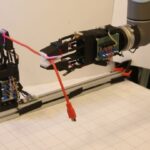
Specifically, the new type of robotics is being developed at the Computer Science and Artificial Intelligence Laboratory (CSAIL) at the University of Massachusetts, and as MIT announced, it will be able to distinguish tangled cables.
For many people, manipulating thin, flexible objects , and something similar may be “nearly impossible” for robots, Rachel Gordon, an MIT spokeswoman, said in an email.
The basic approach for this technologywas for robots to use a "series of slow and gradual movements," in combination with mechanical components, to manipulate small objects.
The researchers , however, preferred to approach the problem from a different angle. They decided to build a two-finger gripper, so that it looks more like a human hand. These fingers are equipped with high-resolution touch sensors , also known as “ GelSight ” sensors, made of rubber, with built-in cameras , and are placed on the robots’ movable arms. The system has two controls: one adjusts the grip force, and the other adjusts its position to hold the cable.
According to the MIT spokesperson, it is difficult for robots to handle cables because the task requires gentle movements and gliding, while at the same time not letting the cable fall from the two fingers. In tests, the gripper was able to do things like find the end of a headphone cable and connect them.

Of course, there's still a lot of work to do before the robot can handle all the USB, and it had trouble pulling back a cable when it reached the end of a finger, which is attributed to the GelSight's curved outer surface. Now the MIT researchers are working to adjust the shape of the finger sensor and improve the robot's performance.
One day this technology could be used by robots to perform household chores like hanging clothes, or for more technical purposes like wiring.
