

 The idea of the possibility of transferring the memory of a living organism to another appears inspired by a science‑fiction movie. Yet, it is not entirely impossible to happen.
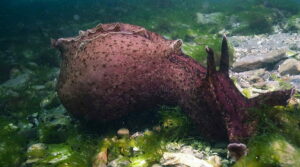
A new study conducted by scientists at the University of California, Los Angeles, proves that it is possible to transplant memories into another sentient being. Specifically, they took a simple form of memory from a sea snail and successfully implanted it into another.
The brain of many marine organisms functions like the brain of mammals, although in a simpler way. Thus marine snails were chosen as the test subject for this experiment, as they transmit neural stimuli just like humans.
Researchers of genetic information) extracted from snails that underwent specialized training, into snails that did not receive the same training.
In this training, the snails received a small electric shock to their tails. The electric shock was not dangerous, but it had enough intensity to trigger a defensive reflex, like those we humans exhibit when we feel something warm touching us.
The trained snails «rolled» for about 40 to 50 seconds as learning a defensive response to the stimulus, while the snails that had not been trained accordingly rolled for only a few seconds.
But after transplantation of RNA molecules, the untrained snails exhibited the same defensive reaction when they were subjected to the stimuli. They remained curled up for about 40 seconds, as if they knew how they should respond.
This proves that memories are physically stored in the body and can be transferred or modified. It also debunked another long-held scientific theory that memories are stored in synapses (a junction between 2 neurons, consisting of a small gap through which impulses pass), as if memory were indeed stored in synapses, this experiment would not have worked. The experiment also revealed that RNA plays an active role in how memories are stored.
However, the experiment was simple and dealt with basic answers. It will certainly take a considerable amount of time before scientists are able to find methods for transferring complex memories to people.
