

Google announced in an official blog post on Thursday that the “Secure” indicator that appears in the URL of websites will be removed starting in September. The move comes as the Web gradually transitions to adopting HTTPS as the default security protocol .
Starting with Chrome version 69, which is due to be released in September, websites using HTTPS will no longer have the Secure indicator in the address bar.
Also, websites that continue to use HTTP will have a ‘Not Secure’ indicator in gray color. When a user enters text in an interactive form (e.g., entering email), the indicator will turn red as a warning about the risks the website entails.
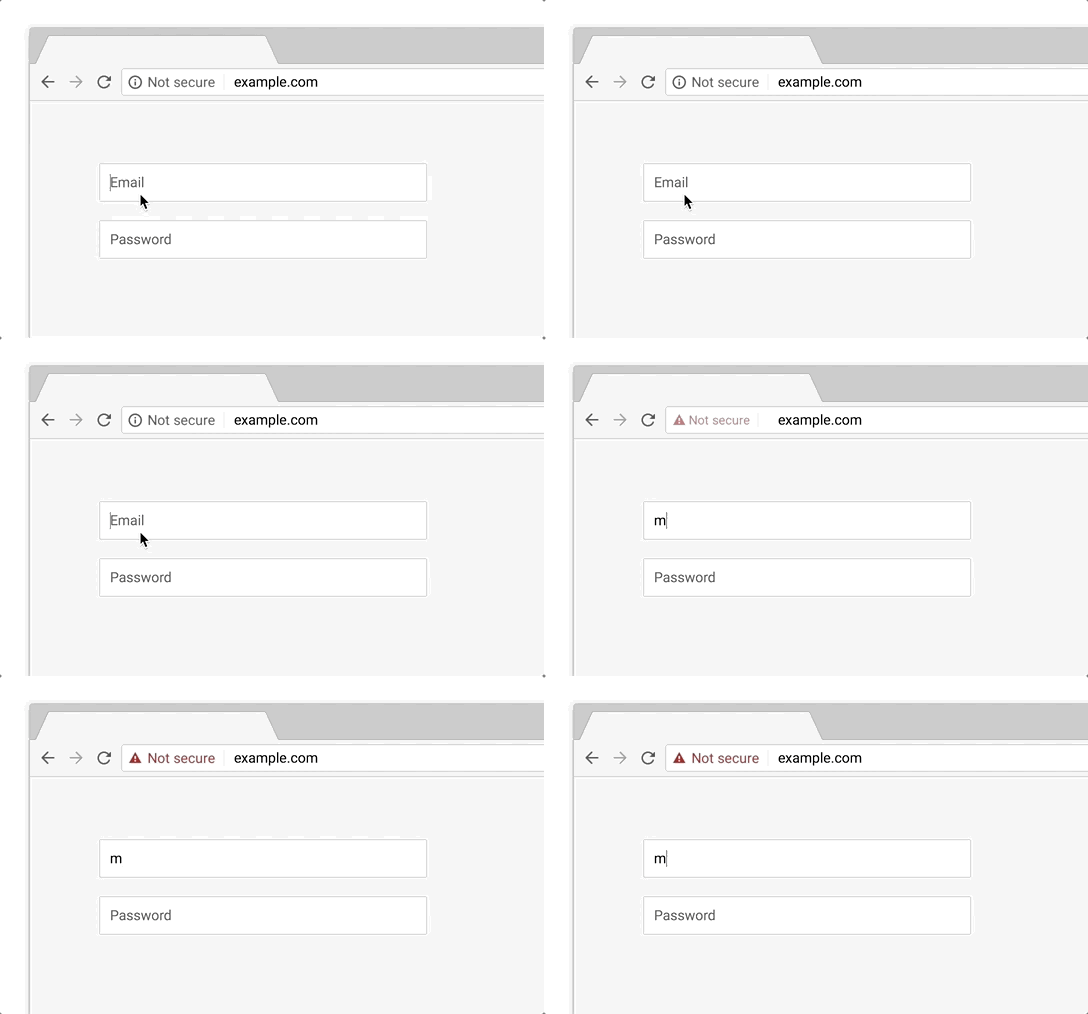
These changes will start in October with the release of Chrome 70. Since acquiring HTTPS became much cheaper and easier nowadays, such changes had to be made.
A quick overview of HTTP and HTTPS
HTTP stands for HyperText Transfer Protocol and HTTPS stands for HyperText Transfer Protocol Secure. Both protocols are used as a basis for sending data from your browser and connecting to any website. HTTPS is considered more secure compared to HTTP, due to the encryption of data by Transport Layer Security (TLS).
This announcement is part of Google's 100% HTTPS program, which aims to load all sites on Google via HTTPS.
