

Android, 18 years after its first release, reveals a different era for smartphones: the physical keyboard, the small screen, and an operating system that was already trying to make room for customization. A new look back at Android 1.0 to see what it promised and what changed along the way.

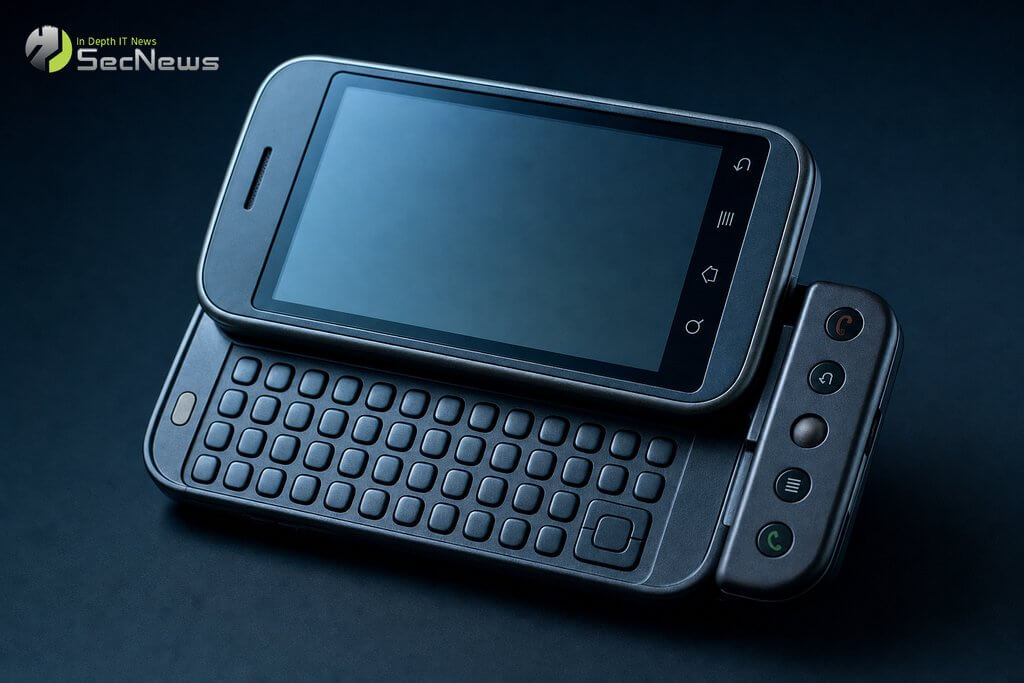
on September 23, 2008, alongside the HTC Dream, known in the US and parts of Europe as the T-Mobile G1. The platform's first phone had a 3.2-inch display and a slide-out physical keyboard, features that today seem far removed from the image of a modern smartphone.
Android Police 's look back isn't limited to old photos. The editor downloaded the original 2008 development kit and booted up Android 1.0 on a Windows 11 laptop, searching for the features that gave the platform its later direction.
Android 18 years and the physical keyboard
The Android 1.0 home screen was simple. A large analog clock dominated a lake background, while the user could move icons and choose from 18 available images. Three backgrounds were created by Dale Chihuly, John Maeda, and Marc Ecko, but the default clock could not be replaced.
This limit is particularly interesting because Android has been pushing the idea of widgets since day one. Android 1.5, released in April 2009, removed the original clock from the home screen and added a framework that allowed third-party developers to create their own widgets.
See also: iMessage app for Android returns to Google Play Store
From Android Market to the virtual keyboard
Android 1.0 already included the Android Market, before Google adopted the name Play Store. The choice of the word "Market" expressed the intention for an open environment, where developers could distribute applications and content without the image of a tightly controlled shelf.
The evolution didn't stop with the initial release. The physical keyboard remained a core part of the experience, but quick updates began to bring more features to the screen. Android 1.1 brought fixes to maps and an email client for users who didn't want to rely on Gmail. Then, Android 1.5 added a virtual keyboard, support for text input in more languages, and a dictionary that learned the user's words.
The move from physical to virtual keyboards wasn’t just a design change. It made the software part of the device itself and allowed manufacturers to experiment with new screen ratios. With the virtual keyboard, manufacturers were no longer forced to design every device around a physical keyboard. This change paved the way for different shapes and larger screens, while widgets made the home screen more personal and useful.
See also: Android SDK: Leaking user location to advertisers

Android 18 years and accessibility from an early age
Android 1.6, released in September 2009, took another step in this direction. The version combined on-device and web search, added voice interaction, and included a screen reader and text-to-speech engine for accessibility services.
The retrospective also looks at which features endured and which were quietly removed. The original clock is a clear example: it started out as a centerpiece, but fell into disuse when Google gave developers the tools for more flexible home screens.
See also: Flying Eagle Android RAT: Traces on 170 servers

Android , 18 years after its first release, doesn't resemble the operating system of the HTC Dream, but the basic idea remains recognizable: a phone that can adapt to the user. Looking back, Google didn't just start with an answer to the iPhone, but with a platform that had a specific direction from the beginning.
