

For years, the conversation around artificial intelligence has focused on large language models, supercomputers, data centers, and the companies developing the most advanced AI platforms. But today, the technology is even starting to affect products we use every day, from shampoo and shower gel to cookies and chocolates.
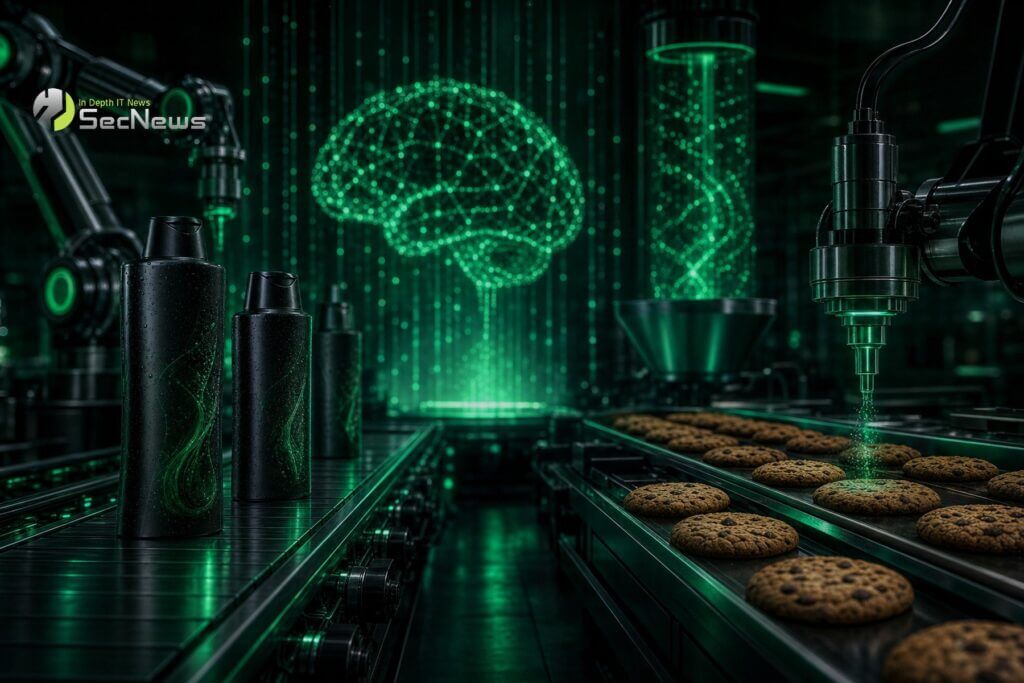
The largest multinational consumer goods companies are now leveraging artificial intelligence not only to automate processes, but also to design new products, create formulations, analyze consumer behavior and design advertising campaigns. AI is thus becoming one of the most important research and development tools for an industry that until recently relied mainly on the experience of scientists and months of laboratory testing.
Procter & Gamble accelerates new product development
One of the most prominent examples comes from Procter & Gamble, one of the largest manufacturers of personal care products in the world.
See also: Samsung heads for 18x profit growth as demand for AI memory grows
The company revealed that it used artificial intelligence systems to develop a new Pantene product formula. Instead of testing thousands of possible combinations of ingredients exclusively in the lab, the AI analyzed tens of thousands of peptides and tapped into an internal database of more than 8,500 different formulas.
In this way, researchers could predict in advance characteristics such as texture, feel on the skin or hair , and the potential performance of a formula, without requiring physical preparation of each candidate product.
The result is significant savings in time and resources, as only the most promising compounds advance to the next stages of testing.
AI brings new foods to market faster
Mondelez , the global conglomerate behind popular brands of cookies, chocolate and snacks, is following a similar strategy . According to the company, artificial intelligence tools allow product development scientists to create dozens of new recipes in a much shorter period of time . Design processes are now two to five times faster compared to traditional methods.
At the same time, the same systems are also utilized in the marketing department, where AI produces personalized images, videos and advertising texts, adapted to different common and digital communication channels.
This capability allows companies to test many different campaigns simultaneously and adjust their content in near real-time.
See also: Alpha School: Rich people pay $75,000 for AI training

From the lab to social media
Unilever is another prime example of the new era. The company leveraged artificial intelligence in its Dove campaign , which partnered with the well-known American chain Crumbl to create cookie-scented body care products.
AI was used at every stage of the process: from analyzing consumer trends and product design to selecting influencers, creating advertising material , and optimizing social media visibility.
According to the company, the campaign recorded billions of views, while attracting a large number of new consumers to this product line. The example shows that artificial intelligence is no longer limited to content production, but is integrated into the entire chain of development and promotion of a product.
Reducing time becomes a competitive advantage
The most important benefit for companies is not necessarily the creation of groundbreaking products, but the drastic reduction in development time.
Traditionally, creating a new formula required months of lab testing, evaluations, and production of trial batches. Similarly, a major advertising campaign required weeks of collaboration between creative teams, photographers, designers, and advertising agencies.
AI allows for the automation of much of these processes, reducing both the cost and the time it takes for a new product to reach store shelves.
In a market where consumer trends change at a rapid pace, the ability to adapt more quickly can be a decisive competitive advantage.
Challenges remain
Despite the optimistic predictions, many experts are wary of the claims made by big companies. Most information about the performance of AI systems comes from the companies themselves, who have every reason to present their investments as particularly successful.
Furthermore, the final evaluation of a product is still carried out by humans. Dermatological tests, taste evaluations and consumer surveys remain necessary before a new product is commercially available.
Correspondingly, in marketing, several creative professionals argue that content produced exclusively by AI often lacks the authenticity and distinctive identity that a successful campaign requires.
See also: SkillCloak: Malicious AI Skills bypass scanners

Will the future of consumer products be designed by algorithms?
Despite the caveats, the direction of the market seems clear. Investment in artificial intelligence tools is constantly increasing and more and more companies are integrating AI assistants and specialized AI agents into their daily operations.
For consumers, the changes will likely not be immediately visible. What they will see are more product variations, faster line renewal, more personalized advertising, and products that respond more quickly to new market trends.
But behind every new shampoo, chocolate bar or detergent, the role of artificial intelligence is becoming increasingly important. AI is gradually becoming an “invisible partner” in research, development and marketing departments, changing the way the products we use every day are designed, tested and promoted. Consumers may not immediately perceive this transition, but decisions made behind closed laboratory doors are now increasingly based on data, algorithms and artificial intelligence models rather than solely on human intuition.
