

Google has taken one of its most significant steps in artificial intelligence by introducing Gemini Spark , a new personal AI agent that aims to fundamentally change the way users interact with digital services. The announcement was made at the Google I/O 2026 developer conference and marks the company's strategic shift towards "persistent" digital assistants that operate autonomously, even when the user is not in front of a computer or mobile phone.
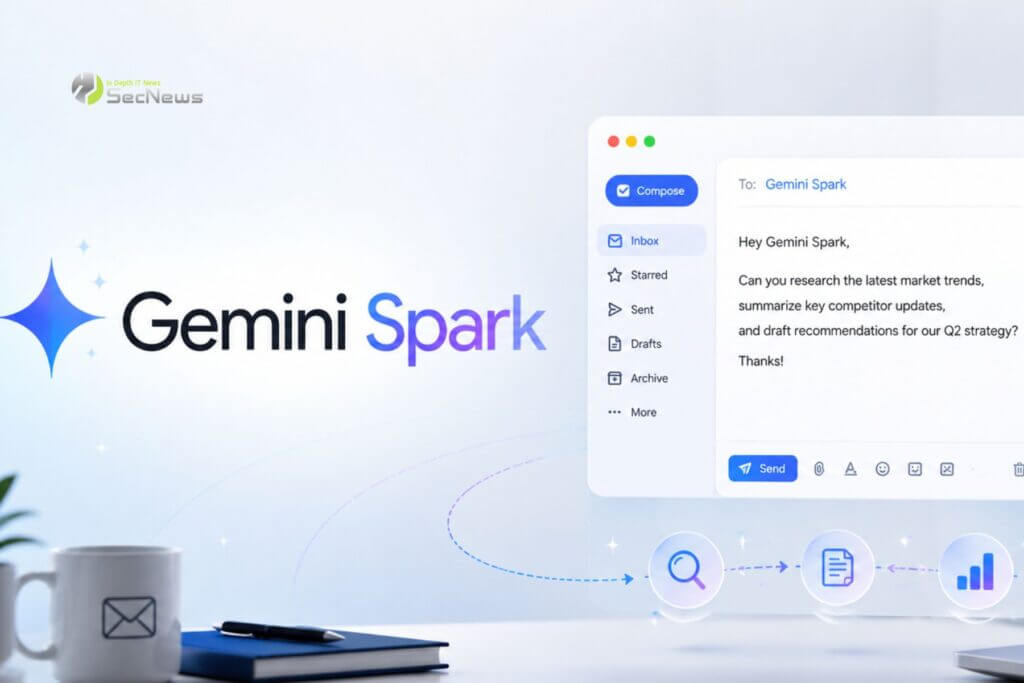
Unlike today's AI chatbots that wait for commands in real time, Gemini Spark was designed as a constantly active AI agent, capable of performing tasks in the background 24 hours a day. Users can assign tasks to it via a dedicated Gmail address, just as they would email a coworker or office assistant.
Google describes Spark as the most advanced personal AI assistant it has developed to date, emphasizing autonomous operation, deep integration with the company's services, and the ability to handle complex everyday tasks.
See also: Googlebook: A new AI laptop based on Gemini
Gemini Spark: An AI agent that runs permanently in the cloud
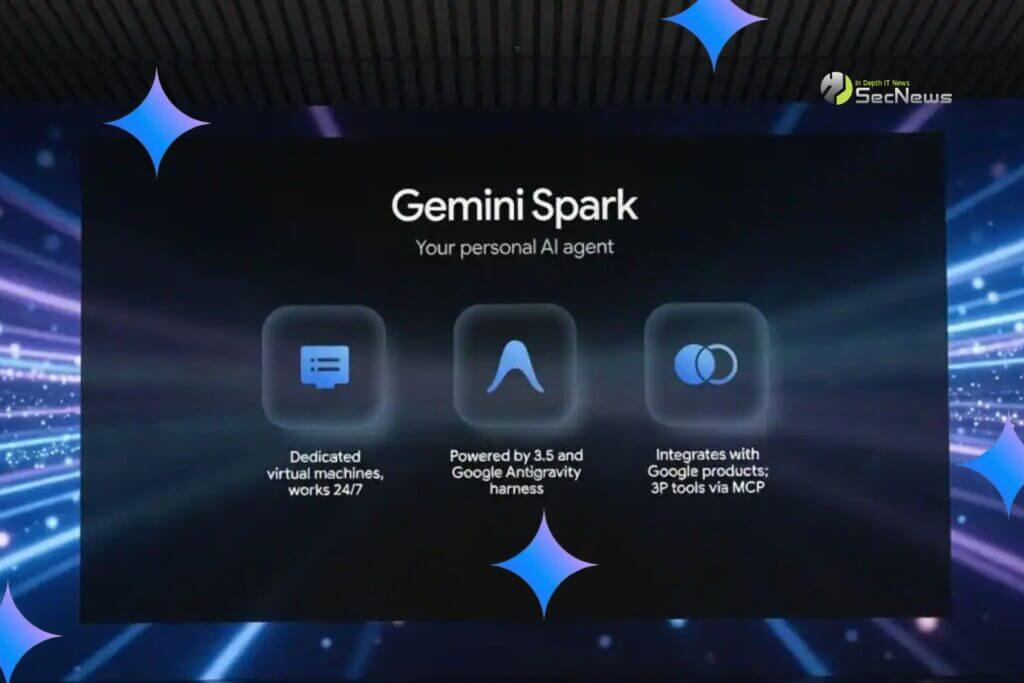
Gemini Spark is based on the new Gemini 3.5 and leverages the Antigravity agent, Google's advanced framework for developing autonomous AI agents. Most importantly, the agent does not run locally on the user's device, but on dedicated virtual machines in the Google Cloud.
This means it can continue working even when the computer or mobile phone is turned off. The user can assign Spark to organize meetings, search for information on the web, write reports, collect data or monitor specific tasks without constant human intervention.
Google CEO Sundar Pichaidescribed Spark as "a personal AI agent that helps users navigate their digital lives," confirming that the company sees AI agents as the next big step after chatbots.
Gmail is becoming an artificial intelligence control center
One of the most impressive features of Gemini Spark is its direct connection to Google's ecosystem of services. The user can send an email to the agent via a special Gmail address, giving them instructions or new tasks.
Spark has access to Gmail, Google Docs, Calendar, Drive, and other Workspace services without requiring complex third-party app connections. This integration gives Google a huge competitive advantage, as it can leverage its entire app ecosystem as a single AI platform.
On a practical level, the agent can analyze emails, schedule meetings, create presentations, summarize documents , or monitor projects in a way reminiscent of a full-time personal assistant.
See also: Gemini AI comes to Google Maps for CarPlay
Google seems to be aiming for something more than a simple chatbot: a digital "partner" that understands the user's work environment and interacts with its services without constant guidance.

Android Halo: The mobile as a dashboard for AI agents
The company also announced Android Halo, a new notification system that will be integrated into Android 17 and will allow users to monitor Spark's actions in real time.
Halo will display live updates at the top of the screen, essentially turning the smartphone into a management center for AI agents. Users will be able to see task progress, notifications for task completion, and actions taken by the agent in the cloud.
This move shows that Google does not treat artificial intelligence as an isolated application, but as an organic part of the operating system itself.
The war of AI agents is escalating
The announcement of Gemini Spark comes at a time when tech giants are aggressively investing in the development of autonomous AI assistants. OpenAI has already integrated ChatGPT and Codex into an agent-based platform, while Anthropic is developing Claude Cowork, which can control desktop environments on behalf of the user.
At the same time, Salesforce is transforming Slack into an AI agent platform, integrating dozens of new automation features.
But Google believes it has a critical advantage: it controls Android, Chrome, Gmail, and Google Cloud all at once. This allows Spark to operate with much less friction than competing agents that rely on APIs and external connections.
The new era of personal artificial intelligence
Gemini Spark is already being tested internally by Google and is expected to be released in beta form to Google AI Ultra subscribers in the United States.
The company also announced a significant price reduction for its AI Ultra service, from $250 to $100 per month, offering increased usage limits, 20TB of storage space, and access to YouTube Premium.
See also: Google Home Gemini 3.1: New complex command capabilities
Analysts predict that the battle for AI agents will define the next decade of technology. Until now, chatbots have functioned primarily as conversational tools. With products like Gemini Spark, artificial intelligence is now entering a new phase where it can operate autonomously, take initiative, and perform real tasks in the background.
The question now is not whether AI agents will become part of everyday life, but how quickly users will trust artificial intelligence to operate autonomously on their behalf.
