

According to new research, the catastrophic collision that created the Moon—one of the most defining moments in Earth's early history—may not have been caused by a distant "invader," but by a sister planet that developed next to Earth, known as Theia.
See also: "Enigmatic" object discovered by the James Webb telescope
About 4.5 billion years ago, a Mars-sized world struck the young Earth with enormous force, melting large parts of its mantle and sending a disk of molten debris into space. From this debris, today's Moon eventually formed. Although this "giant impact" theory is the most widely accepted, the origin and characteristics of the lost planet Theia have remained unclear.
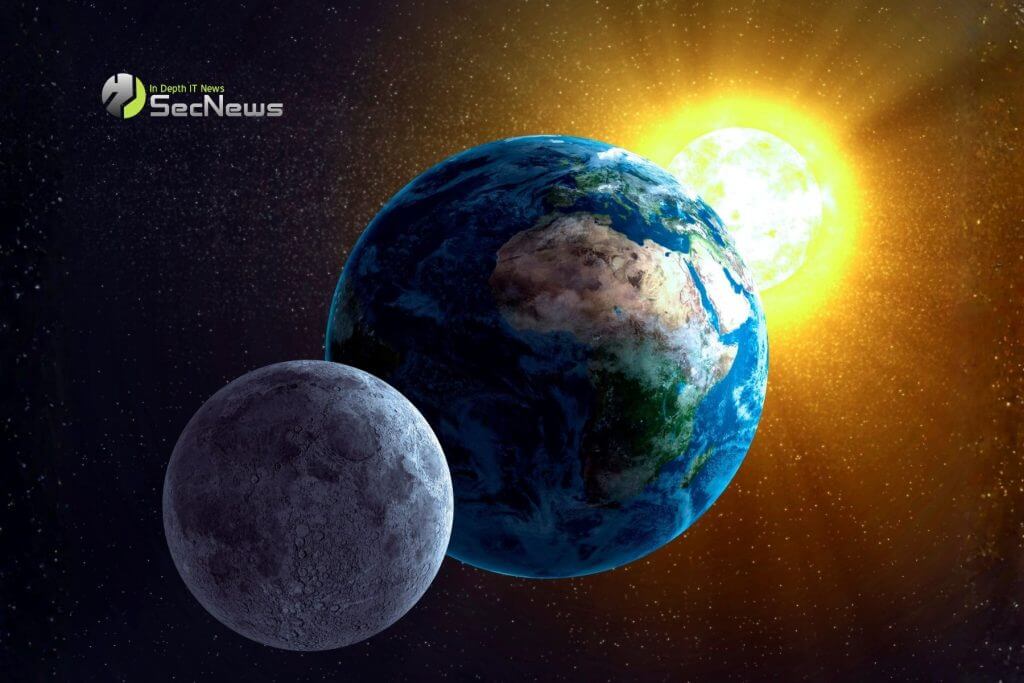
However, new analysis of lunar samples from the Apollo missions, as well as Earth rocks and meteorites, suggests that Theia was a rocky planet in the inner solar system — possibly even closer to the Sun than Earth.
The results, published November 20 in the journal Science, reinforce the classic picture of how rocky planets formed.
See also: NASA: Over 6,000 exoplanets have been found

Theia was one of hundreds of planetary “embryos” from which our planets formed. However, lunar samples from the Apollo missions have revealed that Earth and the Moon are almost chemically identical — a similarity that scientists say makes it particularly difficult to pinpoint Theia’s origins. For this reason, the researchers examined six samples from the Apollo 12 and 17 missions, as well as 15 terrestrial rocks, including material from the Kilauea volcano in Hawaii, along with meteorites found in Antarctica.
The team focused on extremely small variations in iron isotopes, which recent studies show can reveal where in the solar system the material formed. They combined these measurements with molybdenum and zirconium isotopic data, and then compared the results with known meteorite compositions to identify which "building blocks" could have formed Theia.
Of the hundreds of models, only one scenario successfully replicated the chemistry of Earth and the Moon: the one in which Theia formed in the inner solar system. According to the study, Theia was likely a rocky planet with a metallic core and a mass of about 5–10% that of Earth.
See also: James Webb discovered a new exoplanet
Although the study suggests that Earth and Thea were likely “siblings” that formed in the same region, it remains unknown how the giant collision managed to mix the materials of the two worlds so thoroughly that their chemical signatures became nearly indistinguishable. Solving this mystery may reveal the last missing piece of the Moon’s violent birth story — and could hold the key to fully understanding how Earth and our moon formed.
