

New models leave open the possibility that Earth could survive the fiery death of the Sun, even if our star swallows the inner planets of the Solar System.
See also: Halloween: NASA spotted a scary face on the Sun!
The new study proposes an alternative scenario for the ultimate fate of the Earth, which until now was considered almost certain to be destroyed when the Sun, billions of years from now, expands and envelops it in a thermonuclear fiery conflagration.
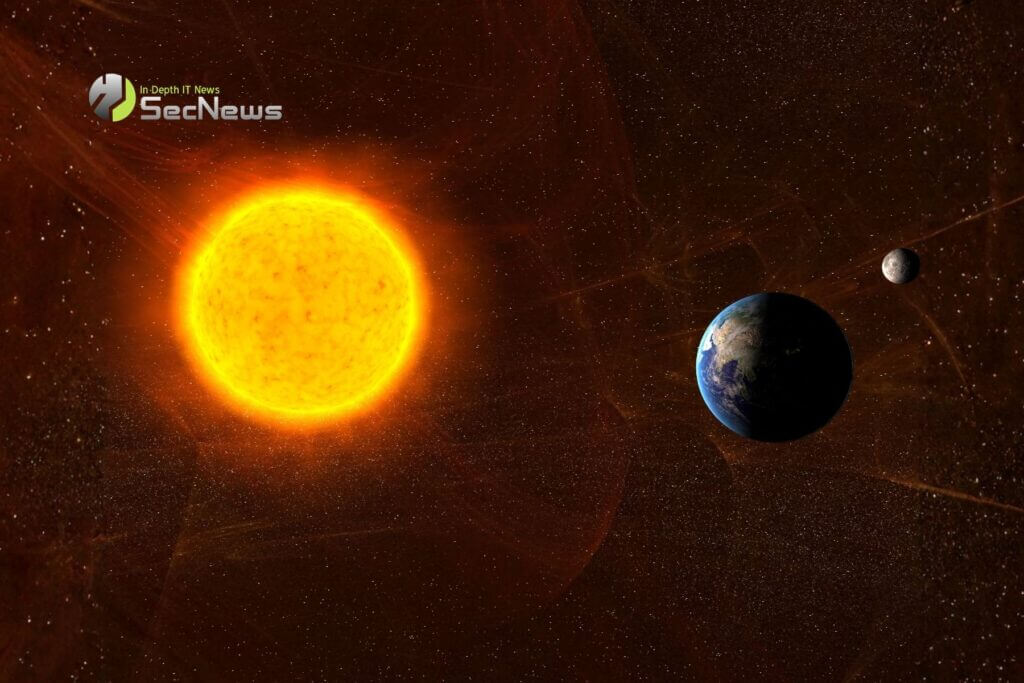
As a yellow dwarf, the Sun is expected to have a total lifetime of about 10 billion years, with a relatively mild evolution. However, in about 5 billion years it will exhaust the hydrogen in its core. Fusion will then resume in its outer layers, causing enormous expansion and transforming it first into a red giant and then into an even larger star of the asymptotic giant branch (AGB), before ending as a white dwarf.
In a letter published June 19 in the journal Astronomy & Astrophysics, astronomers used advanced models of stellar evolution and observations of a nearby dying star to reexamine the possible fate of Earth. According to their results, as the Sun enters the final stages of its life, our planet will be caught between two opposing forces—a development that likely affects countless planets throughout the Universe.
See also: Europe: Simulation of a catastrophic solar storm – Dangers
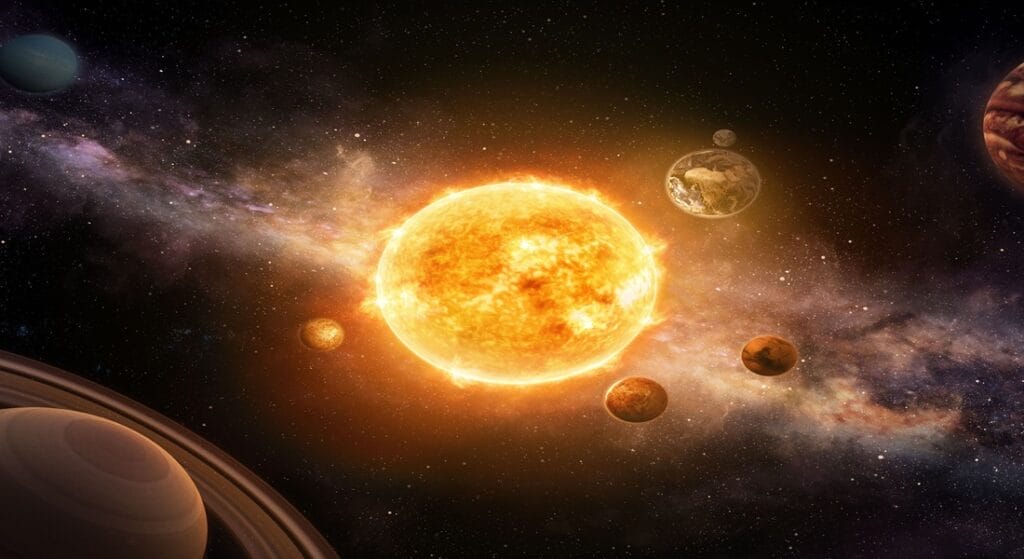
As the Sun expands, potentially reaching hundreds of times its current size, enhanced tidal forces will tend to pull Earth into the interior of the expanding star. At the same time, however, the Sun will shed its outer layers through strong stellar winds. The significant loss of mass will weaken its gravitational pull, allowing Earth to move into a more distant orbit, toward the outer regions of the Solar System, thus increasing its chances of survival.
Based on observations of the mass loss of the star L2 Puppis, combined with updated models of stellar evolution, researchers estimate that Earth could eventually survive, moving into an orbit just outside the radius of the bloated Sun. However, the same is not expected to happen for all the planets in the Solar System. Simulations show that Mercury and Venus will be engulfed in the fiery mass of our dying star.
See also: James Webb reveals hidden 'newborn' stars
Scientists say new observations of aging stars and more sophisticated models will allow for more accurate predictions of Earth's long-term fate. Another important contribution is expected to come from PLATO , a space telescope scheduled to launch next year with the aim of detecting Earth-like planets around Sun-like stars. Its observations are expected to reveal planetary systems around stars in the final stages of their lives, providing valuable clues about the evolution and ultimate fate of these worlds.
