

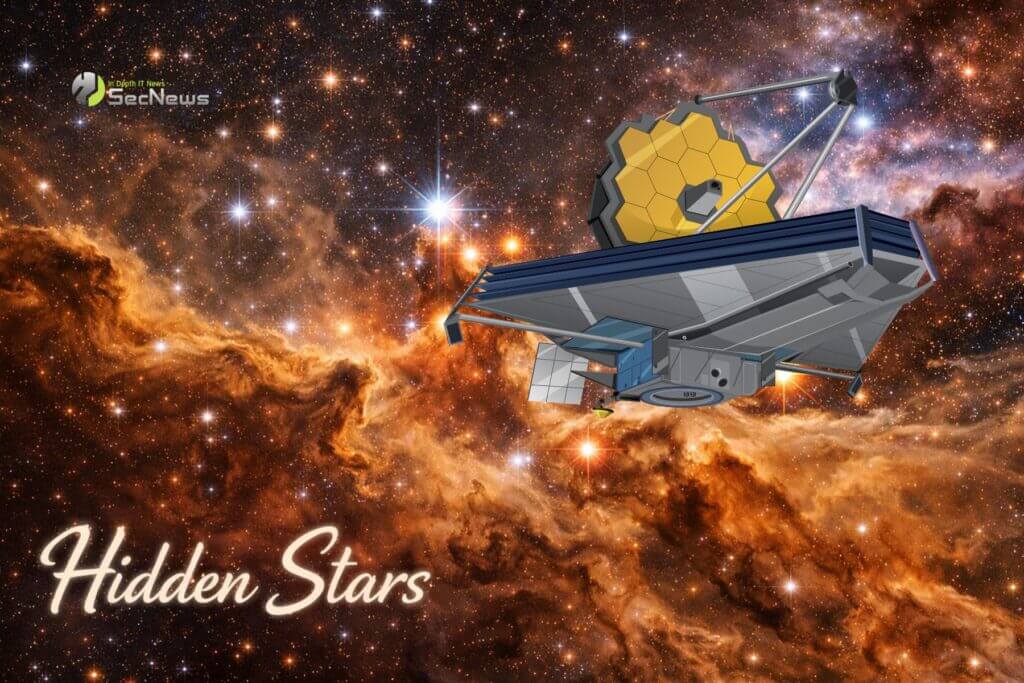
Exploring the universe just took on a new dimension thanks to the Space Telescope James Webb, which turned its infrared eyes toward the star-forming region W51. Astronomers discovered a “hidden generation” of young stars that had remained invisible to other telescopes, providing images full of detail and color.
Young stars emerging from dust and gas
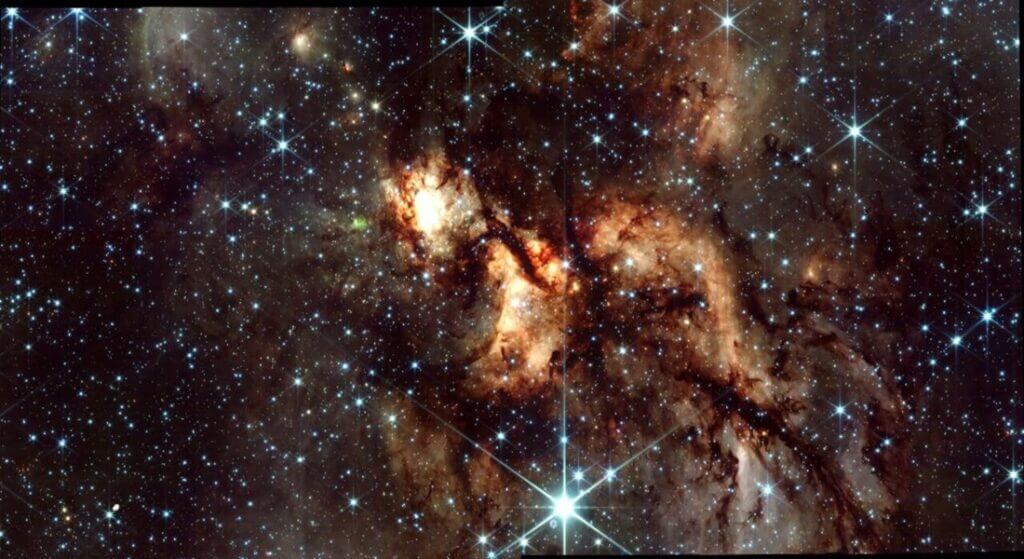
The new observations reveal webs of gas and dust illuminated by the newborn stars, creating scenes that look almost like paintings. The team behind the research used the precision of JWST to determine that the stars in W51 formed within the last few million years. For comparison, our sun, a middle-aged star in stellar terms, is about 4.6 billion years old, which shows how recently these “star babies” were born.
See also: Artemis II: NASA's historic mission to the Moon begins
The unique power of infrared light
The W51 region is not new to the scientific community. But James Webb's observations are revealing stars that remain hidden from most telescopes. The reason is that newborn stars are surrounded by dense clouds of gas and dust, which block visible light. James Webb uses infrared radiation, which can penetrate these layers and reveal the birth of new stars, something that optical or ground-based infrared telescopes are unable to do.
“With optical and ground-based infrared telescopes, we can’t see through the dust,” explains Adam Ginsburg of the University of Florida. “Now we can.” This ability is not just aesthetic; the images offer crucial information about how massive stars form, which remain more mysterious than low-mass stars.
Study of high-mass formation mechanisms
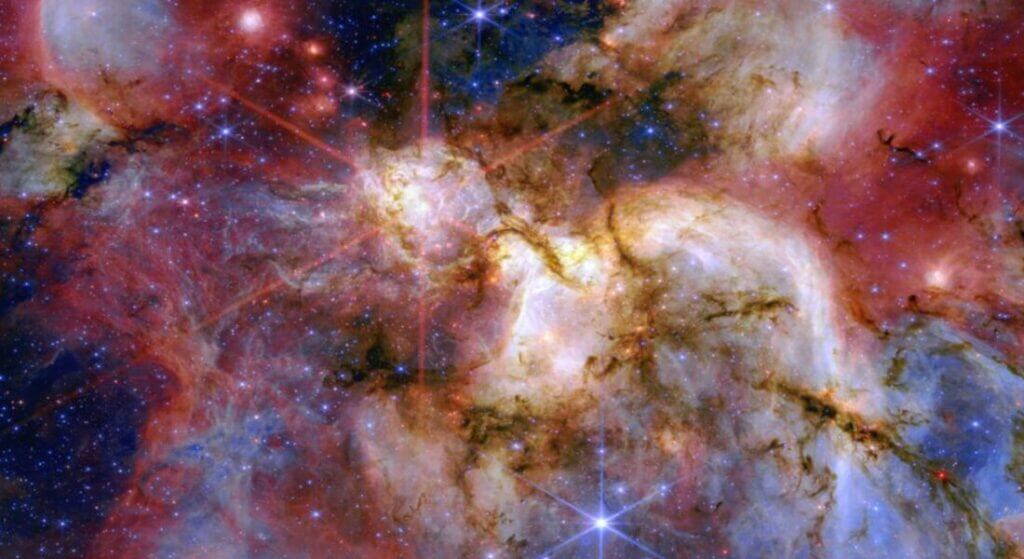
Taehwa Yoo, also a member of the team from the University of Florida, points out: “Thanks to James Webb, we can see these hidden, young, massive stars forming in this region. By studying them, we better understand the mechanisms of their formation.” The images reveal new data, such as shock waves released by newborn stars, giant gas bubbles and dark dust filaments, elements that until now remained unknown.
See also: NASAastronauts will break II
James Webb changes our view of the universe
The difference in quality in the images provided by JWST is so great that, as Ginsburg says, “they are essentially brand-new pictures.” Each observation reveals something unexpected, making the W51 region both more understandable and more fascinating. The new details could help scientists decipher the birth of high-mass stars and improve models of stellar evolution.
Unprecedented observation capabilities
JWST's use of infrared radiation is opening up new horizons in astronomy. Structures previously thought invisible can now be studied, providing images that are both spectacular and scientifically useful. These data allow us to analyze the formation of gas clouds, observe the early stages of the lives of stars , and assess the effects that newborn giants have on their surroundings.
See also: “Electrical hell” on Jupiter: Lightning of unimaginable power
The future of astronomy with JWST
The observations at W51 demonstrate that the James Webb is not just a telescope with exceptional resolution. It is a tool that is changing the dynamics of astronomical research, revealing what was previously hidden behind clouds of dust and gas. The scientific community now has images that combine aesthetic beauty with precise data, paving the way for new discoveries in star formation.
