

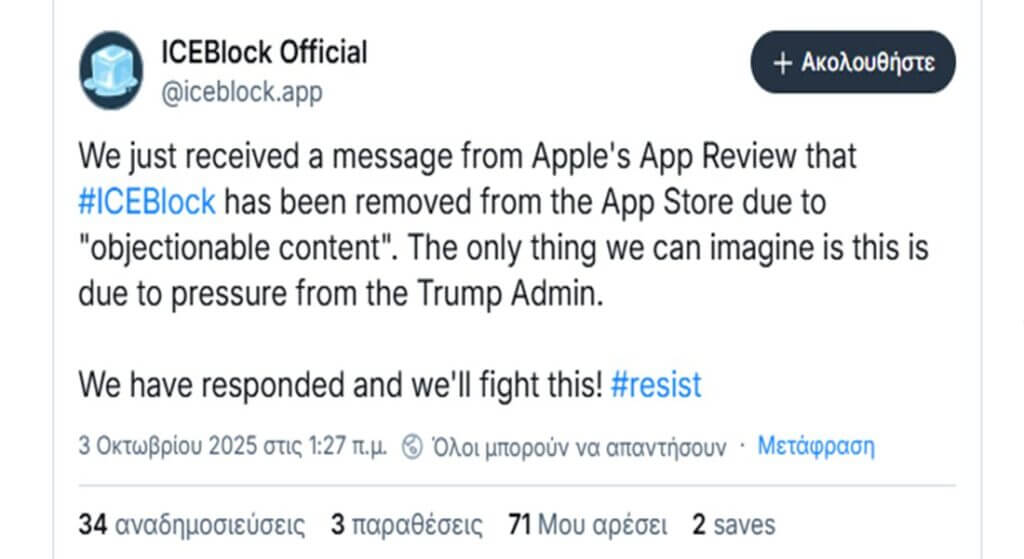
The controversial ICEBlock app was removed from the Apple App Store after a demand from Attorney General Pam Bondi, who claimed the app was being used to harm ICE agents.

Over the years, Apple has faced numerous requests from various countries, usually authoritarian ones, to remove apps or services deemed unsafe. Now, one such request has come from the US government. According to a report by Business Insider, Attorney General Pam Bondi says that the Department of Justice has demanded the removal of the ICEBlock app from the App Store. Given the legal authority of the entity, Apple had no choice but to comply.
See also: Apple shelves Vision Pro for smart glasses
What is happening with the ICEBlock app?
The ICEBlock app had raised concerns as it was believed that it could be used to monitor and interfere with the activities of ICE agents, which was considered dangerous to the security of the agents and their businesses.
The decision comes at a time when Apple is under pressure to maintain a balance between protecting free speech and complying with legal requirements. The removal of the ICEBlock app highlights the challenges that technology companies face when asked to comply with requests that may impact free speech and user privacy.

"We built the App Store to be a safe and trusted place to discover apps," Apple said in a statement. "Based on information we received from law enforcement about the security risks associated with ICEBlock, we have decided to remove it from the App Store, along with other similar apps."
See also: AirPods Pro 3 still not being repaired
Was ICEBlock illegal?
There was nothing inherently illegal or unsafe about ICEBlock. It functioned like a crowdsourcing application. Users could mark on a map where they might have spotted ICE activity to give people the chance to follow a safer route. Interaction with police could prove problematic, especially for those who match the demographic profile being sought.
However, Bondi and others allege that the app has been used to orchestrate attacks against ICE agents, putting them at risk.
The developer of ICEBlock stated that he would oppose the removal of the app from the App Store.
Apple, as one of the world's largest technology companies, is often at the center of such debates, and its decisions can have significant implications for the industry. The case also highlights the growing tendency for governments to intervene in technology platforms, citing security concerns.
The balance between security and freedom of speech is one of the most difficult issues facing technology companies today, and the ICEBlock case is a characteristic example of this challenge.
See also: Apple will release over 5 new products in October
In a world where apps can be powerful tools for social action or even political resistance, the decisions about their presence in digital stores are not simply technical or commercial, but deeply political and social. Apple, as the manager of one of the largest digital marketplaces on the planet, is often in the position of determining which voices can be heard and which cannot. This in itself makes it more than a technology company; it positions it as a regulator of the public sphere.
This particular abstraction raises the question: to what extent can a government determine the limits of free speech in the digital space? The reference to agent security is certainly serious, but the security argument has often been used internationally to justify restrictions on fundamental rights. On the other hand, companies themselves, such as Apple, do not have absolute neutrality. The choice to comply with or resist such demands affects not only users, but also their image as defenders or limiters of digital freedom.
