

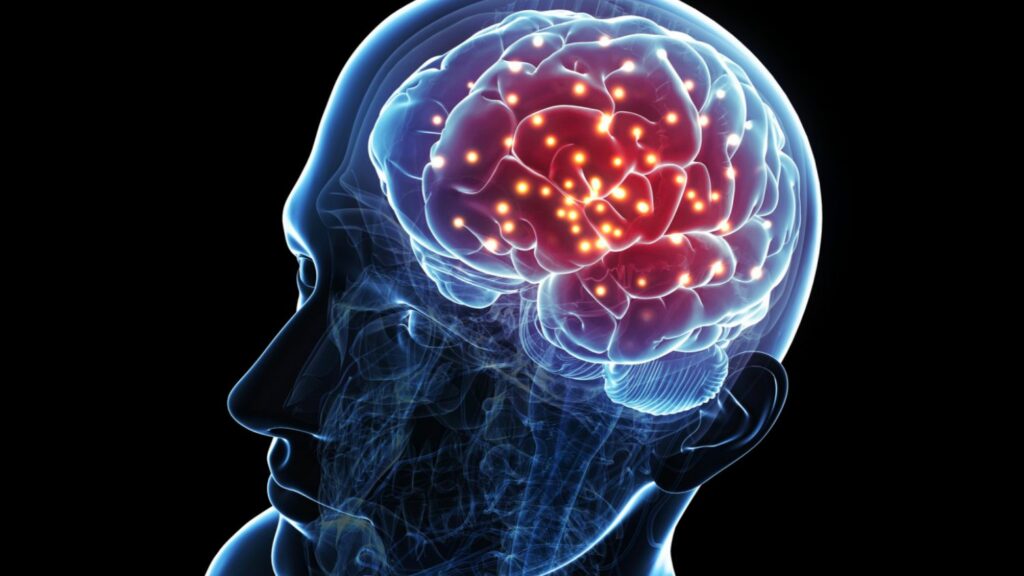
AI: If we connected a computer to the human brain…. Human intelligence can function as a classic binary system-symbiosis, which works due to the structural features of transmembrane proteins in the ion channels of the brain. At first glance, it may seem that this new and generally excellent neurophysiological idea is of interest only to doctors and biologists. But in fact, this idea from the world of neurophysiology paves the way for creating a very unusual AI.
See also: AI technology reads children's emotions while they are learning
Existing AI systems, with all their features, have one thing in common: they are all built as single, controlled electronic assemblies that operate using algorithms of varying complexity. Central control is an irresistible property of any artificial electronic computing system. We simply don't know how to build it differently.
But what if we repeat nature's maneuver and follow the path of unification to create a technological symbiosis of the human brain and the computing system? Perhaps this is the shortest and most effective method of modernizing intelligent systems.
A new type of AI intelligence is a bioelectronic hybrid, in which a living human brain and a machine will work together in a dual complementary system. Both components will complement and reinforce each other, creating something completely new that neither nature nor the designers of fully electronic systems have encountered before.
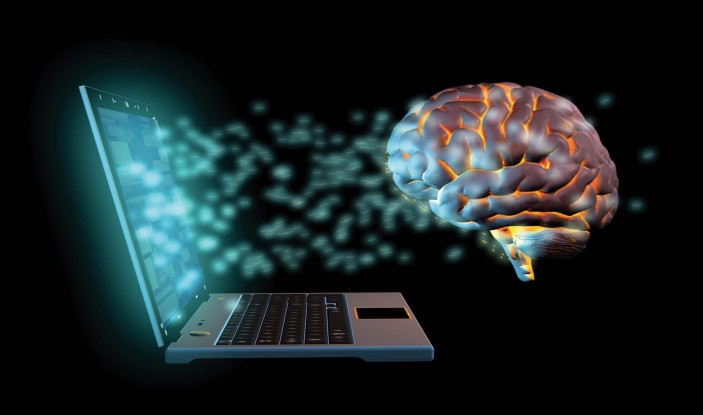
This is a new type of AI, built around a neurocomputer interface that directly connects the neurons of the human brain and a computer.
Despite the fascinating prospects of this direction, there have been only a few attempts in the world to create an interface that connects the human brain and a computer directly. One of the most famous was Elon Musk's Neuralink. The weakness of these projects is that they follow the traditional surgical route and therefore fail to overcome two fundamental obstacles.
See also: Pentagon: Its AI technology can predict events
The first obstacle is the inaccuracy of individual interpretations of local foci of brain activity. Simply put, each of our brains is to some extent unique. But that's only half the problem. What's worse is that, thanks to plasticity, the detailed picture of brain activity is constantly changing.
The second and main obstacle is the signal crossover point. This is where the artificial electronic signal becomes a biological nerve impulse and vice versa.
In the new artificial intelligence system, the transmitting and receiving parts of the neurocomputer interface will be completely separated and will be two completely different communication mechanisms.
The receiving part will be a network of inactive marker objects whose state will be monitored remotely by an active external component of the system. This technique will allow replacing the direct transmission of a signal from living neurons to a computer system for transmitting information about the existence of such a signal. This will turn the receiving part of the neurocomputer interface into a non-invasive (non-traumatic) mechanism. In such a scheme, there is no need to perform expensive surgical procedures, and molecular markers can be injected into the body using a simple intravenous injection.
The transmission part will remotely transmit the signal only to the synapses and not to the neurons, as they are trying to do now. The transmission part of the interface will use marking objects as spatial orientation points and feedback sources.
Interestingly, the signal that will be transmitted only at the synapses must be non-electrical in nature. This will allow us to create an artificial signal in the neurons of the brain that is completely identical to the normal one. As a result, the neurons of the human brain will experience the stimulation of synaptic plasticity and as a result they themselves will actively participate in the formation of lines of dynamic interaction with the transmission part of the neurocomputer interface. The brain tissue itself will create a connection with the transmission structure of the interface.
In addition, to install such an interface, a person will not need to use the services of highly qualified medical personnel, which will make the system convenient for most users.
It is important to understand that the described scheme will allow for controlled stimulation and monitoring of the response of a single neuron.
Thanks to the new type of neurocomputer interface, the brain and computer will be able to exchange data directly, without using intermediate communication protocols, such as voice commands or letter symbols.
See also: The next ENVY AIO PC may have the NVIDIA GeForce RTX 3080 SUPER

As a result, interacting with a machine will feel more like intuition than an electronic device.
The increasing volume of information that humanity creates will make it possible to create millions of IAIs (individual artificial intelligence) with ever-increasing performance.
The information consumption of a person equipped with their own artificial intelligence will be thousands of times greater than traditional information consumption based on biological communication systems.
Your individual artificial intelligence system will know you, your personality, your requests and preferences with greater precision and clarity than you do, it will be a part of you and at the same time your creation and extension, in short, your digital shadow.
After 5-10 years of coexistence, the complementarity of AI elements will reach such a level that many complex behavioral and communication complexes can be performed by the system reflexively. As a result, a person will be able to perform a huge number of routine actions without any strain.
