

In the spring of 2020, COVID-19 began to spread around the world, with many governments imposing lockdowns and other related measures to protect people. Confinement to homes had various effects, not only on people but also on the environment. The air and water became cleaner, fewer animals were killed by vehicles. Now, researchers believe they have found another impact of the lockdowns – fewer lightning strikes during the spring of 2020.
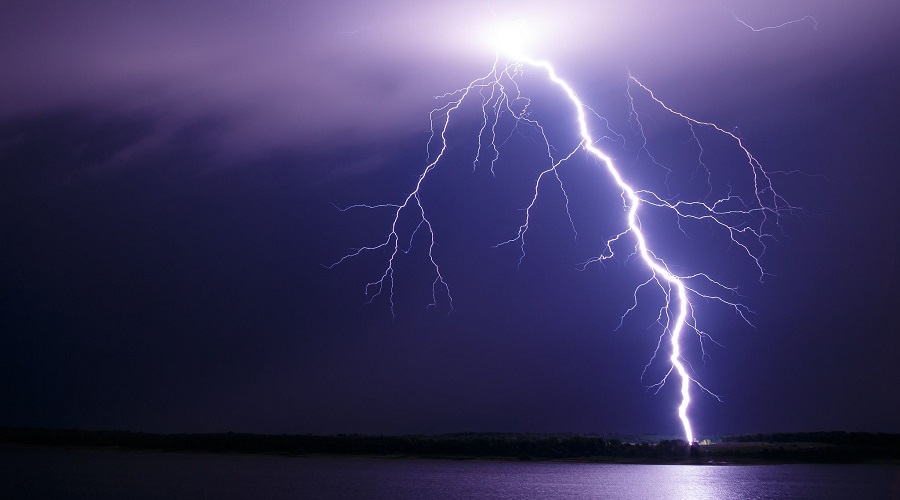
Scientists believe that tiny particles in the atmosphere called aerosolscontribute to lightning, and human activities such as burning fossil fuels release aerosols. A study last year showed that during lockdowns, people released fewer aerosols , which resulted in a decrease in aerosol concentrations in the atmosphere. Last month, researchers met in New Orleans at the American Geophysical Union meeting and presented their findings, which showed that this drop in atmospheric aerosols coincided with a decrease in lightning.
See also: NASA: Mysterious signals from "dusty" object discovered by TESS
Earle Williams, a meteorologist at the Massachusetts Institute of Technology, said the research team used three different methods to measure lightning. “All of the results showed the same trend — that is, reduced lightning activity associated with reduced aerosol concentration,” he said.
Some aerosols in the atmosphere can collect water vapor, forming cloud droplets. According to Williams, when there are more aerosols, the water vapor in the cloud is broken up into a greater number of droplets. The droplets are smaller and less likely to coalesce into larger raindrops. These smaller droplets stay in the cloud, helping to form hail called graupel and even smaller ice crystals. Collisions between graupel and crystals produce negatively charged graupel in the middle to lower part of the cloud and positively charged crystals at the top of the cloud. Scientists believe that this large charge difference between the two parts of the cloud causes lightning.
See also: Russian rocket returns to Earth today after a failed test
However, when there is less pollution (as has happened during lockdowns) and clouds form larger and warmer raindrops, “there are not the ice particles needed for charge separation and so there is reduced lightning activity,” Williams said.
As we said above, in the spring of 2020, many countries imposed lockdowns and people released fewer aerosols into the atmosphere. Production in factories that burn fossil fuels decreased. Cars on the roads also decreased. “Car traffic plays a significant role in aerosol production,” Williams said. In addition, pollution from air travel decreased significantly.
It appears that this reduction in pollution during the lockdown is linked to reduced lightning. The researchers recorded significantly fewer lightning strikes from March 2020 to May 2020, compared to the same three-month period in 2018, 2019 and 2021.
See also: PayPal is considering creating its own stablecoin
Additionally, the results showed differences in different parts of the world, depending on the concentration of aerosols in the atmosphere. Southeast Asia, Europe and most of Africa saw some of the largest reductions in both atmospheric aerosols and lightning, while the Americas did not see such dramatic changes.
Researchers examine phenomena, such as lightning, as they affect the atmosphere.
Source: abcnews.go.com
