

In observations gathered by Transiting Exoplanet Survey Satellite (TESS) , astronomers have uncovered yet another mystery, and a dusty one at that. In a new study, a team of scientists is examining possible causes of strange signals emitted by an object called TIC 400799224.
See also: NASA delays launch of James Webb telescope due to bad weather
Based on what astronomers have seen so far, they suggest that this object may be a binary star , or double star system, in which one of the stars is surrounded by a huge cloud of dust, possibly the remains of a large asteroid, according to a statement from the Harvard-Smithsonian Center for Astrophysics, which hosts one of the team's researchers.
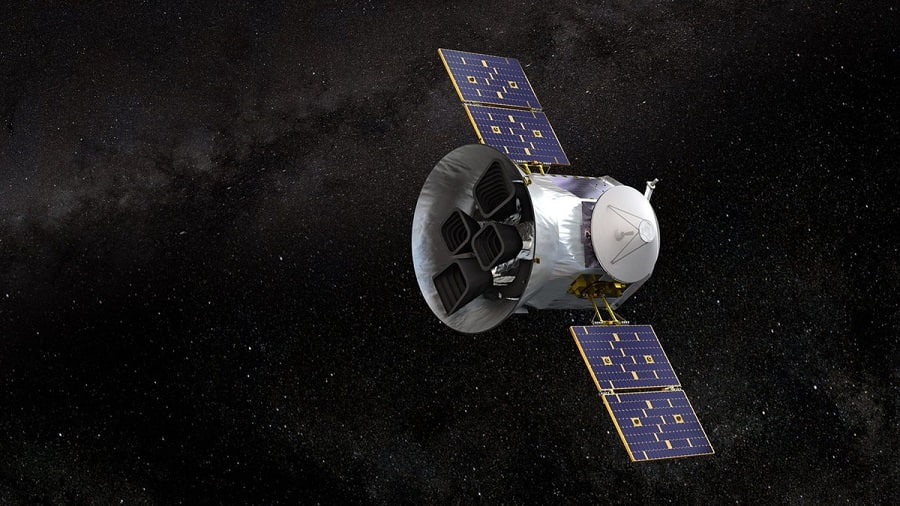
TESS is designed to detect exoplanets by looking for tiny, rhythmic dips in a star’s brightness. These dips are caused by a planet passing between the telescope and the star, blocking a trace of its light. However, planets aren’t the only phenomenon that can cause varying brightness, so TESS has collected a wealth of observations of everything from supernovae to triple star systems and more.
When researchers were examining TESS data collected in early 2019, TIC 400799224 stood out because it became almost 25% dimmer in just a few hours and then made several more sudden brightness changes.
See also: NASA's TESS spacecraft has already found 2,200 potential planets
TESS spends about a month in a single patch of sky and then moves on, so the object was included in four different sectors observed between March 2019 and May 2021. Researchers also turned to other instruments for additional information about the strange object, incorporating data from facilities such as the All-Sky Automated Survey for Supernovae and the Las Cumbres.
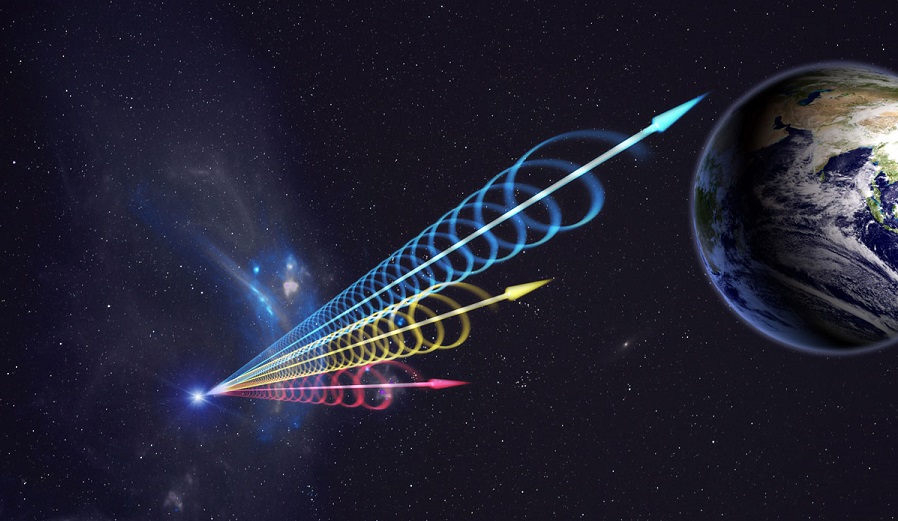
Taken together, all this data allows scientists to piece together a picture of what might be causing the strange signals. The researchers suspect that at the heart of TIC 400799224 is a binary star in which two similar stars orbit each other. But one of these stars appears to pulsate every 19.77 days, causing more complex patterns. The pulsation, the astronomers say, is caused by a huge cloud of dust surrounding the star. This dust has a combined mass equivalent to the remains of a 10-kilometer-wide asteroid, they estimate.
See also: NASA: You can hear the sound of Ganymede – Jupiter's icy moon
Scientists are considering a few different explanations for all this dust, but they suggest that the most likely case is that collisions between tiny planetary objects, such as asteroids, are creating the dust. However, it's difficult to explain why the amount of dust around seems to have remained fairly constant over the six years that scientists have been able to find existing observations of TIC 400799224. The researchers hope to continue observing the object to better understand its strange patterns.
