

 Nowadays, we all use smartphones and the solutions that technology generously offers us to make our lives easier. Nowadays, most people communicate via messaging services, such as WhatsApp, and social networking platforms, such as Instagram and Facebook. They send emails via Gmail and other services, listen to music on YouTube, shop in online stores, make reservations in hotels, restaurants and more. This means that various personal data is entered and stored.
The question is how do companies use this data and where do they send it?
The security of user data has been a hot topic of discussion lately. New rules on protection personal dataGDPR), forcing tech companies to manage data more transparently. They can't freely share personal information with other companies, agencies, or governments.
Companies are required to publish reports, which explain in detail where they send data, as well as how many requests they receive from other companies (around the world) to send information.
The Addictive Tips blog shows how many requests have been made in total and which company made the most from 2010 to 2017.
Requests increased from 27,625 in 2010 to 382,242 in 2017. However, in 2018 the number of requests decreased again, mainly due to new data protection laws.
The increase in requests between 2010 and 2017 is related to the increase in internet usage in general. However, most requests for data came from the US.
The US sent 151,047 requests from 2010 to 2018. Facebook accepted 64,351 of the US government's requests.
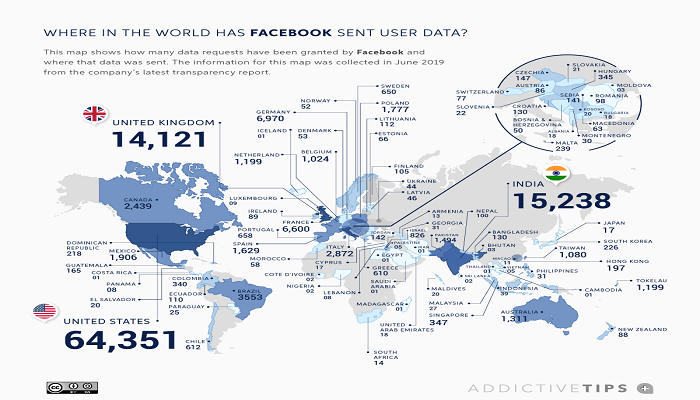
Google gave 70,908 pieces of data to various countries. 30,332 were to the US government
Google, Facebook and Apple are among the companies that provided the most data.
Tech companies already know a lot about users . But sending data (or used to send it before GDPR) everywhere makes the situation even worse.
We often forget that the data we enter into our devices is stored by technology companies.
They know information such as names, gender, date of birth, location, workplace, browser, political beliefs, interests, and much more.
Unfortunately our data is available to companies and services around the world.
