

Advanced Persistent Threats were once considered a problem that only affected Fortune 100 companies. However, the threat landscape of recent years says otherwise – in reality, every organization, regardless of size, is at risk, either as a direct target, as part of the chain, or from collateral damage.
The vast majority of decision makers recognize that they need to address APT risk with additional security solutions but have difficulty mapping APT attack vectors to a clear set of security product, which hinders their ability to select products that will best protect them.
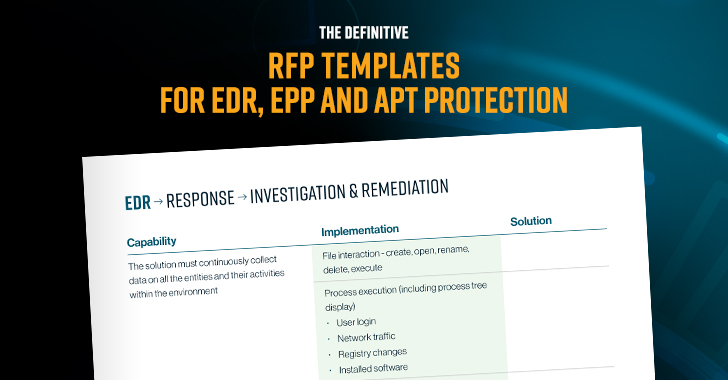
Cynet is now addressing this need with the definitive RFP templates for EDR/EPP and APT Protection, a list of security requirements prepared by experts that allows stakeholders to accelerate and optimize the evaluation process of the products they use.
These RFP templates aim to identify the broadest common denominator in terms of the security needs relevant to each organization.
So, using these ready-made templates can potentially save a lot of time and resources spent on building similar requirements from scratch.
APT groups, as the name suggests, are extremely persistent. In practice, this persistence manifests itself in targeting multiple attacks until a successful compromise.
To adequately protect ourselves from such attacks, we must be well aware of them, both them and the various actors that attackers use to target them.
This attack map should be at the back of any cybersecurity purchase. In the long run, investment in security will be measured against its success in preventing cyber damage.
However, many security decision-makers lack the attacker's perspective, which would enable them to prioritize the defensive capabilities their security products need.
To address this need, Cynet is releasing the EDR/EPP and APT Protection RFP standards for use as open source by organizations seeking protection against advanced threats.
This is exactly the missing link in the knowledge of the average security buyer, which makes sense – since users are not expected to understand the attackers' playbook of best practices.
These decision makers, however, know better than anyone what they have and what they need to protect themselves. The APT protection RFP can force-multiply quality market decisions ,ensuring their optimal performance.
The RFP includes five sections:
- Monitoring & Control – routine activities to gain visibility to discover and then proactively mitigate attacks.
- Prevention & Detection – mechanism to thwart the wide range of commodity and advanced attack vectors.
- Investigation & Response – a set of tools for effectively responding to detected attacks.
- Infrastructure – architecture, development, data collection and communication.
- Operation – ongoing management of the provided solutions
“I guess there’s no organization that hasn’t experienced something shiny at some point that seemed amazing and ended up being of little value,” Gruner says.
“It either didn’t work or it didn’t address some internal attack vector that looked great in the demo but never happened in real life. This specific action guide is intended to prevent these types of scenarios.”
