

 Thanks to Google and the help of artificial intelligence, we now know that our solar system is a little more unique than we thought.
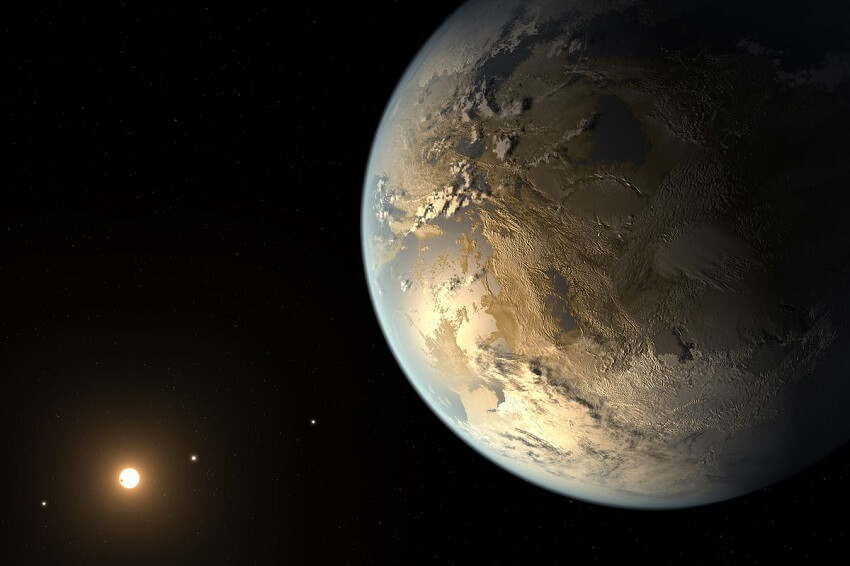
Scientists have discovered an eighth planet orbiting the sun-like star Kepler-90, located 2,545 light-years away. This means that our solar system and Kepler 90 now tie for the largest number of known planets within a single star system.
The new planet, called Kepler-90i, was found using technology from Google, which effectively teaches a computer to spot patterns in large data sets.
In this case, the dataset was compiled from signals detected by the Kepler Space Telescope, which discovers planets by detecting the slight dips in a star's light that occur when a planet passes in front of its star from Earth's side. This movement is called a transit.
Astronomer Andrew Vanderburg and Google's Christopher Shallue are training the artificial intelligence, first showing it how to pick out the paths from 15,000 signals they already knew from real exoplanets, NASA said.
After that, they moved on to the next step. Vanderburg and Shallue then used the technology to look at data from 670 other star systems known to have planets to find other worlds that might be hiding in the data.
Kepler-90i is one of these worlds.
“We have a lot of false positives for planets, but also potentially more real planets,” Vanderburg said in a statement. “It’s like sifting through rocks to find diamonds. If you have a finer sieve, you’ll catch more rocks, but you might also find more jewelry.”
Scientists also found another planet, Kepler-80g, orbiting a star with five other planets.
Kepler-90i, however, is a rather difficult planet to live on!
While the terrain is rocky, it is also extremely hot. The planet completes one orbit of its star every 14.4 Earth days and likely has an average surface temperature of about 800 degrees Fahrenheit.
The Kepler 90 system is also very different from our own. If all eight planets in this system were moved into our solar system, they would all fit into Earth's orbit. In other words, all of the planets would be closer to Kepler 90 than our Earth is to the sun, according to NASA.
“These results demonstrate the enduring value of the Kepler mission,” said Jessie Dotson, Kepler project scientist.
“New ways of looking at data – like this early-stage research applying machine learning algorithms – promise to continue to yield significant advances in understanding planetary systems around other stars. I’m sure there are more firsts in the data waiting for people to find them.”
