

Kaspersky Secure Connection: VPN service is a new application from Russian security company Kaspersky for the Android mobile operating system.
The app is available for free and for a fee. The free version of the app gives you a daily traffic of 200 Megabytes, while the premium version removes the limitation, and can be used on up to five devices.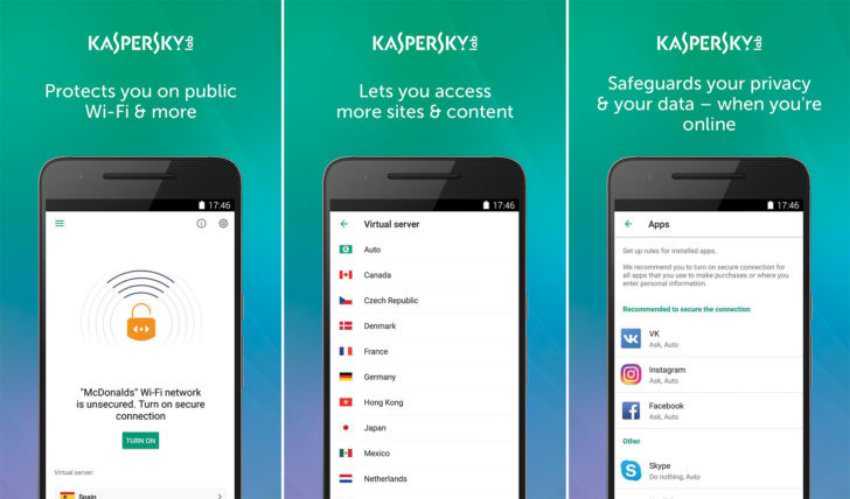
The application promises to protect the privacy and data of its users when they are online, by encrypting connections and not recording what users do online.
But it asks for access to your contacts, calls, and location, and if you deny any of these, it won't start. If you check the full list of permissions the app requests, you'll find many more, including Identify (locates accounts on the device), device and app history (reads your bookmarks and web history), and it also reads what's on USB storage devices.
It is not clear why these permissions are required and the main reason for a VPN, but this is probably why it has negative reviews on Google Play.
The current quota of 200 Megabytes per day is sufficient for a little browsing and maybe checking your email, but don't expect it to last long. That's 200MB.
If you need a VPN to start streaming media or open heavy sites in your preferred browser, 200MB is not enough at all.
We should mention one more privacy issue that only becomes apparent if you allow permissions. The app is powered by Hotspot Shield. The Center for Democracy and Technology has filed a complaint against Anchorfree, Inc, the company behind Hotspot Shield. (PDF)
The Center for Democracy and Technology is asking the Federal Trade Commission to investigate the security and data sharing practices of Hotspot Shield Free Virtual Private Network (VPN), a product of AnchorFree, Inc. Hotspot Shield Free VPN promises secure, anonymous access to the internet. As detailed below, this complaint alleges undisclosed and unclear data sharing and traffic redirection occurring on Hotspot Shield Free VPN. This is considered an unfair and deceptive trade practice under Section 5 of the FTC Act.
To put it nicely: Avoid the Kaspersky Secure Connection app until Mr. Kaspersky comes to his senses. However, you can try F-Secure Freedome VPN, an app that requires fewer permissions to run.
