

AMD High Bandwidth Memory – The RAM with the revolutionary architecture: RAM is a major part of the computer. Essentially, without it, a computer wouldn't even be able to start up.
Like the general-purpose main memory of a computer, the dedicated memory for the graphics circuit/chip and the graphics memory (VideoRAM – VRAM) are subject to specific architectural rules. However, over the years and with the evolution of technology, these architectural rules tend to present various problems, such as speed lag = “bottlenecks” and high energy consumption.

AMD has recently developed a completely new general memory and graphics architecture that overcomes these problems. Introducing HBM (High Bandwidth Memory), a new type of memory chip with low power consumption, extremely wide communication lanes and a new revolutionary formation. This revolutionary product with its vertical formation and fast information transfer, essentially and officially opens the gate for truly exciting performance in innovative factors.
Applications in graphics processing units (GPUs) are just the beginning, as the superior energy efficiency and space savings of HBM can cause the entire innovation industry to experience positive change.
End all processing barriers with the revolutionary HBM
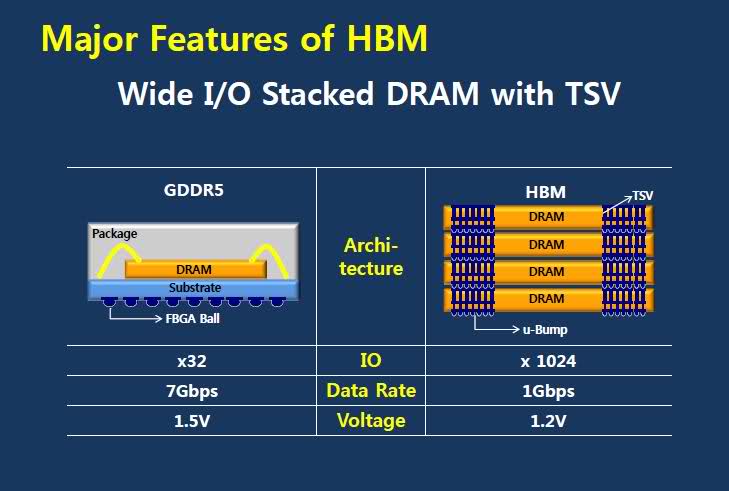
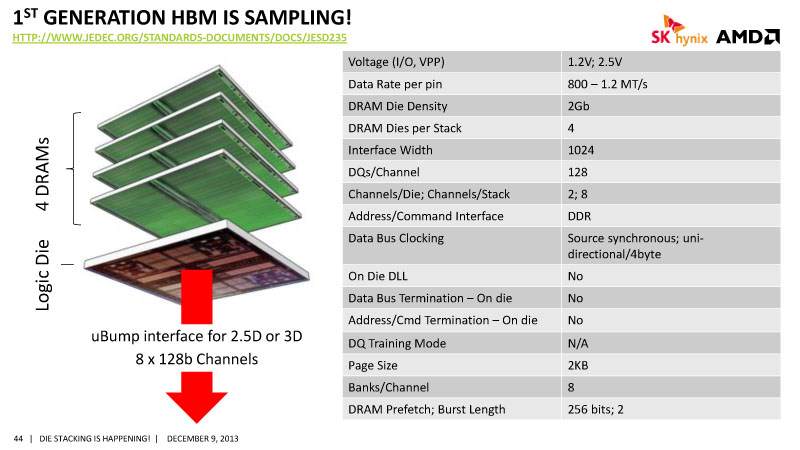
HBM is a new type of RAM for CPUs and GPUs, which has memory chips arranged in a vertical arrangement, like the floors of a skyscraper. This shortens the information transfer, greatly reducing the inter-communication time. These towers are connected to the CPU or GPU via a very fast interface called an “interposer”. Multiple HBM arrays are connected in parallel to a CPU or GPU on the interposer interface, and the entire unit is connected to the electrical circuit. Although the HBM arrays are not directly integrated into the CPU or GPU, they are so tightly and quickly connected via the interposer that the HBM benefits are almost equal to those of an embedded general-purpose RAM within a CPU/GPU chip.
Energy Efficiency
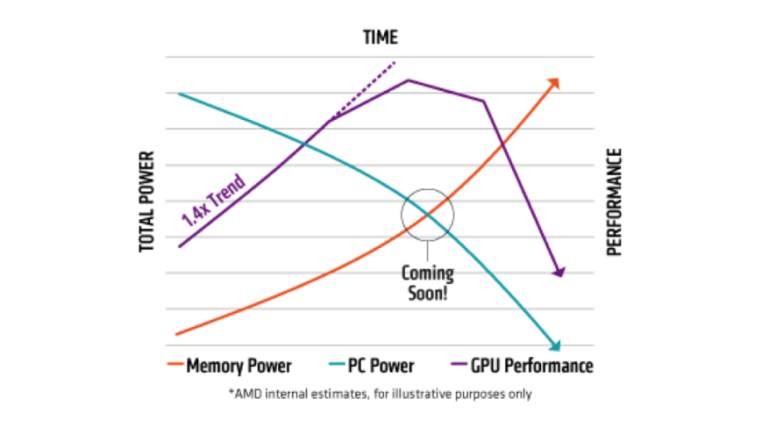
GDDR5 graphics memory has served the industry well for the past seven years, with gigabytes of it used in nearly every high-performance graphics card to date. But as graphics chips continue to evolve at a rapid pace, their appetite for fast information delivery (known as bandwidth) continues to grow. The ability of GDDR5 graphics memory to meet these bandwidth demands is starting to wane, with the technology reaching the limits of its specifications. Every additional gigabyte per second of bandwidth is starting to consume too much power to be an effective, efficient solution for designers and consumers. It's a natural consequence, then, that GDDR5 graphics memory could begin to slow down the performance of graphics chips. In contrast, HBM memory brings back energy efficiency, offering more than three times the bandwidth per watt of power offered by GDDR5 memory.
Smaller Dimensions
Beyond performance and energy efficiency, HBM memory is revolutionary in its ability to squeeze more usable space into a product. As gamers everywhere expect ever smaller yet more powerful computers, eliminating bulky and power-hungry GDDR5 chips in favor of HBM memory could provide devices with exciting new form factors in a much smaller footprint. Compared to GDDR5 memory, HBM will be able to pack the same amount of memory into 94% less space!
Innovative elements for faster development of the entire industry
AMD has a long history of pioneering innovations and industry standards to push the boundaries of what is possible. The new HBM memory architecture is the latest in an impressive list spanning processors, graphics, servers:
• x86-64: The 64-bit version of the x86 instruction set has been present in all modern x86 processors
• Wake-On-LAN: Invented with HP, the revolutionary networking standard that allows the computer to be woken up remotely
• GDDR and more HBM: Expands the industry standard for high-performance memory, invented by AMD with contributions from the Joint Electronics Engineering Device Council (JEDEC)
• First multi-core x86 processor: AMD's Opteron100 Series processor was the first to introduce multi-core computing to the PC space
• DisplayPort Adaptive-Sync: Implemented by AMD, FreeSync technology removes barriers to smoother, better gameplay in video games
• First on-chip memory controller for x86: AMD's "Hammer" architecture was the first to integrate a memory controller into processors for maximum performance
• First full GPUs within a CPU chip: AMD's Advanced Processing Units (APUs) were the first to integrate a GPU with the CPU, eliminating the need for a bulky external graphics processing chip
With the new HBM memory architecture, AMD is set to revolutionize the industry once again, for both professionals and hobbyists ,as well as gamers in the next level of Virtual Reality and beyond.
Source: zougla.gr
