

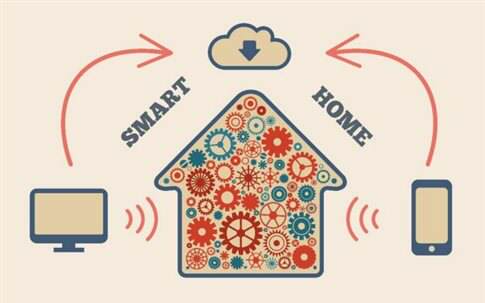
In support of concerns about the use of Smart TVs, the European Network and Information Security Agency ENISA identifies Smart TVs and other multimedia devices with two-way access to the Internet as the most likely targets for attacks on so-called smart homes.
Specifically, convergence media» and television raise security issues from the perspective of
- connectivity,
- embedded functionality,
- opaque systems and
- incompatibility with traditional information security approaches, as well as
- privacy issues,
- access and
- intellectual property rights.
Convergence media devices are likely to be some of the first consumer smart home devices that will be introduced into many homes, and therefore will be the initial focus of many of the identified smart home security issues.
The European Network and Information Security Agency (ENISA) today published the report entitled “Threat Landscape and Good Practice Guide for Smart Home and Convergence Devices”, a 55-page report (available in English). This study is part of the effort to achieve the objectives set out in the EU Cybersecurity Strategy. The study identifies security and proposes countermeasures needed for emerging technologies in smart homes.
- Cybercriminals rank as the largest and most hostile category of threats.
- The potential misuse of smart homes should be considered particularly likely given the increasing number of smart devices and homes, but especially convergence media (convergence media are considered smart TVs and all multimedia devices in the home that are connected to the Internet/cloud.
- Furthermore, several economic factors create security vulnerabilities, while design choices compete for cost and practicality.
- Many of the risks are sociotechnical in nature due to the depth and variety of personal information that can be recorded and processed, while leading to the production of data on previously unrecorded activities, closely linking people and their environment.
- Furthermore, the interests of various asset owners in the smart home are not necessarily aligned – and may even conflict – which creates a complex environment for security activities.
- Due to the multiple design approaches, not all smart homes are created equal. These approaches can lead to their own security and privacy specificities, with common issues and vulnerabilities. Just as in many other areas of Information and Communications Technology, implementing basic information security can significantly increase overall security in the smart home sector.
According to ENISA, good practices in this area include:
- the design of the smart home as a system,
- carefully examining the security of cloud-based smart home designs,
- an application isolation (as designed for smart cars) and
- separation of critical software from non-critical applications, but also
- network and communications security measures
Similar approaches to those mentioned for smart networks may prove applicable also in the context of smart homes.
The executive director Udo Helmbrecht said: «The smart home is a point of intense contact between networked information technology and the physical space, therefore it combines security risks both from the virtual and the physical environment. Detecting threats in cyberspace is critical for protecting the smart home and thus constitutes a key element for ensuring its successful development».
Source: tech.in.gr
