

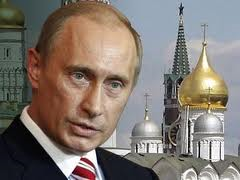
 Headache for US spies
This is perhaps the leader who is the greatest enemy of technology. Vladimir Putin does not use a mobile phone, calls the internet “this internet” in a pejorative tone and stubbornly refuses to send a message… All of this causes additional headaches for American spies, who were trying to “listen” to his intentions before his moves in Crimea.
Earlier this month, as Russia launched its operation to seize the peninsula, US intelligence agencies noted an alarming silence in the “digital space” surrounding Putin and his military. As the Wall Street Journal reports, the Americans were unable to intercept any communications at the start of the invasion.
A US official described the incident as “classic maskirovka,” the Russian espionage term for concealing sensitive data. The “radio silence” could have a simpler explanation: Putin, by his own admission, does not own a cell phone, so the Americans would have something to monitor.
The Russian president is not even a man of the internet, which he has long mocked, most recently on March 20. During a meeting with Russian industrialists, one of them referred to documents that can be found online. “I rarely look at this place where you obviously live, the internet,” Putin replied, according to TIME.
As old-fashioned as his comment may sound, his communication habits have made him a difficult target for foreign spies. Unlike Angela Merkel, whose phone was monitored by the NSA for years, Putin does not send text messages. Nor does he have social media pages. He gets his news from daily intelligence briefings. And since 2005 he has said he does not own a cell phone.
"If I had one, it would never stop ringing. Besides, when they call me on my home phone, I don't even answer it," the Russian explained in 2010. This sounds paradoxical for the leader of a country that has more activated mobile phones than residents and has the most internet users of any other European country.
But his technophobia seems to be part of a Russian tradition older than the telephone itself. The aversion to chatter that has become ingrained in the nation's consciousness after a century of police state rule. "This is not a telephone conversation," Russians still say to each other when they talk on the phone, a reference to KGB surveillance and a reminder that it is only safe to chat about innocent things on an unsecured line.
The Russians know how to keep quiet. The Russian school of cryptography has a long history of “resisting” Western spies, says Andrei Soldatov, an analyst specializing in the subject. In 2009, for example, American and British intelligence agencies tried to intercept the communications of Dmitry Medvedev, then Russian president, during a conference of world leaders in London. According to documents leaked by Edward Snowden, they bugged the phones but were unable to crack the Kremlin’s code. “Our intelligence agencies may not be terrible, but when it comes to data protection, they can do it,” says Soldatov.
Putin, who is also their former colleague, is doing everything he can to help them. In a rare moment when the camera recorded him with a mobile phone in 2010, he did not have in his hand a smartphone that, as it turned out, the US National Security Agency monitors for… fun. It was a huge black device, which may have caused some mockery on the Internet, but it did its job.
As for his office, when cameras entered it for his 60th birthday, they captured a computer—which Putin said he doesn’t open—and several red folders from the secret services, where he gets his information. There were also several old yellow telephones, the kind found in most Kremlin offices. But the line, according to the TIME reporter who picked up the phone, was dead.
Source: planet-greece.blogspot.com
