

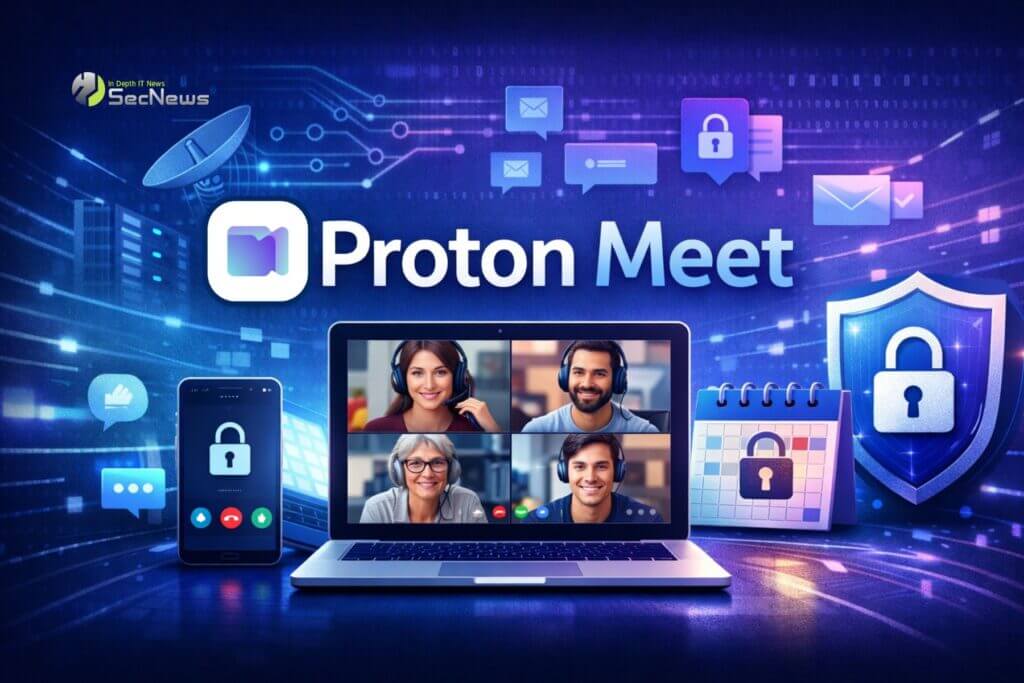
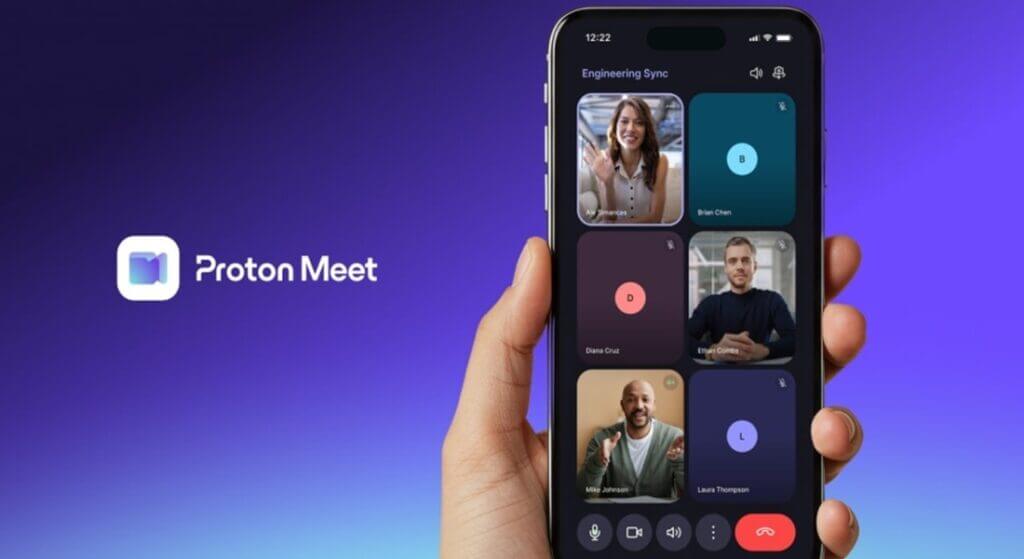
Proton is taking another step towards strengthening digital privacy , introducing Proton Meet , a video conferencing service that aims to be an alternative to established platforms such as Google Meet, Zoom and Microsoft Teams. At a time when concerns about data security are growing, the company's new offering has a clear focus on protecting privacy .
Free access with an emphasis on simplicity
Proton Meet is available for free for meetings lasting up to one hour and with up to 50 participants, without even having to create an account. The philosophy is simple: the user creates a link and shares it with the participants, without complicated procedures. For more demanding use, there is a professional package with a monthly subscription, which extends the limits and capabilities.
See also: Proton Sheets: New encrypted spreadsheet app
Privacy as a response to modern challenges
Proton positions Meet as a response to a growing need for European solutions that comply with regulations such as GDPR (and even CCPA). The complexity of international legislation and uncertainty in the geopolitical environment have intensified the demand for services that ensure full control over data. At the same time, the company addresses another critical issue: the use of personal conversations to train artificial intelligence models, which raises serious questions of transparency and ethics.
End-to-end encryption as a basic foundation
At the heart of Proton Meet is end-to-end encryption (E2EE), which ensures that only participants can access the content of conversations. The company claims that it cannot read or process any plaintext data. This means that conversations cannot be used for advertising, monitoring, or training AI models.
The technology behind security
The service is based on the Messaging Layer Security (MLS) protocol, a modern encryption system designed for real-time group communication. MLS creates a dynamic “group” of users who share a cryptographic key, which changes every time someone joins or leaves. This ensures that new members cannot see older messages, while those who leave cannot access future conversations.
Meet's architecture leverages WebRTC and Selective Forwarding Units (SFU), allowing for efficient audio and video transmission without sacrificing security. At the same time, user authentication is done through the Secure Remote Password (SRP) protocol, which Proton has been using for years in its services.
See also: Proton Mail for iOS and Android gets Offline Mode
Resilience against cyber threats
Proton emphasizes that even in the event of a server breach, attackers will not be able to decrypt or tamper with conversations. The databases contain only basic meeting identifiers, without sensitive information such as emails or IP addresses. In addition, the company states that it does not keep records of who communicated with whom, further enhancing anonymity.
Possible risks and practical protective measures
The main risk is link meeting. However, this can be addressed with practices such as locking the meeting, removing unwanted participants, or creating a new link. This way, users maintain control over access.
See also: Proton Lumo: New AI chatbot with an emphasis on privacy
The future of secure communications
Proton Meet is part of a broader trend of redefining privacy online. As users become more aware of how their data is managed, services that prioritize security are gaining increasing importance. Proton seems to be betting on this shift, offering a solution that combines ease of use and strong protection, in a market that has until now been dominated by tech giants.
Source: www.bleepingcomputer.com
