

Amazon subsidiary Zoox is ramping up its autonomous vehicle efforts , expanding its presence in two key markets: San Francisco and Las Vegas . At the same time, the company is charting its next steps, considering entering new cities like Austin and Miami . This strategy clearly shows that the competition in autonomous vehicles is entering a new phase, with companies seeking rapid geographic expansion and greater penetration into users' everyday lives.
Impressive sizes and user experience
Since the launch of the pilot service for the public, Zoox has already logged nearly 2 million miles of autonomous driving, transporting approximately 350,000 passengers. These are numbers that reflect the growing trust of the public, but also the technological maturity of the company's systems. It is noteworthy that the routes remain free, as the operation is carried out under a "demonstration exemption" status from the competent US highway safety authority, allowing Zoox to test and improve its service in real conditions.
See also: Zoox expands robotaxi trials to Phoenix and Dallas
A radically different driverless vehicle
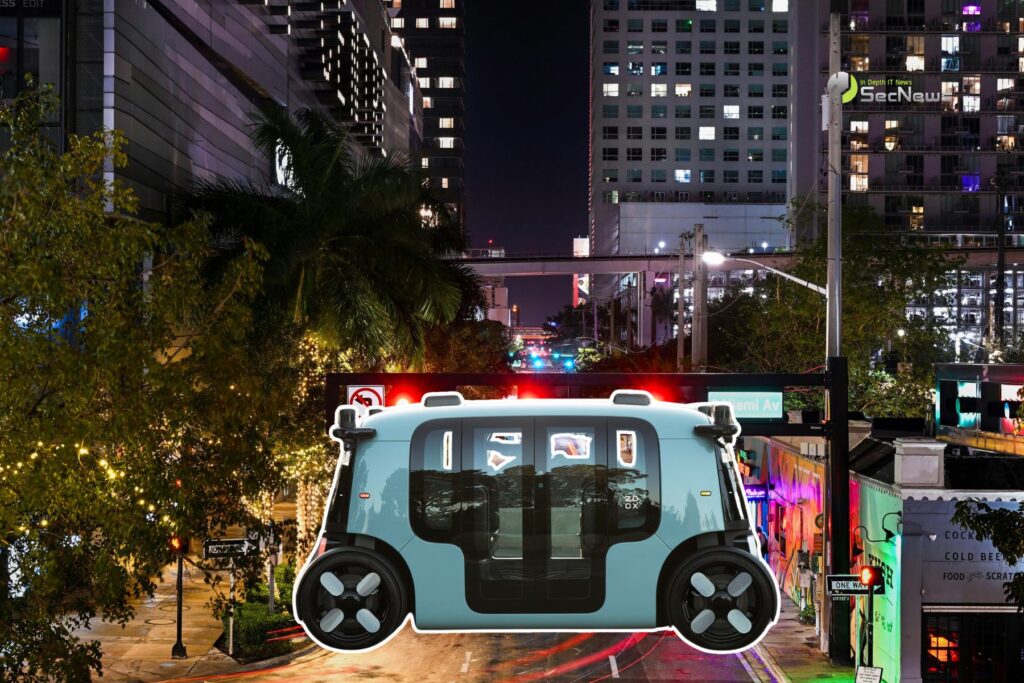
Unlike other approaches on the market, Zoox’s robo-taxis are not based on modified conventional cars. Instead, they have been designed from the ground up as fully autonomous vehicles, without a steering wheel or pedals. Their interiors are more like lounges, with facing seats that encourage social interaction between passengers.
In terms of technology, the vehicles are equipped with a full arsenal of sensors, such as cameras, lidar and radar, which work together to accurately perceive the environment. At the same time, their speed is limited to 72 km/h, emphasizing the safety and stability of the travel experience.

Zoox: New features for improved passenger experience
Zoox is also investing heavily in software to improve the user experience. The new Estimated Time of Arrival (ETA) feature promises greater accuracy, while pre-booking options make it easier to plan trips. In addition, the “Find My Zoox” feature helps passengers easily locate their vehicle in busy areas.
Of particular interest is the ZooxCast, which leverages Bluetooth connections to offer personalized audio options, turning the journey into a more personal experience. These moves show that the battle is not only being fought on autonomous driving, but also on the overall user experience.
Expansion into high-demand key locations
In Las Vegas, the company is expanding its service points, including high-traffic areas such as the Las Vegas Convention Center, the Sphere and the T-Mobile Arena, as well as major hotels along the Strip. The choice of these locations is not accidental, as they attract a huge volume of visitors and are an ideal testing ground for high-demand services.
See also: Zoox robotaxi are available in Las Vegas
Similarly, in San Francisco, Zoox is dramatically expanding its coverage, including areas such as Chinatown, North Beach and the Embarcadero, strengthening its presence in the eastern part of the city.

The next step: Controlled entry into new markets
For the Austin and Miami markets, Zoox is taking a more conservative approach. The initial rollout will be limited to small geographic areas and select users, such as employees and close associates, before gradually opening up to the general public.
This strategy allows for better control of the technology and reduces risks, while also creating anticipation. It is no coincidence that the service's waiting list already exceeds 500,000 registrations, demonstrating the intense interest of consumers.
The broader picture of autonomous mobility
Zoox’s expansion reflects a broader trend in the mobility industry: the shift from vehicle ownership to ride-hailing services . If the technological and regulatory challenges are overcome, robo-taxis could fundamentally change the way we get around cities.
See also: Zoox: Allows the public to use its robo-taxis in San Francisco
However, success is not a given. Issues such as security, public trust and regulatory framework will determine the final outcome. In any case, Zoox seems determined to claim a leading role in a market that is only now starting to take shape.
