

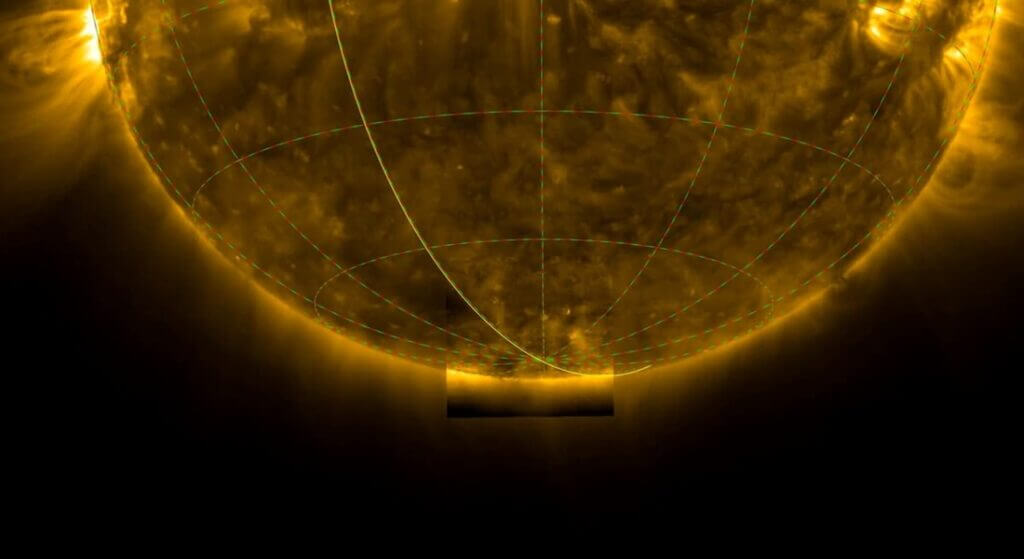
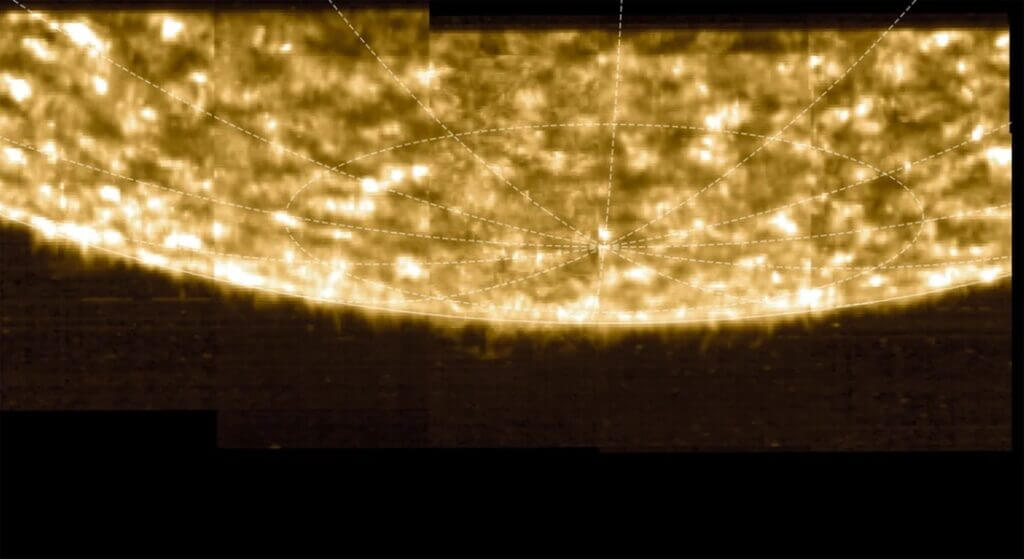
The European Space Agency (ESA) 's Solar Orbiter has sent back to Earth the first images and video of the Sun's south pole , offering scientists a glimpse into the most mysterious part of our star.
The high-resolution images are expected to play a key role in understanding how the Sun alternates between periods of intense activity — such as solar storms — and calmer phases. This information is critical, as solar phenomena can cause significant disruptions to Earth's technology, affecting satellite communications and even the security of electrical grids.
The images reveal a hot, luminous atmosphere, reaching a temperature of one million degrees Celsius, while darker, cooler clouds of gas—at 100,000°C—are scattered across the surface. These are the most detailed images of the Sun yet.
See also: Photos of the Sun in 8K resolution – Impressive!
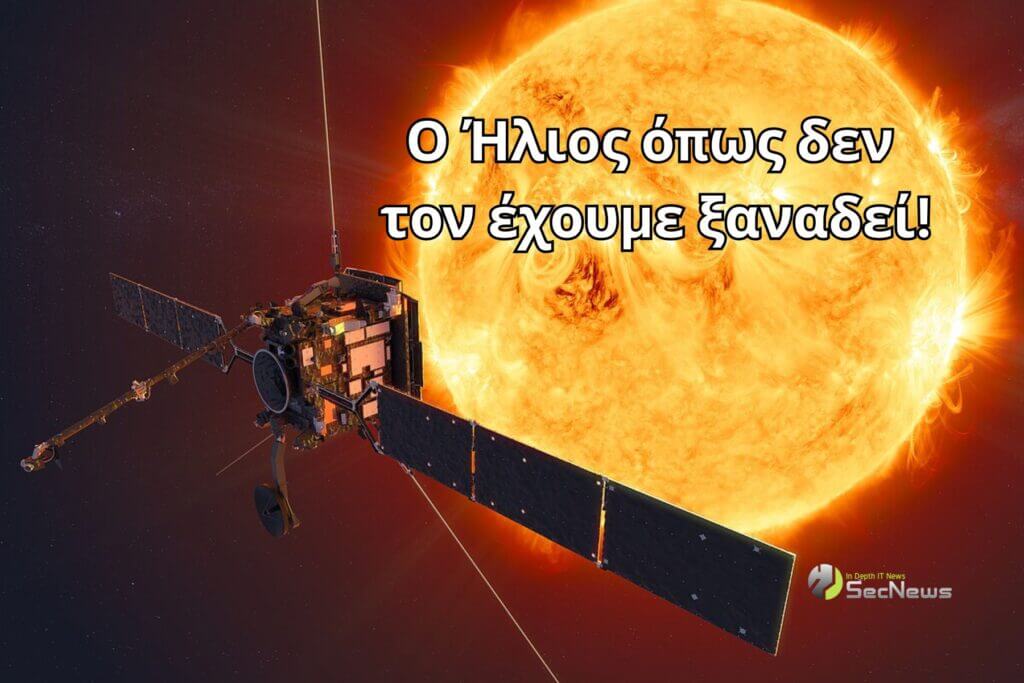
It is very important for scientists to understand exactly how the Sun works, given that it is both a source of life and a potential risk factor for our technological infrastructure.
From Earth, the Sun appears as a simple bright disk. But thanks to special filters and advanced observation at different frequencies, scientists can "see" it for what it really is: a dynamic ball of plasma, with magnetic fields that twist, forming spectacular flares and extensive jets of gas.
Solar Orbiter: Understanding magnetic fields and eruptions that threaten Earth
The magnetic fields Sun's are the key factor that determines when our star remains calm and when... it explodes, spewing charged particles towards Earth with potential consequences for critical technological infrastructure.
See also: Elon Musk: The Sun threatens life on Earth – Mars is the solution!
Scientists know that the Sun has a period of quiescence when its magnetic fields are aligned, with our star having a fixed magnetic north and south pole. This is a phase in which the Sun does not produce violent outbursts, but these fields then become complex and chaotic as they reorient themselves, with the north and south poles reversing about every 11 years. When this happens, the star enters a phase of intense activity. Then, plasma bursts and solar storms are shot out into space — and, sometimes, headed directly toward our planet.
These phenomena can cause disruptions in satellite communications, damage to power systems, and also create impressive phenomena, such as the northern and southern lights.
Until recently, scientists could not predict this solar behavior, as they lacked crucial data on the migration of magnetic fields towards the poles. But the picture is starting to become clearer thanks to ESA's Solar Orbiter
"We now have the missing piece of the puzzle," Professor Lucie Green of University College London told the BBC. "The reversal of polar magnetic fields on the Sun is one of the great open questions in science and what we will be able to do with Solar Orbiter is measure for the first time the really important fluid flows that grab bits of the magnetic field on the Sun and carry them to the polar regions."
See also: NASA – Blue Ghost: What does the sunset look like from the moon?
The big goal of ESA's Solar Orbiter mission is ambitious: to develop computer models that will accurately predict space weather — the activity of the Sun that can affect infrastructure on Earth. With the right predictions, satellite networks, energy infrastructure , and more can now be better protected .
Solar Orbiter brings us closer to understanding the mechanisms behind solar flares. However, we still need more data to develop prediction algorithms based on clear “signals” from the Sun.
The spacecraft continues to transmit images and first‑look analysis data, with expectations rising for an era where space weather will be as predictable as terrestrial weather.
Simply put: it's like we're starting to "read" the Sun's manual — and this opens up new horizons for disaster prevention and exploration of our solar system.
Source: www.bbc.com
