

Dyson is dynamically entering the American robotic vacuum cleaner market with the innovative 360 Vis Nav, shaking up the tables.
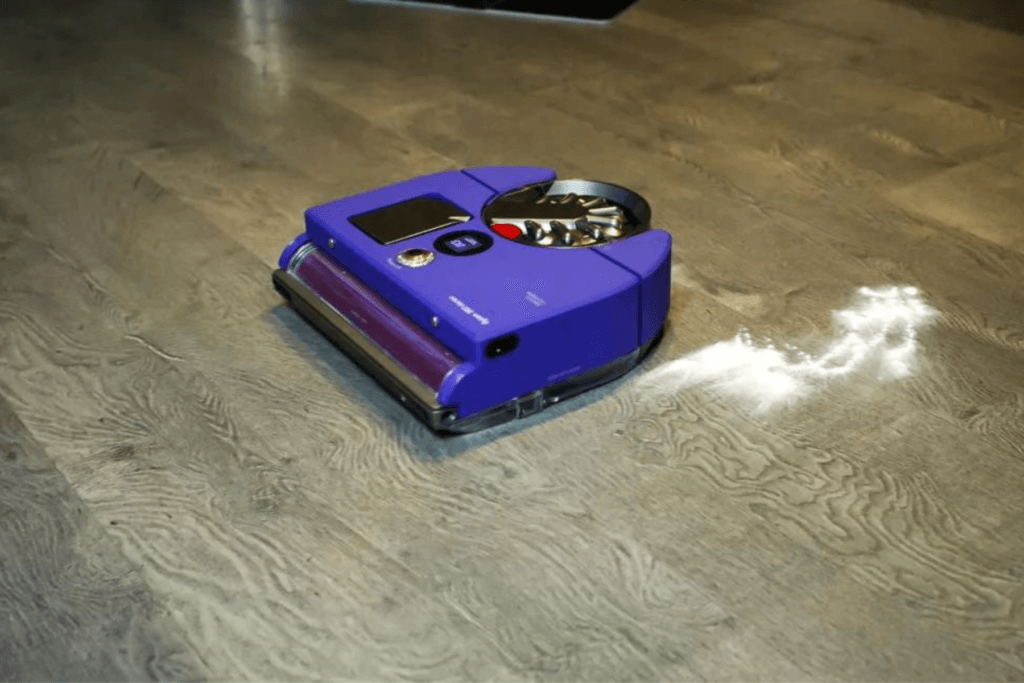
Dyson is one of the biggest players in the cordless vacuum and air purifier space (and, more recently, hair styling as well), but it has kept a relatively low profile in the robotic vacuum market. Today, the company is bringing its latest robotic vacuum to the United States and Canada. Following its availability in other regions, the Dyson 360 Vis Nav is now available for pre-order in the US for a starting price of $1,199 from Dyson directly and other retailers like Amazon.
See also: Pornhub just pulled out of Texas: Here's why
Although we haven't had a chance to test the 360 Vis Nav yet, we were able to get more details from Dyson about how the new robot vacuum works. A few things stand out as a departure from traditional robot vacuums, the first being the 360-degree visibility system that uses a camera in the center of the robot to map your home as it cleans. Home mapping isn't new in this space, but Dyson claims that the images captured by this system will help the machine better understand the layout of your home, including where obstacles like furniture are, capture corners and edges, and help it recognize where it has cleaned and where it still needs to go to finish the job. The camera is surrounded by eight LEDs that balance exposure and help the robot vacuum better navigate in low-light conditions.
Finally, Dyson’s robot vacuum uses a Piezo sensor similar to those found in the company’s stick vacuums to detect dirt, then helps the machine do a few things: increase the suction power to a maximum of 65 air watts when needed, and create a temperature map in the My Dyson app of the dirtiest parts of your home. This sounds like a more useful application for a Piezo sensor than the one on Dyson’s cordless vacuums. In my testing, I noticed that seeing how much dirt particles a handheld vacuum picks up can be interesting to watch change on a digital display as you clean, but it’s not very proactive after you’re done vacuuming. But in this app, especially with the temperature map, that information can show you areas of your home that you want to clean more often , and you can program the 360 Vis Nav to clean only those spots from within the app.
See also: LinkedIn plans to add games to its platform
The Dyson 360 Vis Nav has a similar design to some of the high-end robot vacuums on the market right now, with two squared-off edges that help it get into corners of rooms more easily. Under the hood, it has a Hyperdymium motor and a removable filter, as well as a triple-action brush that runs the entire width of the machine, something you don't often see on competing robot vacuums. Of course, the cleaning surfaces borrow a lot from the company's stick vacuums: there are carbon and hard nylon brushes for deep cleaning of carpets, and a "soft" soft nylon surface that's better on hard floors.The entire machine is HEPA-compliant, which means that the air that has been sucked in cannot escape through other parts of the machine, making it better at trapping tiny particles like allergens and dust mites.
Dyson may have waited a while to enter the robot vacuum market in the United States, but it seems like it wanted to find the right ways to integrate the technology from its cordless vacuums into this space before doing so. On paper, this technology could set the 360 Vis Nav apart from other robot vacuums in terms of superior suction power. When we have time to test the device, I'll be interested in testing out the four cleaning modes (Auto, Boost, Quick, and Quiet), seeing if the advertised 65-minute run time (in Auto Mode) actually holds up, and judging how robust and easy to use the My Dyson app is.
See also: Dubai: Rolex with Sheikh Mohammed's autograph wins Dh1.1 million at auction
But what already sets the 360 Vis Nav apart from the competition is its high price tag, which comes in at $1,199. That's a price we've only seen on robot vacuums that come with self-centering bases, and the 360 Vis Nav doesn't have one (its base just charges). But that won't come as a surprise if you're familiar with other Dyson products, which are often priced at a premium.
Information source: engadget.com
