

Vaccination Certificates: Protect Your Personal Information Koji Fusa, a leading cybersecurity expert, has made progress towards developing a framework where people can store their digital identities and access them in real time. Koji is a Visiting Professor at the Cyber Security Innovation Research Centre (CSI) at Aston University.
The idea was to create a platform that would have the ability to distribute over 200 individual keys to every person around the world. Each key could be assigned to personal information, such as vaccination certificates.
The framework will be operated by vaccine administrators who will send each individual’s vaccination details to a dedicated server. This server will issue a QR code that will be transmitted to the vaccinated individual as a digital key for access. The certificate holder will retain the QR code that will allow them to access the server, to check their record at any time.
Read also: Johnson & Johnson COVID-19 vaccine: Risk of autoimmune disorder
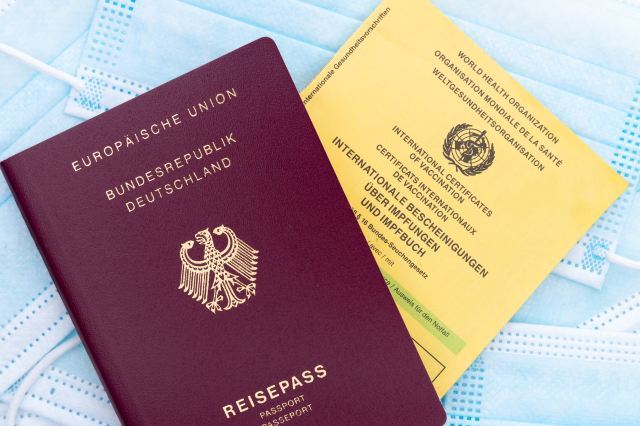
The framework will separate private data into different databases, where one can only access it with the individual key, along with fingerprint, facial and voice recognition technology, making it extremely difficult for cybercriminals and fraudsters to develop any suspicious/malicious activity.
This will be a huge step forward for digital identification around the world. Not just for certificates vaccination , but also for people's personal information . The framework will make everyday life simpler and more secure .
It will allow people to verify all their personal information such as address, electronic health record and banking details individually and instantly with any third party they choose. This could involve anything – from the home buying process to getting into a nightclub.
Professor Vladlena Benson, a cyber risk expert and director of the CSI Centre at Aston Business School, said: “I am delighted to be working with Koji Fusa on this project. With his experience, I am confident that this could be the first system of its kind where the authenticity of vaccination certificates can be instantly verified globally, something that is currently not possible. This work aligns with the UK government’s proposed Trusted Identities Framework and addresses issues of data sovereignty and information privacy.”
This initiative comes after numerous incidents of fraud and cybercrime have been recorded that exploited the COVID-19 pandemic.

See also: COVID-19 contact tracing apps: Most people don't use them
Specifically, security researchers have discovered fake COVID-19 vaccines (AstraZenecavaccinationdark, Sputnik, etc.), certificates , and negative test documents, which were put up for sale on the web.
Prices for doses of AstraZeneca, Sputnik, Sinopharm or Johnson & Johnson vaccines ranged between $ 500 and $750 . Fake vaccination certificates were also being sold by anonymous traders for $150 .
Researchers reported that they have observed a sharp increase in dark web advertisements related to vaccines.
Researchers from cybersecurity firm Check Point have been monitoring hacking forums and other marketplaces since January , when vaccine ads first appeared . They noted that the number of ads they have seen has tripled , to more than 1,200.
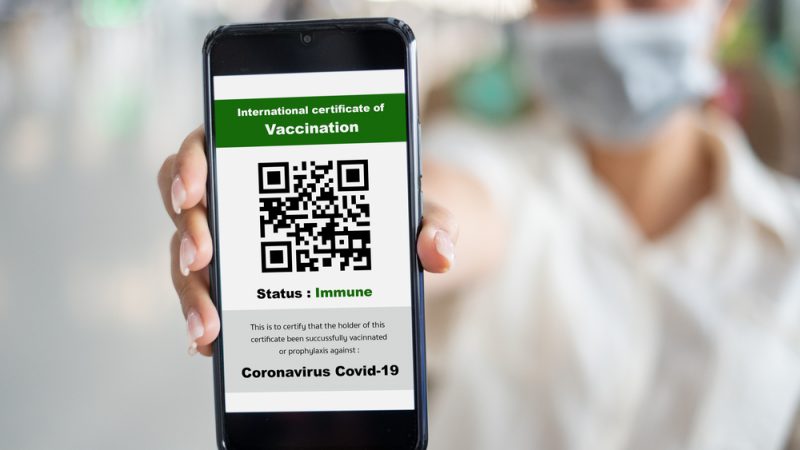
Proposal: Covid-19: Vaccines and fake vaccination cards are being sold on the dark web
The vaccine sellers appear to be from the US, UK, Spain, Germany, France and Russia. The team found many ads in Russian Cyrillic text as well as English.
It’s no surprise that fake documents are being sold on the dark web. Check Point researchers found multiple sellers offering fake documents, including one that appeared to be from the UK, with a vaccination card for $150, using the hard-to-trace Bitcoin as a payment method .
Oded Vanunu, Head of Product Vulnerability Research at Check Point, stressed the following: “It is essential that people understand that attempting to obtain a vaccine, vaccination card, or negative COVID-19 test result through unofficial means is extremely dangerous, as hackers are more interested in their money, information, and identity.”
Check Point is urging countries to adopt a QR code system on all vaccination documentsto make forgery more difficult.
