

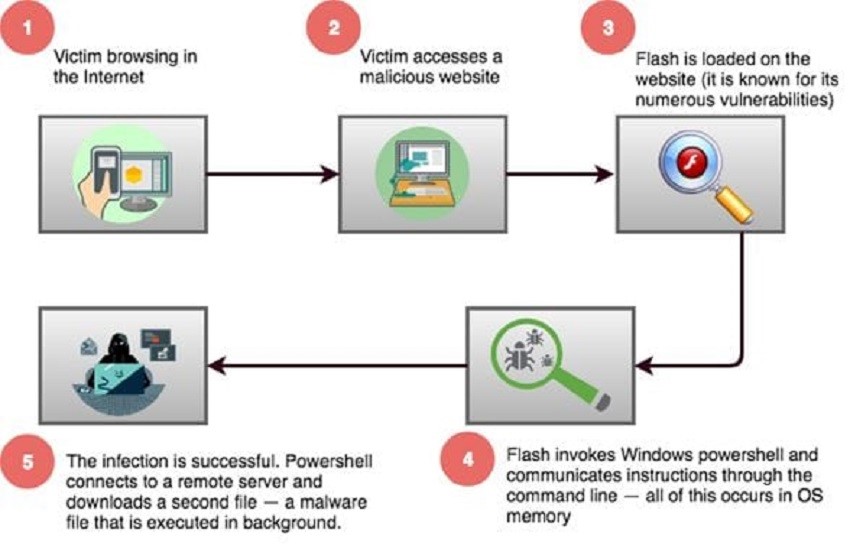
Hacker attacks have now changed form. Unlike the malware attacks we are used to, attacks do not involve the attackers installing software. They are fileless malware attacks that exploit Windows tools such as PowerShell and WMI (Windows Management Instrumentation) for malicious activity. In this way, the attacks are not detected within the system. Thus, the "dispersal" occurs from within and with lateral movement it gradually infects the entire system.
It can be prevented or even prevented by various means.
- One way is telemetry, which collects measurements and informs that malware is present.
- The next way is called Threat intelligence and it is the knowledge that allows you to prevent or mitigate cyberattacks. It enables you to make informed decisions about security and identify who is attacking and what their motivations are.
- A different alternative is Heuristics. They look at what malicious code could do when activated.
- Finally, another way is EUBA (Machine learning and End-User Behavior Analytics). It is a type of cybersecurity that takes into account normal user behavior. It then detects any anomalous behavior or cases that fall outside of the “normal” patterns and reports them.
Of course, there is a way to recover. However, because the damage caused by fileless malware is truly extensive, it is essential to identify what allowed the virus to enter and fix it completely. Otherwise, there is a chance that it will re-enter the system through vulnerabilities and damage it again.

