

Η κατασκευή τεράστιων υποβρύχιων κέντρων δεδομένων μπορεί να ακούγεται σαν μυθιστόρημα του Ιουλίου Βερν, στην περίπτωσή μας όμως είναι κάτι που δοκιμάζει η Microsoft. 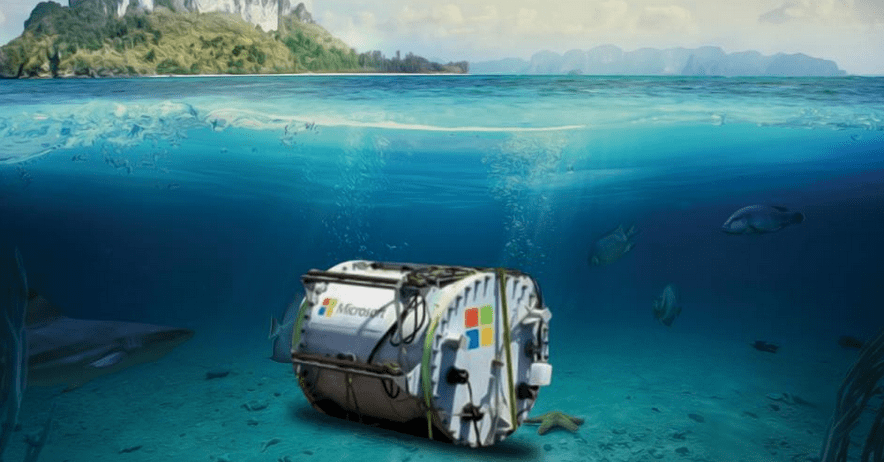
The company's plan is called Project Natick, and on its website it states its purpose: “To understand the benefits and challenges of developing underwater data centers worldwide.”
Why should underwater data centers be built? The customers' approach for better service is the main reason.
Given that so many large cities are coastal, and the data center buildings are in the middle of nowhere, building underwater centers could improve the performance of services like Netflix for millions of city residents.
Furthermore, hosting servers in an underwater building essentially eliminates the risk of damage from overheating.
And finally, Microsoft reports that it can pair underwater data centers with electric generators or turbines that use the tide to move, something that could help address the growing energy demands.
The first prototype called Leona Philpot was tested last fall about a kilometer off the coast of California, 30 feet (approximately 10 meters) underwater.
The test was conducted in a single datacenter that was located in a steel capsule, which was equipped with sensors that monitored pressure, humidity, and other factors that helped the engineers learn more about the potential challenges they will face in the future.
In December, after a series of successful tests, the technicians sent the test results back to Microsoft's headquarters in Redmond for analysis.
Microsoft believes it can install underwater data centers 90 days faster than it can build the surface ones.
