

A microcamera developed by the company Rambus is targeting the emerging field of the " Internet of things " , which has the innovative feature of not having a lens.
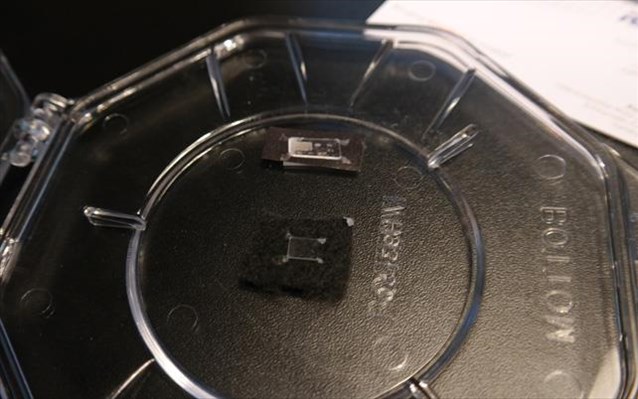
According to a MIT Technology Review article, although digital cameras with lenses produce exceptionally high‑quality photos, integrating cameras into smaller‑sized devices is difficult. The miniaturization of lenses works only up to a point, because the smaller the lens, the more difficult it is to achieve precise curvature on its surface. According to Patrick Gle, a researcher at Rambus, one way to solve this problem is to replace the lens with a microscopic sensor that «records» light and relies on a computer to «understand» how the image looks.
Gill envisions integration of the miniature camera into devices of all kinds, from wearable gadgets to security systems and games, without this implying an increase in their cost. «Our goal is to add “eyes” to every digital device, no matter how small it is» he says.
The purpose is not to capture high‑resolution photos, like from a regular camera or a modern smartphone, but to create a very small and easy‑to‑manufacture sensor that can gather enough information to depict exactly what is happening in the scene.
Gordon Wegstein, a scientist at Camera Culture Group , is optimistic about this technology: "besides shrinking pixels, we haven't seen much progress in camera sensors in a while."
According to Gill, the algorithms of Rambus allow users to «produce» images of various resolutions: the highest that has been achieved so far with the originals is 128×128 pixels.
