

The US will extend the operation of the International Space Station at least until 2024. NASA chief's assistant William Gerstenmaier clarified that this decision was made after a thorough study of the station's condition and consultations with other space agencies – partners in the ISS. He added that the station's equipment will be able to operate until 2028.
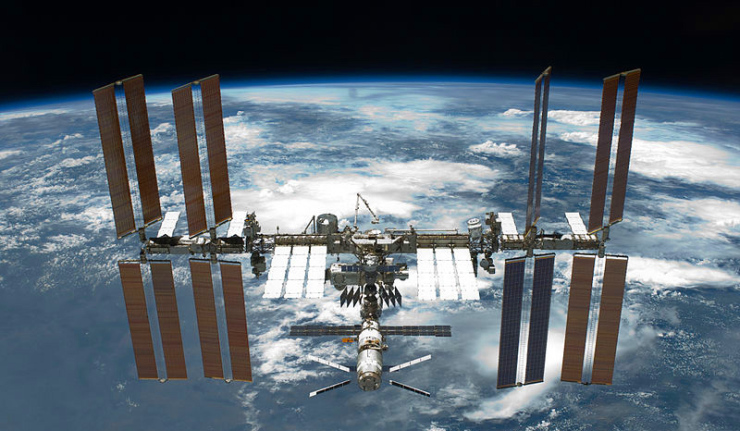
Since the launch of the Russian «Zarya», the first unit of the ISS, 15 years have passed. Since then, the station has expanded significantly and has become the largest human outpost in near space. Its weight reaches 420 tons and its size is larger than a football field. The six‑person crew is provided with all work and rest conditions, such as internet access and gym equipment. This unique space laboratory is capable of operating much longer – Alexander Zelezniakov, member of the Russian Academy of Cosmonautics, is convinced:
There is benefit from the station. Interest from all partners remains alive. Let us hope that the decision of the Americans will receive support from the Europeans, the Japanese and, of course, us. And not only as 2028, but also as 2028, the station will be in orbit. The programs and studies being carried out on it are interesting for many fields of science: medicine, technologies and geophysics.
For the service of the Station, $3 billion is spent annually, allocated to all participants in the program. For NASA, the shift beyond 2020 does not entail additional cost, assures William Gertsenmagier. The already existing funds in the agency's budget will be used, which have been allocated for the station decommissioning process. However, the expert Igor Lisof is not sure they will be sufficient:
Each large-scale program requires, at its end, means for terminating its operation, canceling all contracts, and settling them finally. I have serious doubts that these funds are sufficient for more than an additional year of the station's operation.
The extension of the station's operating deadline until 2024, not to mention 2028, may not align with the plans of individual members of the DDΣ program, although at this moment they are positioned «in favor» . It is not excluded that at some stage they will stop funding it. What can be done? «At NASA we know what to do if partners diversify» – is the confused answer given by the service. Regarding Russia, it was positioned in favor of the station's operation at least until 2028. And this makes sense: this year the 20th Russian multi‑purpose laboratory unit will reach DDΣ, which is clearly not going to be able to complete the entire range of its tasks by the new decade. Thus, Russian funding of the station is not going to stop. ‘It has nevertheless prepared an alternative exit for any scenario: the entire Russian section can be disconnected and start an autonomous orbital flight.

