

Together with his accomplice, hacker A.K. caused a stir in an Internet giant: Facebook itself. By cracking passwords and infiltrating hundreds of accounts, the two Greek hackers humiliated the Internet's most advanced security systems.
But eventually they were caught in the nets of the Hellenic Police, which, instead of arresting them, should perhaps have considered hiring them. After all, at least A.K. had dreamed of becoming an EYP agent since he was a child.
“A.K.”, his initials, is the only element of his identity that he wants to be known. A.K., like AK47, known worldwide as Kalashnikov – although the weapons of this “guerrilla” are not firearms. “THEMA” talks to one of the two Greek hackers who hacked Facebook, invaded more than 250,000 computers around the world, infecting them with malware and, most importantly, undermined the security measures of the emperor of social media. Proving that even Facebook is unsecured, the two Greeks automatically became famous worldwide, were even accused of looting bitcoins from unsuspecting users, while, according to a rumor, they were close to being hired by the Hellenic Police’s Cybercrime Division. For all this, A.K. is not particularly willing to speak at length, maintaining an enigmatic distance from the events or rumors that concern him. He is 27 years old, with gentle features, a pleasant physiognomy, blue eyes, a thin underbeard and four tattoos on his body. He has not studied anything, on the contrary he is simply a high school graduate – which he finished with difficulty. And yet, penetrating the sanctuaries of Facebook's sanctuaries is something "very easy" and "simple" for him. However, the head of the Electronic Crime Prosecution, Manolis Sfakianakis, after arresting him and his accomplice, described them as "geniuses, individuals who stand out for their abilities". The Facebook administration, on the other hand, officially thanked the Greek Police in a letter, which freed the user community from the two dangerous intruders.
A.K. He grew up in Thrace and from a very young age he began to wander around Greece, as he was an independent person by nature. His father, now retired, was a civil servant, while his mother does not work and in recent years has lived permanently in Germany. “I have also stayed in Germany,” he says, revealing that he never studied any subject. “I wanted to go to an IT vocational school in Thessaloniki, but I had to work at the same time and I was unable to do both.”
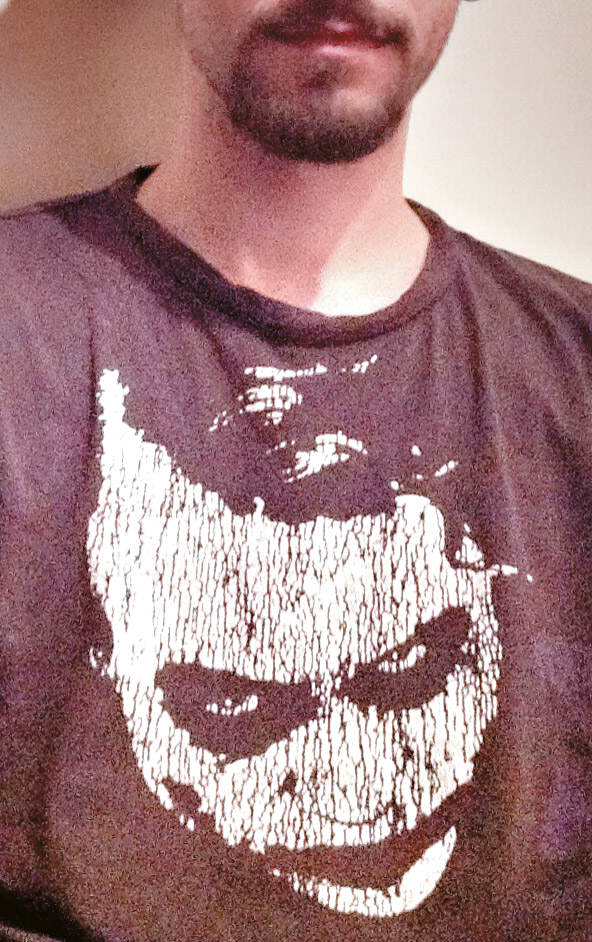
The hacker in the only photo he allowed to be published, taken the way he wanted
 Self-taught
A.K.'s extraordinary knowledge is a mystery that he probably doesn't intend to unravel: "I generally didn't do any work related to computers, only in the last two years, that is, now that I live in Athens, I worked for a company that performed security checks on client networks. However, I didn't acquire my knowledge there. I've been dealing with computers since I was a little kid and I learned to do everything I did on my own. It's something like painting: you either have it or you don't. Basically, I don't do anything special, anyone can do something like that if they want to. It's actually simple.".
Code-breaking and the… builders of Cybercrime Prosecution
How little A.K. fits the profile of the person who, according to the established and dominant perception, is characterized as a “dangerous criminal” is evident from his personal life, the epitome of which could be the moment of his arrest. Here is how he himself recounts it: “I was with my girlfriend when they came to arrest me at my house. She has been through a lot with me too. She was very scared. It was 7.30 in the morning when they came and knocked. We were sleeping. They rang the doorbell, they told me that they needed me for a construction issue, so they told me to come downstairs. In the meantime, I saw them. Were there 7 people for a “construction issue”? I immediately realized that the issue was something else, but I went downstairs immediately. I had it in the back of my mind that they would come at some point.”
The strange thing is that while A.K. living with the idea that his arrest was somehow imminent - or at least possible - he continued undeterred by cracking Facebook's passwords. In retrospect, he explains his attitude as follows: "There was no real reason for all that happened, I didn't think of it as something bad - after all, Facebook suffered no financial loss or anything, it's just that what happened clearly made the system that protects users much better than it was before. After all, that was my job for the last two years. Through the company I worked for, I would access our clients' systems to find their weaknesses and improve them. So, I offered these "services" to Facebook voluntarily, as if it were my client. Together with my friend, we wanted to see how protected it really is, regardless of whether they asked us to do such a thing."
With bitcoins in hand
A.K. is probably oversimplifying and downplaying the real business he had developed with his accomplice. Because among the charges against the duo of Greek hackers is that through a malicious program they created with the official code name Lecpetex and sent it as an attached file to various users, they managed to neutralize Facebook's digital armor. In this way, they supposedly invaded the "wallets" of dozens of users, in which they saved their bitcoins. It is recalled that bitcoin is the global online currency, the parity of which is estimated at approximately 1 to 470 euros. However, A.K. himself categorically denies that he touched anyone's bitcoins: "You can 'produce' bitcoin, you can put your computer to work and acquire it, etc. This does not mean that you get it from someone else." At this point, A.K.'s lawyer, Dr. Spyros Karanikolas, intervenes, emphasizing that "my client is accused of having access to bitcoins, that is, wallets of other users. However, no evidence in the case file indicates that any user who received this virus lost even one of the bitcoins he had.".
For A.K. the word “virus” is something of an insult, so he takes it upon himself to clarify that “yes, we had access, that’s true. First of all, however, it bothers me that everyone is talking about a virus and I don’t like that word at all. Any programmer in the world is potentially the creator of a similar “virus”. It’s just a program like any other, but they give it that name because it does something that the user doesn’t know about.” A.K. also denies that together with his partner they had created a virtual capital with a total value of around 23,000 euros in bitcoins, which they did not have time to cash out. Again, Mr. Karanikolas takes it upon himself to explain that “this is not true in any case. There is no evidence in the case file that refers to amounts. Believe me, if there was an issue of amount in the case file, both defendants would be in custody today. Proof of this is the fact that none of the hundreds of thousands of users have reported missing even a single bitcoin.”
If the motivation wasn’t money, then what was? A.K.’s answer to this fundamental question is incomprehensible to anyone who doesn’t belong to the special and bizarre caste of hackers: “I think this whole story was an experiment, it was a challenge for me what I did on Facebook. I wanted to see if I could succeed. I was one step ahead of Facebook’s security technicians, they were upgrading the software, I was overtaking them. I wanted to see how far I could go.” As for the terrifying, nightmarish scenario for every unsuspecting Facebook user, that of having personal data stolen, for A.K. it is a simple choice: “If I wanted to, I could enter the inbox of any of the accounts I had on my list. It’s something simple. In any program, for example Skype, any company behind it, let's say Microsoft, can see all your personal messages, can access anything". And if A.K. speaks from experience, his advice to any user who wants to protect their personal information from the indiscretion of hackers is valuable: "Do not open anything, any file that you are not expecting. Even if it is supposed to be sent by a friend of yours".
Officially unemployed
A.K., in addition to being on trial and now a notorious cybercriminal, is officially unemployed. As he himself confesses, "I quit my job the day before I was arrested. I was thinking of leaving for Germany. Things are a bit difficult, though, because I don't have any degree in my hands. On paper, I'm just a high school graduate, nothing special." Undoubtedly, however, and although he has so far used them in activities that have strayed from the boundaries of legality, A.K. has excellent qualifications. As he sees it, the ideal profession would be "what I've been doing in recent years, namely proving to companies that I can, if I want, have access to their data and help improve their system, which has security gaps. If someone were to ask me what job I dreamed of doing since I was a child, I would say working for the EYP. I was crazy about this idea."
Because there is a lot of discussion internationally about how state bodies prosecuting cybercrime can benefit from the know-how and demonic ingenuity of hackers, immediately after the arrest of the two Greek "intruders" on Facebook, the same issue was raised regarding the tactics of the Hellenic Police. A.K. says that he has not received any pushback for cooperation with the people who arrested him: "From what I understand, the Police want us to cooperate but this is not their responsibility. Because I have committed an offense, it is now a matter for Mr. Vasilis Kikilias, the Minister of Citizen Protection. If I understand correctly, he is the only one who can do something and there will be special treatment for people like us, as is the case abroad, especially in America where the Authorities are the first to cooperate with them." As Dr. Karanikolas notes, "there is no legislative framework that allows the Police to cooperate with cases of people like A.K. and his friend. We are perhaps the only country in the European Union where this happens. They are more likely to be hired by a large foreign company than by the Greek Police."
AK
…like AK47 or Kalashnikov: the 27-year-old blue-eyed man from Thrace who disgraced the digital armor of the world's most popular social media is far from the profile of a notorious cybercriminal
Source: protothema.gr
