

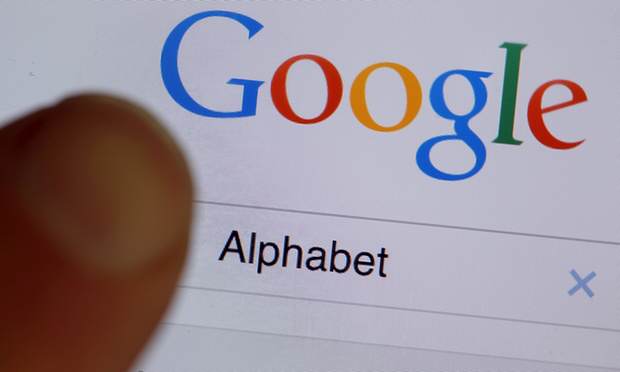
 Google a company in 11 years: All of its services are being transferred to a new operating entity called Alphabet.
The company's spin-off into separate entities under Alphabet allows for "greater scale of management, as we can run things independently that are not very related," the announcement said.
Page and Sergey Brin will be at Alphabet as CEO and Chairman respectively, and they named the company's rising star, Sundar Pichai, as CEO of the search engine . Of course, each company will have a CEO , and Page and Brin will oversee and innovate across all of the portfolio companies.
But besides better management and focus, there is another explanation for this move: Branding.
The 12th law of marketing as described by Al Reis and Jack Trout in the classic guide to marketing, and in the 22 Immutable Laws of Marketing, is "The Law of the Extension Line."
Reis and Trout advise companies to resist the pressure to expand their brand equity, not to spread themselves too thin, and not to try to be everything to everyone. The same goes for product lines: Expanding a product line into unproven areas is risky. While most companies believe that the power of a brand will help sell new products, often the new product hurts the old one, and in doing so, the brand's reputation is tarnished.
Google is of course not just another ordinary company. What is its brand? Its mission is to “organize the world’s information and make it accessible and useful. But also another company motto: “It’s better to do one thing really well.”
The company states: “We do search. With one of the largest research teams in the world focused exclusively on solving search problems, we know what we do well and how we can do it better.” But how does it explain other services that have little to do with search? Like Gmail and Google Maps? The giant company ties these products to search:
“Our dedication to improving search helps us apply what we’ve learned to new products like Gmail and Google Maps. Our hope is to bring the power of search to uncharted territories, and help people have greater access to and use even more of the ever-expanding information in their lives.”
It seems like Google has managed to connect these products. But how can one explain Calico, a Google company “for health, wellness, and longevity”? It simply cannot. Google has expanded far beyond the promise of its original brand name. So it essentially had two options:
1. To develop its brand name from "organizing the world's information" to something broader enough to encompass all of Brin and Page.
2. To keep Google focused on its true brand name and move away from anything that doesn't align with it.
How else could it connect self-driving cars to Gmail? This is where Alphabet.
That's why Page and Brin had to create a new umbrella company, with a new brand. They had to make sure that this brand was broad and reflected vision to make the world a better place through their bold, innovative projects.
Source: iguru
