

This $10 device can clone RFID-equipped Access cards with ease. Are you one of those people who just taps your wallet on a reader to get into your office? Then you probably use Radio-Frequency Identification (RFID) cards to manage your building access and security.
However, these widely used access control systems are very easy to hack – and now it's easier than ever. Thanks to a tiny $10 device developed by two security researchers that can easily fool these RFID cards.
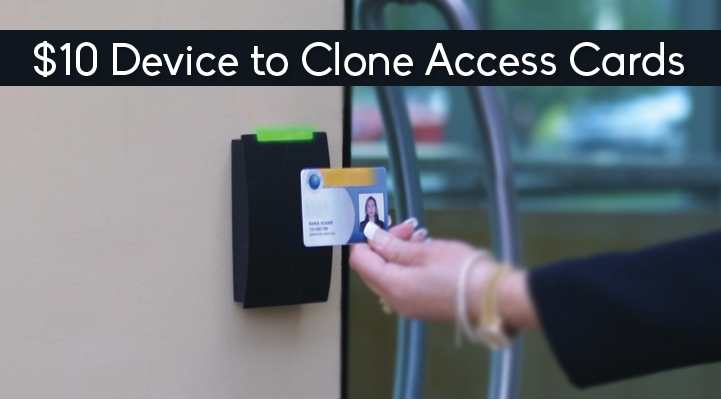
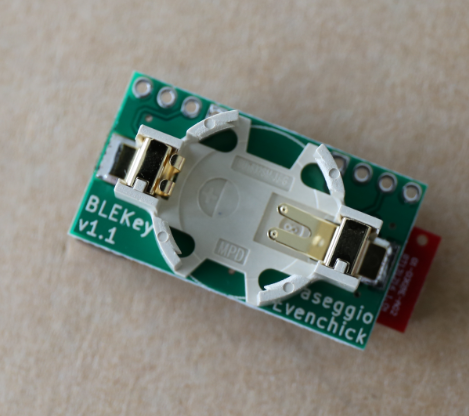
Called BLEkey, or Bluetooth Low Energy device, this tiny device is designed to be integrated into an RFID card reader, a small box that you touch or swipe to gain entry.
BLEkey exploits a vulnerability in the Wiegand communication protocol used by the majority of RFID card readers today to clone RFID-equipped cards.
Mark Baseggio, from security firm Accuvant, and Eric Evenchick from Faraday Future, who created BLEkey, will present their findings at the Black Hat security conference next week in Las Vegas.
The idea behind BLEkey is to publicize technologies such as HID proximity cards, which distribute these access cards in the majority of offices and buildings around the world, as well as to demonstrate that the Wiegand protocol is outdated and should no longer be used.
According to the researchers, BLEkey can be installed in less than two minutes and is capable of storing data from more than 1,500 RFID cards, or it can be downloaded to a mobile phone via Bluetooth to clone these cards.
BLEkey features:
Now these cloned cards can be used by hackers to gain physical access to sensitive areas, such as a data center or printing room.
The tiny device offers a unique feature, such as disabling the card reader for two minutes after the attacker enters the area with the cloned card.
Researchers estimate that about 80 percent of office buildings using this method have vulnerable RFID readers for physical entry control.
In the meantime, businesses should replace these vulnerable systems with more secure ones, Mr. Baseggio suggests, among other things, installing a camera on card readers to take a photo of the attacker.
But these are only temporary solutions that could show if someone is using a cloned card, but do not solve the problem at its root.
