

They map areas with great precision and monitor leaks from ships
In Greece, the "yeast" for the smart camera, which is built into the robots and allows them to "see" even in murky or dirty waters, was also created - by the late researcher Maria Petrou. Also, the telecommunications systems used to communicate with the robots, which were worked on by the Institute of Telecommunications Systems of the Technical University of Crete, have a Greek "stamp".
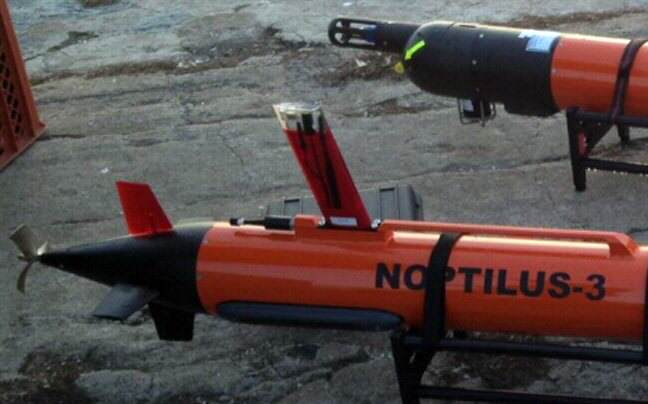
Already, three "smart" robots have been "floated" outside the port of Porto, while the goal is to use six in experiments in the coming months, as Dr. Elias Kosmatopoulos, an executive at the Institute of Technology, told AMPE, on the occasion of a scientific workshop organized today, WEDNESDAY, in Thessaloniki, by CERTH and researchers at the Institute of Technology, in memory of Maria Petrou.
The results of the experiments are extremely encouraging, since the robots mapped areas that had previously been mapped by the Portuguese navy and they did this work 3 times faster and 10 times more accurately!
The three robots that have been used for the experiments so far are located at a relatively shallow depth (20-60 meters) near the port of Porto. In the coming months, however, they will be moved deeper, to 100-200 meters, which opens up a wide range of commercial (and not only) applications, from monitoring aquaculture that will be supervised by robots, to work in commercial port areas. In fact, within the next few weeks, the project partners will hold a meeting to begin the procedures for the possible establishment of a company, the purpose of which will be precisely the commercial exploitation of this innovative technology.
"Our goal is to sell technology, not perfected robots. Underwater robots are already on the market, and the technology being developed within the project, which aims to make them more "smart" and autonomous, is compatible with the systems on the market," he added, recalling that the smart camera works as follows: it takes many photos of the same object, with different lighting each time, with the result that it can ultimately "see through" even dirty water.
The NOPTILUS project is completed in April 2015. Partners, in addition to IPTIL/CERTH, are the Department of Engineering of the University of Porto (FEUP), the Autonomous Systems Laboratory of the Federal Institute of Technology Zurich (ETHZ), the Delft University of Technology (TU Delft), the Institute of Telecommunications Systems of the Technical University of Crete, Imperial College London and the Portuguese Port Authority "Douro e Leixões".
